Blog

  • Market Wrap for the Week Ending 5 Sep 2025

    U.S. labour market weakens further.

    The August 2025 US jobs report revealed a significant weakening in the labor market, with employers adding only 22,000 jobs while the unemployment rate rose to 4.3%, well below economists’ expectations of 75,000-76,500 jobs.

    Job gains over the past three months have averaged less than 30,000, marking a dramatic slowdown from earlier in the year. The weak data has intensified expectations for Federal Reserve rate cuts, with markets now pricing in three quarter-point interest rate cuts by the Fed’s December meeting.

    The S&P 500 lost 0.29% as Wall Street grappled with concerns about a weakening economy. Bonds gained as lower rates lifted prices. The disappointing employment data has essentially “all but sealed a 25-basis-point rate cut later this month” according to analysts, as policymakers face mounting pressure to stimulate economic growth amid clear signs of labor market deterioration.

    U.S. ISM PMI New Orders index recovers

    The US ISM PMI New Orders index showed a notable improvement in August 2025, marking a significant turning point for the manufacturing sector. New Orders Index expanded in August for the first time after six consecutive months of contraction, registering 51.4, compared to July’s figure of 47.1.

    This expansion above the 50 threshold indicates that new orders are growing for the first time since early 2025, suggesting renewed demand for manufactured goods. This improvement in new orders could signal the beginning of a recovery in the manufacturing sector, as increased order flow typically precedes broader manufacturing expansion.

    Gold prices surge to all time highs.

    Gold prices have surged to new record highs over the past week, with prices climbing $3,653. The rally has been driven primarily by weaker-than-expected jobs data that has solidified expectations for Federal Reserve rate cuts, with traders now pricing in a near 100% chance of a 25-basis-point rate cut at the September 17 Fed meeting.

    A weakening dollar has further boosted gold’s appeal, as the precious metal benefits from both lower interest rate expectations and currency debasement. However, risks remain elevated as non-yielding gold’s performance is heavily dependent on the low-interest-rate environment, meaning any hawkish surprises from upcoming economic data or Fed communications could trigger sharp reversals, especially given the rapid pace of recent gains that may have left the market vulnerable to profit-taking.

    Correction time in Chinese stocks.

    Over the past week, Chinese stocks have experienced a notable pullback after their remarkable rally earlier this year. AI darlings like Cambricon Technologies fell sharply after warning that investors may have gotten ahead of themselves.

    This correction coincides with reports that China’s financial regulators are considering cooling measures for the stock market due to concerns about the speed of a $1.2 trillion rally since August. Market analysts attribute the recent weakness to “regulatory guard against a fast bull market and profit-taking pressure after the rapid gains”, suggesting that both government caution and natural profit-taking by investors are contributing to the current consolidation phase.

  • From “Uninvestible” To “Ignore At Your Own Risk”

    China was labelled “uninvestible” in 2021–2022 due to regulatory crackdowns, zero-COVID disruptions, and unpredictable policy shifts. However, conditions have changed significantly. While risks remain, the policy environment has stabilised, valuations are compelling, and government support is stronger, making the case for renewed investment in Chinese equities.

    After the 20th Party Congress (Oct 2022), Beijing recognised the economic costs of over-tight regulation. The leadership pivoted to prioritising stability, growth, and employment over ideological campaigns.

    Regulatory Cycles Are Maturing

    • Tech platforms: Rectification declared ‘basically complete’ in early 2023.
    • Education: Reforms have stabilised, with no new sweeping restrictions.
    • Property: Shift from punitive measures to support, including credit easing and state-backed restructuring.

    Regulators now issue forward guidance more consistently, reducing the risk of policy shocks. Examples include pre-signalled stock market support measures, limits on short selling, and equity allocation incentives.

    Post-Zero COVID, fiscal and monetary policies shifted towards restoring growth. Measures include tax cuts, green subsidies, and multiple PBoC rate and RRR cuts.

    The Plenum reaffirmed the private sector’s role as ‘important’ and promised greater support for entrepreneurs. Language now emphasises market mechanisms alongside state guidance, signalling pragmatism over ideology.
    The primary factor that once justified calling China ‘uninvestible’ has eased. Policy has become more predictable and pro-growth. Combined with attractive valuations and structural growth drivers, this stabilisation strengthens the bullish case for Chinese equities. A pull back to the 50-dMA would be an attractive entry point, given the authorities latest concern about speculation in the stock market.
  • Vietnam’s Stock Market Surge: How the FTSE Emerging Market Upgrade is Powering the Rally

    The Vietnam stock market broke records in 2025, driven by exceptional earnings growth, robust GDP expansion, foreign investor inflows, and transformative reforms. The VN-Index reached new highs, up 60% YTD, buoyed by the potential upgrade from frontier to emerging market status by FTSE Russell. This reclassification has fuelled strategic capital flows and expanded Vietnam’s visibility across global asset allocators.

    Reclassification to Emerging Market: Vietnam’s push for FTSE Russell upgrade meets strict criteria: adoption of non-prefunding (NPF) settlement, improved market accessibility, and enhanced disclosure standards. The KRX system launch in May improved overall market operations. Announcement from FTSE Russell in due early October 2025.

    GDP Expansion: Vietnam’s GDP posted 7.52% growth in H1 2025, the fastest first-half pace in 15 years. Growth was led by services (up 8.14%), manufacturing, and solid FDI inflows, which jumped 32% YoY to $21.5 billion.

    Earnings Growth: Companies achieved earnings growth forecasts of 32% in 2025 and a projected 19% for 2026, with the top 100 stocks expected to grow EPS by 13%, keeping the P/E ratio attractive at around 11x–12x.

    Passive and active funds tracking the FTSE Emerging Markets Index could inject $5–7 billion following official inclusion. Increased allocations, ETF flows, and strategic investments are already observed.

    The combination of robust earnings, economic growth, policy reforms, and the anticipated FTSE upgrade position Vietnam as one of Asia’s most interesting equity markets.


  • Market Wrap for Week Ending 29 August 2025

    US Courts: Trump’s Global Tariffs Illegal

    The recent ruling by the U.S. Court of Appeals for the Federal Circuit on August 29, 2025, declared that most of President Donald Trump’s tariffs imposed under the International Emergency Economic Powers Act (IEEPA) are unlawful.

    However, the court allowed these tariffs to remain in effect until October 14, 2025, to give the administration time to appeal to the U.S. Supreme Court. The Supreme Court is expected to hear the case quickly, given its importance. If the high court upholds the lower courts’ decision, the bulk of the tariffs under IEEPA will be canceled, and the administration may need to refund billions of dollars collected so far.

    The ruling is significant because it challenges the broad unilateral tariff powers Trump claimed under emergency economic powers, emphasising that tariff imposition is fundamentally a Congressional authority.

    This raises uncertainty about trade deals, on-going negotiations and future interactions with the Trump administration.

    US Q2 Economic Growth Upgraded

    The US Q2 2025 GDP growth was revised upward to 3.3% annualised from the initial 3.0% estimate.

    The upgrade was primarily driven by higher consumer spending, which rose at a 1.6% annual rate compared to the earlier 1.4% estimate, and significantly higher investment growth, revised up to 5.7% from the initial 1.9%. A sharp decline in imports, down 29.8%, also contributed positively to the GDP by reducing the subtraction from GDP calculations, reversing a Q1 surge in imports that dragged down growth.

    This stronger GDP growth revision highlights resilience amid tariff-related trade disruptions and is a positive signal for economic momentum in the second half of 2025.

    Recession risk remains low, in my opinion.

    Nvidia Losing Momentum

    Nvidia recently reported its fiscal second-quarter results, with adjusted earnings of $1.05 per share on $46.74 billion in revenue, a 56% increase year-over-year. Despite beating estimates, Nvidia’s stock declined in after-hours trading due to a conservative revenue outlook and data center revenue missing forecasts for the second consecutive quarter. The company projects next quarter revenue to reach approximately $54 billion, above Wall Street’s $53.43 billion consensus.

    Nvidia’s report validates ongoing robust demand for AI-capable semiconductors but also signals the industry is at a delicate inflection point balancing explosive growth with production costs, geopolitical risks, and market skepticism about sustained demand levels.

  • Market Wrap for Week Ending 22 August 2025

    FED Ready To Cut

    The recently concluded Jackson Hole gathering of central bankers produced an investor friendly outcome – Jerome Powell is ready to cut rates. The acknowledgment of rising risk to the labour market signalled a shift in the FED’s monetary policy stance. Expect a September cut unless there is a big change in inflation and job market data. Interestingly, markets responded positively, which would indicate that expectations of a rate cut was not that high.

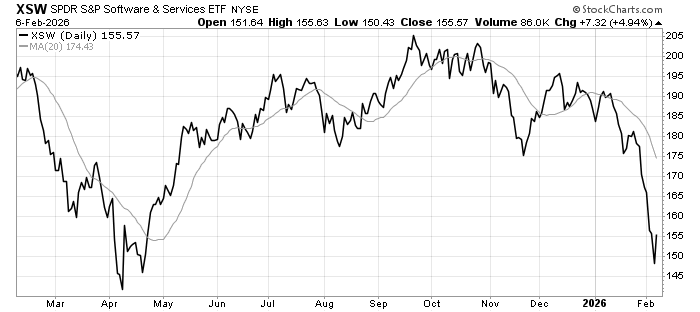
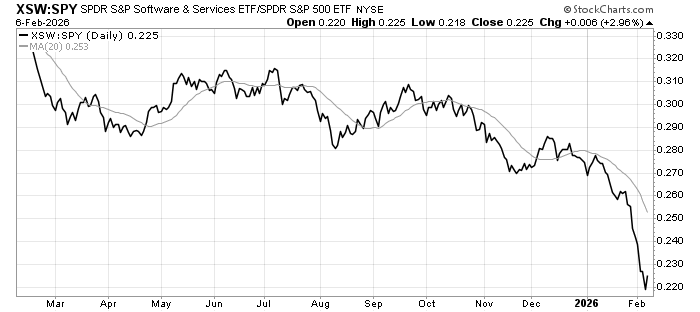
    Rotation Out Of Tech

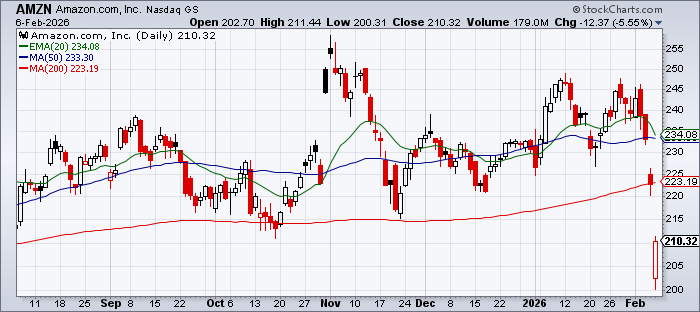
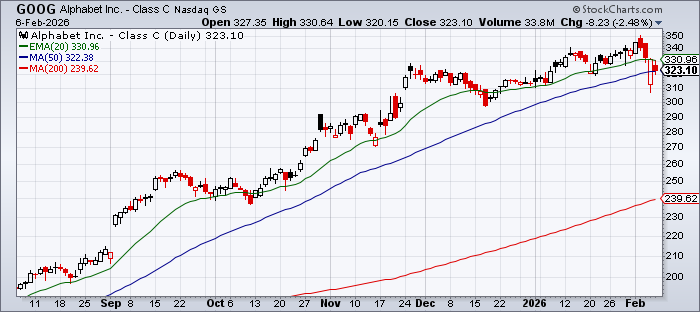
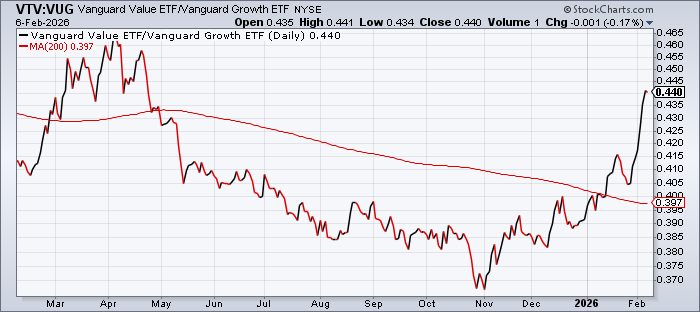
    While lower interest rates boost real estate, banks, and manufacturing companies, the tech sector’s “Magnificent Seven”—Amazon, Alphabet, Apple, Meta, Microsoft, Nvidia, and Tesla—are struggling to maintain momentum.These tech giants carried markets to record highs, but investors are having second thoughts. Stock prices have become extremely expensive compared to earnings, and the AI boom driving their growth is showing cracks.

    The AI revolution is facing harsh realities. OpenAI’s highly anticipated GPT-5 model flopped, failing to answer basic math questions despite being marketed as a “PhD-level expert.” A MIT study found hundreds of companies using AI haven’t seen promised revenue growth. Industry leaders are pumping the brakes. Meta froze AI hiring, and OpenAI’s CEO Sam Altman is comparing current AI investment to the dot-com bubble—making investors nervous.

    The short term negatives are likely to put a lid on investors’ enthusiasm for tech stocks for the time being. On a side note, the long term benefits of AI adoption is still positive. The same MIT study notes that companies are not deploying successfully, result in low Return on Investment. We are still in the early stages of learning how to integrate AI into business processes. The results will not be immediate.

    Germans Are More Positive

    After 3 years of business expectations below assessment of business situation, the forward looking index is leading the way up. This spells good news for Europe’s largest and still struggling economy, hit by trade tariffs and competition from export juggernaut China. The improvement should filter down to corporate earnings in the quarters ahead.


  • Market Wrap for the Week Ending 15 August 2025

    The past week brought three developments that matter greatly to global investors: fresh U.S. inflation data that challenges expectations for monetary easing, a set of weak July figures from China that highlight ongoing fragility in the world’s second-largest economy, and renewed diplomatic engagement between Washington and Moscow over Ukraine.

    U.S. Inflation: The Fed’s Job Isn’t Done

    The U.S. consumer price index (CPI) for July confirmed what many investors have feared: inflation is not easing as quickly as hoped. While headline CPI edged lower thanks to softer energy prices, core inflation remained stubbornly high, particularly in services and shelter.

    Markets had entered the summer with hopes of multiple Federal Reserve rate cuts before year-end. Those expectations are now being pared back. Futures pricing suggests investors see fewer cuts, later, and at a slower pace than initially anticipated.

    Bond markets reacted immediately. Treasury yields climbed, reflecting the likelihood that policy will remain tighter for longer. Equities wobbled, before regaining some ground later in the week.

    The risk of a stagflationary mix—stubborn inflation and slowing growth—is rising. That combination historically favours real assets (gold, commodities) and inflation-linked bonds over traditional fixed income.
    Equities may remain range-bound until markets gain clarity on the Fed’s path. Interestingly, the US Dollar strength remains under pressure despite reasons for the Federal Reserve to hold.

    In short, the CPI release reinforces the message that the Fed’s fight against inflation is far from over. Investors should be cautious about positioning portfolios too aggressively for imminent policy easing.

    China’s July Data: Momentum Slips Again

    China’s July economic numbers painted a disappointing picture. Retail sales slowed, reflecting weak consumer confidence and a still-cautious household sector. Industrial production lost momentum, despite earlier government support measures. Fixed asset investment also cooled, pointing to fading stimulus from infrastructure and property.

    Taken together, the data shows that China’s recovery remains uneven and vulnerable. Domestic demand is subdued, exports are struggling against weaker global trade, and the property sector continues to drag on growth.

    Markets ignored the weakness, probably looking towards more measures from Beijing.

    U.S.–Russia Talks: A Glimmer of Diplomacy

    In the geopolitical arena, reports confirmed that U.S. and Russian officials engaged in direct discussions over Ukraine. President Trump signalled openness to exploring a negotiated settlement, although no concrete outcomes were announced.

    Markets, however, seized on the development as a tentative positive. European equities rallied modestly, with investors hoping that any step toward easing conflict could reduce energy and security risk premiums. Monday’s meeting with Ukraine’s President should be another step towards a three-way meeting that should pave way for a roadmap to a permanent peace in Ukraine.


  • Jittery July Jobs Report

    The Bureau of Labor Statistics reported that the U.S. economy added just 73,000 jobs in July, far below expectations. More concerning were the massive downward revisions: 258,000 jobs were revised downward for the prior two months, with economists calling these revisions “stunning”. President Trump reacted by firing the Bureau of Labour Statistics commissioner.

    Breaking down the revisions: the U.S. created just 33,000 jobs total in May and June after the adjustments, painting a picture of a labor market that has essentially stalled since spring 2025.

    Sector-Specific Trends

    The job gains and losses show clear patterns:

    • Government employment continues to decline, down 12,000 for the month and 84,000 since its January peak, partially attributed to efficiency initiatives
    • Professional and business services lost 14,000 jobs
    • Healthcare, retail trade, and social assistance showed some gains, but not enough to offset weakness elsewhere

    Historical Context and Pattern Recognition

    Looking back to January 2025, we see a deteriorating trend. The U.S. economy added 143,000 nonfarm payroll jobs in January, which already fell short of consensus expectations of around 175,000 jobs. The progressive weakening from 143,000 in January to essentially flat job growth in May/June and only 73,000 in July suggests a clear deceleration in hiring.

    Financial Market Indicators and Recession Signals

    1. No Yield Curve Inversion: The difference between the 10-year and 2-year yields rose despite the worse than expected data. Markets are expecting the Fed to cut rates while assuming no recession.
    2. Housing equities bucked the trend: Stocks were generally weaker across sectors after the dismal report, with the exception of Healthcare, Staples and Utilities. Surprisingly, housing and home improvement stocks gained. If the labour market is to deteriorate further, big tickets items should get hit, but that’s not what we are seeing.
    3. US dollar fell: In response to expectations of more Fed’s cuts, the US dollar fell.

    Economic Outlook and Implications

    Several factors point to continued challenges:

    1. Momentum Loss: The sharp deceleration in job growth and massive revisions suggest the labor market lost momentum much earlier than previously recognized.
    2. Business Sentiment: ISM surveys on employment have been weak. The hard data is confirming. The weak hiring suggests companies are acting like “they’re in a recession”, pulling back on expansion plans and new hires. The good news is that layoffs are not accelerating. The trend of unemployment insurance claims remains steady.

    Near-Term Risks and Considerations

    1. Recession Probability: Prediction markets did not indicate a significant rise in recession risk, still at a 15% chance of a recession in 2025 for the US economy.
    2. Policy Response: Markets will closely watch the Fed’s response. Easing of interest rates can help ease the financial constraints and allow the continuation of the economic expansion, providing a buffer to a weaker hiring outlook.
    3. Market Response: How will cyclical sectors like housing and banking perform in the next few weeks will determine if the risk of a bear market and hence recession has increased.


  • Market Wrap for the Week Ending 25 July 2025

    US-EU Trade Deal

    On July 27, 2025, the EU and US announced a trade deal to stabilize transatlantic commerce, finalized at Trump’s Turnberry golf course. The agreement sets a 15% tariff on most EU goods exported to the US, lower than the threatened 30% but higher than the current 10%, potentially generating $90 billion in US revenue.

    The EU will invest $600 billion in the US and purchase $750 billion in US energy (LNG, oil, nuclear fuels) over three years, boosting US industries and replacing Russian energy imports. Zero tariffs apply to aircraft, semiconductors, generic drugs, and some agricultural products, though pharmaceuticals may face higher tariffs, creating uncertainty.

    European futures markets reacted positively. The agreement aligns with similar US deals, like Japan’s 15% tariff framework. It would seem that a 15% base rate will be applied to all nations.

    US Treasury Yields Stable

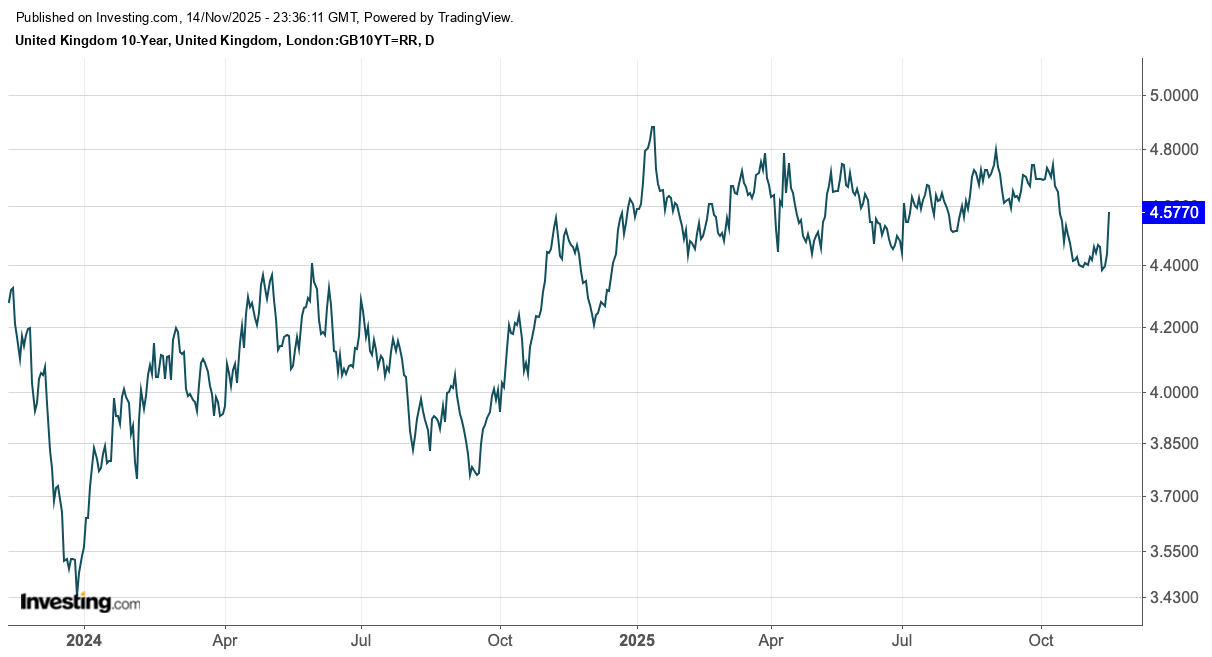
    US Treasury bond yields have stabilized over the past month, with the 10-year yield at 4.39% and the 30-year at 4.93% as of July 25, 2025, showing minimal fluctuations. This follows a period of volatility driven by policy uncertainty and tariff announcements. Stabilization is attributed to a resilient economy, with steady labor market data reducing expectations for Federal Reserve rate cuts. Mixed foreign demand for Treasuries, coupled with sufficient interest at current yield levels, supports market balance. Concerns over rising government debt and potential inflation from tariffs have eased, though investors remain cautious. The Fed’s focus on anchoring inflation near 2% further contributes to this stability. While short-term yields are influenced by Fed policy, longer-term yields reflect expectations of sustained economic growth and moderate inflation.

    US Recession Risk Drops

    Recent economic data and prediction markets indicate a reduced risk of a US recession in 2025. Polymarket, a leading prediction platform, shows recession odds dropping to 18% in July 2025, down from a high of 70% in April. This shift reflects growing optimism driven by stabilizing economic indicators.

    The Atlanta Fed GDPNow model is forecasting Q2 GDP coming in at 2.4%. Retail sales and industrial production have come in better than expected. Consumer confidence has risen, supported by stable job openings and household spending.  J.P. Morgan lowered its recession probability from 60% to 40%, citing de-escalating trade tensions. Corporate earnings have also been resilient, countering bearish narratives.

    Stock Markets Making New Highs

    With tariff uncertainty fading, investors are bidding up equities as confidence returns. US, Japan, UK, and EM stocks are making new highs. With global monetary policy easing slightly (with only the FED holding out for now), the outlook continues to improve.


  • Pressure on the Federal Reserve Chair

    The Trump administration has intensified pressure on Federal Reserve Chair Jerome Powell to resign, raising serious concerns about central bank independence. President Trump has called for Powell to “resign immediately” and launched a multi-faceted pressure campaign that includes accusations about Fed headquarters renovation mismanagement. This development introduces a new layer of political risk for financial markets, with Treasury Secretary Scott Bessent confirming that “a formal process that’s already starting” to replace Powell. The outcome—whether Powell serves out his remaining 11 months or steps down early—could materially affect the US dollar, Treasury yields, and broader asset allocations. Financial advisors should prepare clients for volatility and consider potential shifts in monetary policy direction.

    Legal and Political Context

    While President Trump has stated it is “highly unlikely” he would fire Jerome Powell, the focus has shifted to pressuring Powell to resign voluntarily. Federal Reserve Chair terms are designed to insulate monetary policy from political interference, and the legal precedent for removing a Fed Chair is limited. Powell’s term runs until in May 2026, creating urgency around whether he will complete his tenure or step down under mounting political pressure. The administration’s strategy appears focused on making Powell’s position untenable rather than pursuing outright termination.

    Why Central Bank Independence Matters

    The independence of the central bank is essential for ensuring that monetary policy is trusted and effective. When the Fed operates free from political interference, it can focus on its long-term goals of controlling inflation and the labour market—even when those goals conflict with short-term political interests.

    Why it matters for markets:

    • Inflation Control: Independent central banks are more likely to raise interest rates to fight inflation, even if it’s unpopular. This maintains purchasing power and economic stability in the long run but may slow the economy in the short term.
    • Credibility and Confidence: Markets trust that monetary policy decisions are based on data, not politics. This anchors inflation expectations and reduces volatility.
    • Lower Long-Term Rates: When markets trust the central bank, risk premiums on long-term bonds stay lower, reducing borrowing costs for households and businesses.

    Turkey and Argentina are examples where political control over central banks led to runaway inflation, currency collapses, and capital flight. Markets are now watching closely to ensure the U.S. doesn’t follow a similar path. 

    Scenario 1: Powell Stays On

    Implications:

    • Central Bank Independence Preserved: Markets retain confidence in policy continuity and inflation control despite political headwinds.
    • Monetary Policy Outlook: The Fed remains data-dependent with Powell likely to maintain current policy stance through his remaining term.
    • Market Reaction: Relative stability expected, though political noise may create periodic volatility. US dollar is likely to maintain its downtrend against most major currencies on the relative unattractiveness of US fiscal policies and Trump’s America First policies.

    Investment View:

    • Supports maintaining current duration positioning in fixed income portfolios.
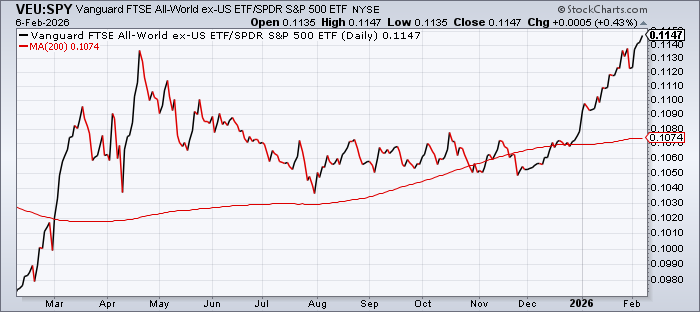
    • USD weakness over time favour non-USA equity allocations and emerging market exposure.

    Scenario 2: Powell Resigns or Is Removed

    Key Risks:

    • Immediate Market Shock: Sharp US dollar depreciation likely as central bank independence concerns mount.
    • Treasury Yield Volatility: Loss of policy credibility may push long-dated yields higher due to rising inflation risk premiums.
    • Equity Market Disruption: Initial broad-based sell-off expected due to higher uncertainty.

    Monetary Policy Impact:

    • A Trump-aligned Fed Chair may pursue more aggressive rate cuts.
    • Potential erosion of inflation-fighting credibility and increased long-term inflation expectations.

    Investment View:

    • Consider implementing US dollar hedging strategies in multi-asset portfolios.
    • Increase allocation to non-USA assets, inflation-linked securities and real assets (commodities).

    Likely Successors to Powell

    Current speculation centers on several candidates, with Treasury Secretary Scott Bessent receiving significant backing from both inside and outside the administration:

    • Scott Bessent (Treasury Secretary): Closest political alignment with Trump agenda, but markets view him as relatively pragmatic on monetary policy.
    • Kevin Warsh: Former Fed governor known for advocating faster policy adjustment cycles and market-oriented approaches.
    • Kevin Hassett (Director of the National Economic Council): Outspoken Powell critic with strong alignment to Trump’s economic philosophy.
    • Christopher Waller (Current Fed governor): offers policy continuity, though considered politically unlikely given administration preferences.

    The successor choice will signal the administration’s monetary policy priorities and significantly influence market expectations for future Fed behaviour.

    Conclusion

    Powell’s fate has evolved from a personnel matter to a significant source of systemic risk with tangible market implications. His continued leadership through early 2026 would help anchor market confidence in Fed independence, while his early departure could provoke substantial volatility and fundamental shifts in monetary policy expectations. Given that formal replacement processes are already underway according to Treasury Secretary Bessent, investors should remain highly alert to developments and be prepared to adjust client portfolios tactically if political uncertainty escalates further. The next few months will be critical in determining both the immediate market impact and longer-term implications for central bank independence in the United States.

  • Market Wrap for the Week Ending 11 July 2025

    1) Global Stock Markets

    Major indices retreated: the Dow fell ~1% (~279 pts), S&P 500 dropped 0.3% (~21 pts) to 6,259.8, and the Nasdaqslipped ~0.1% to 20,585.5. The Russell 2000 led losses for the week with a 1.3% decline . Still, YTD, these benchmarks remain ahead: +6.4% (S&P), +6.6% (Nasdaq), +4.3% (Dow) .

    Europe
    Despite a weaker closing on Friday, pressured by weak UK GDP and a potential tariff letter from Trump,  European equities were up 1.8% for the week with the EURO Stoxx 50 closing at 5383.48.

    China
    Reactions were muted: the Shanghai Composite showed modest weekly gains (+1.1%), as markets digested mixed GDP/retail data and anticipated further stimulus .


    2) Government Bonds – Week Ending July 11, 2025

    US treasury yields climbed, especially on long-dated paper: 10‑yr yields breaching 4.4%. European sovereign bonds (e.g., German Bunds) sold off in tandem too.


    3) Key Market-Moving Events

    1. U.S. Tariff Escalation: President Trump announced a 35% tariff on Canadian imports (effective Aug 1), potential 15–20% “universal” tariffs, plus threat of 50% on copper and duties on pharma.
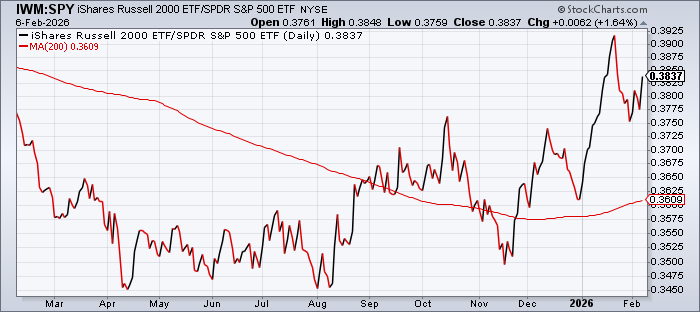
      • Impact: Stocks and bonds slipped in tandem amid trade jitters; small-caps led losses; DAX, CAC, FTSE pulled back; some safe‑haven commodities (gold, bitcoin) rallied.
    2. Chinese Data & Stimulus Hopes: Slower-than-expected retail sales and steady GDP prompted expectations of further fiscal or monetary easing .
    3. Corporate Earnings & Tech Surge: Tech giants like Nvidia surged (now ~$4 trillion market cap), keeping indices afloat despite broader weakness; earnings front-loaded next week (e.g., JPMorgan) .

    4) Focus: Market Complacency & Sentiment

    VIX: Remains subdued: trading in the 15–18 range, under its historical norm, but higher than the lows reached in 2024.