Author: admin

  • Market Summary for the Week Ending 20 Sep 2024

    It was the most anticipated FED meeting in recent times. Even though FED chair set the stage for a rate cut at the Jackson Hole central banking symposium, markets and economic observers could not agree on the size of the cut – 25 or 50bp.

    Eventually we got 50bp, with one dissent. FED chair did make it clear that the path forward remains data dependent, i.e. the health of the labour market and barring any negative surprise from the inflation front. Markets took another day to digest the news, sending stocks up across the board.

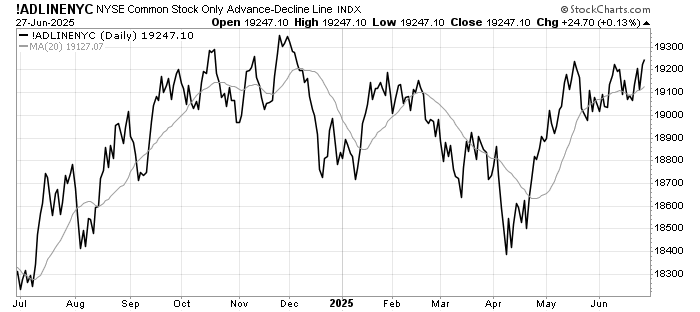
    From a market breadth analysis, we see many positive signals from advance-decline index, new highs-new lows, and equal weight indices are making new highs. Strangely, the bears stop warning about bad breadth in markets anymore.

    Economic data from the weak also added to the optimism and raised hopes of the elusive soft landing for the American economy. Retail sales, industrial production, NAHB housing market index, continuing jobless claims all came in better than expected, better than the previous month.

    Still, this writer is aware that there are enough data points to suggest that the weaker is not 100% healthy. Manufacturing sector PMI remains weak (under 50), delinquency rates is on the rise, and companies are not really hiring much. This is a difficult economy to predict, let alone describe, which is why the optimist and the pessimists are aplenty. It is akin the story where three blind men were trying to describe an elephant. They each describe the it as a snake, a tree and a wall, depending on where they touch. That is why relying on financial market signals would be better off as it collects all the inputs from the economy.

    So for now, this writer remain bullish on US equities and positive on the US economy and see a higher chance of a soft landing. So does the Atlanta FED GDPNowcasting model, which shows a Q3 growth of 2.9%.

  • Market Wrap for the Week Ending 14 Sep 2024

    US CPI – slow improvement

    The long awaited report is out. According to GS:

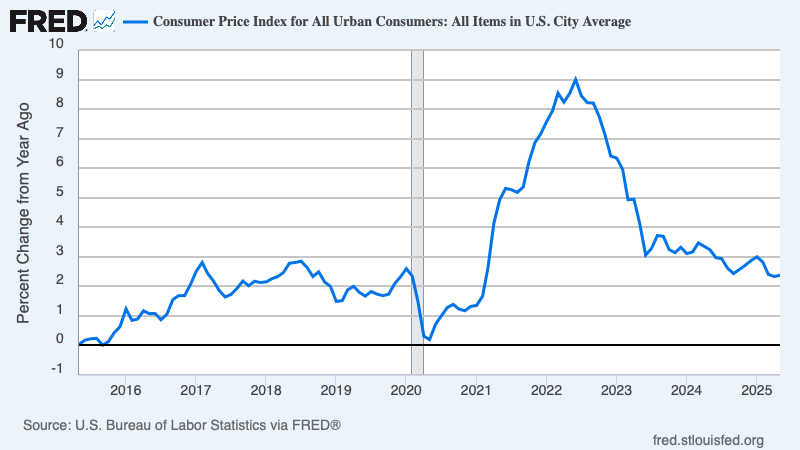
    August’s US headline consumer price index came in 0.2% month-over-month and 2.5% year-over-year, in line with expectations and below its 20-year average for the first time since 2020. However, core CPI rose 0.3% month-over-month (above +0.2% expectations) to the highest level in four months, indicating there’s still room to tame inflation, despite controlled headline data. Shelter prices remained stubbornly sticky, climbing 0.5%, the biggest increase since the start of the year and the second month of acceleration. Lingering inflation was also evident by headline and core producer price index readings that came in firmer than expected at 0.2% and 0.3%, respectively.

    Most likely we will get a 25bp cut but the key will be what would the dot plots say? A lower year end target for rates can be a tailwind for risk assets.

    Can Key Day Reversal (KDR) overcome a weak start to September?

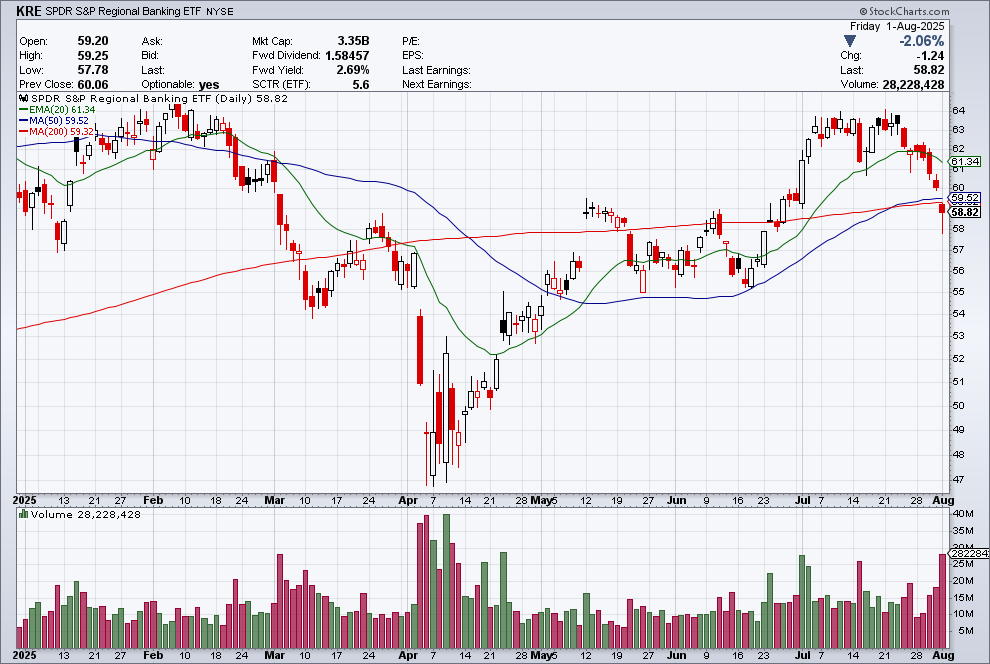
    US equities started September on a weak note. Last week saw some strong buying, with cyclical sectors like housing and regional banks displaying KDRs and positive followups (another positive close). As we head into the FED meeting, the market signals are positive, suggesting that the momentum should carry equities higher in the months ahead. So the risk of a recession is still low and the odds of a soft landing remain higher.


    JPY carry trade effect over?

    Based on the price action of the largest technology stocks in US markets, and the performance of the USDJPY, it seems to indicate that the effect of the carry trade reversal is diminishing. Since mid-August, the JPY has strengthened again, making new highs against the USD (it’s inverse on the chart). However the QQQ, which tracked the top 100 stocks on Nasdaq, staged a strong rebound to recover much of the losses. Either much of the trade has been unwound, or the thesis was not solid in the first place, i.e. investors did not borrow free JPY to invest in tech stocks.

  • Market Summary for Week Ending 6 Sep 2024

    It was a week marked by worries over the economy. ISM manufacturing numbers were worse than expected, although it was better than the previous month. The New Order component came in weaker than the previous month, suggesting no improvement for the manufacturing sector in the current month.

    The labour market also disappointed, although the data improved from the previous month. The July non-farm payroll was revised downwards (from 114K to 89K). The August report was 142K, lowered than the expected 160K. Unemployment rate inched lower to 4.2%. The JOLTS report did not indicate a rise in layoffs, but hiring has eased.

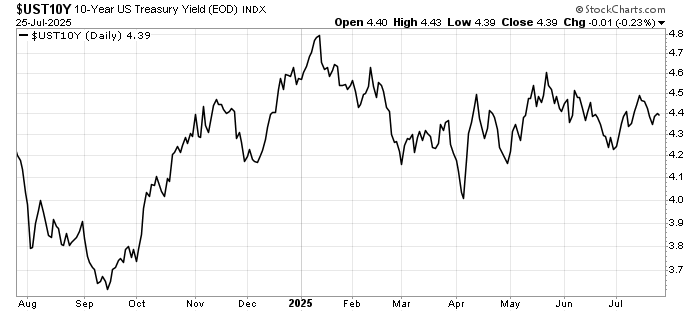
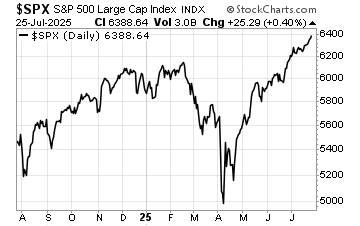
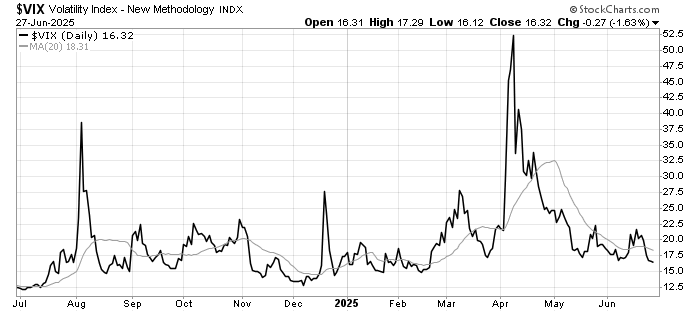
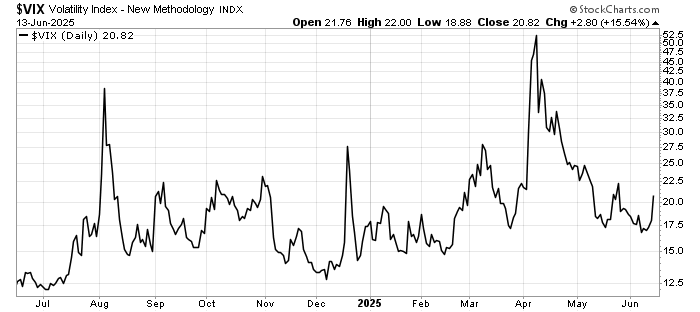
    Nonetheless, markets were worried about growth, sending stocks down and bonds up. The S&P500 was down 4% while the 10Y Treasury yield fell to 3.7% from 4%. The VIX surged to 20.3% from 15% as investors sought protection.

    Clearly, as we enter into the final quarter of 2024 and the upcoming election, volatility is increasing. Coupled with the delicate task of soft landing the economy, it is natural that investors are on edge. We have been positive on risk taking based upon the positive signals from markets (broad market participation and cyclicals remaining in an uptrend). We need to find confirmation from the data to show that the economy is not stalling, and equities can regain its footing. Otherwise, the alternative scenario, where a soft landing is not achieved, will have to be consider the base case.

  • Thoughts On The Dis-inverting Yield Curve

    Many observers are posting that the dis-inverting yield curve is the real signal of a recession.

    Historically speaking it is true that when the yield curve dis-inverts, ie. the short term rates starts to fall when the FED cuts, the economy is in trouble (unemployment goes up) and the stock market tanks (2001, 2007/08).

    Taken from a promotional email from Sevens Report

    The only reason why the economy and stocks can avoid the same outcome is if the economy can achieve a soft landing. Now it is true that certain parts of the economy is already weak or contracting. Manufacturing is one, according to the ISM surveys. The contraction is in its fifth consecutive month. Unemployment is also inching up, triggering the now famous Sham Rule. There is also a rise in delinquency in consumer loans. All these point towards a weaker economy.

    Yet, the signals from financial markets is starkly different.

    Unlike the previous dis-inverting periods, the signs from markets are more positive. Market breadth was very weak in 1999-2000, and in 2007-08. When the yield curve dis-inverted, many stocks were already in a bear market. The Advance-Decline index was trending down during those periods.

    Currently, the signal from markets are more positive. More stocks are participating in the current rally. Even industrial stocks are in an uptrend, defying the results of the ISM surveys. Hence, we conclude that there is a significant chance that the economy can do a soft landing, arresting the increase in unemployment and continuing the economic expansion.

  • Market Summary for the Week Ending 23 August 2024

    Jackson Hole outcome:

    “The time has come for policy to adjust. The direction of travel is clear, and the timing and pace of rate cuts will depend on incoming data, the evolving outlook, and the balance of risks”

    Words from the most powerful central banker. A rate cut in September is baked in as policy makers have pivot from fighting inflation to taming the rise in unemployment. According to the FED, the upside risks to inflation have diminished, and the downside risks to employment have increased. The focus is now on stemming the rise in the unemployment rate, which if they are successful, will dramatically increase the odds of a soft-landing in the world largest economy.

    Kamala Harris economic policy:

    • Harris has proposed keeping rates in place for those making less than $400,000, while raising taxes for higher earners. She is also pushing for an increase in the corporate tax rate to 28%, up from the current 21%.
    • While details remain vague, Harris has called for a federal law against price gouging on food and groceries.
    • Harris has proposed as much as $25,000 in down-payment support for first-time home buyers. She has also suggested a tax incentive for builders who work on starter homes and called for the creation of a $40 billion innovation fund to spur innovations in housing construction.

    Still in the early stages of the presidential campaign, so the impact on markets is likely to be limited. Prediction market is still split on who will be the next President. There is also no clear winner on who will control the government (which is a good thing!).

    Market’s response to dovish tilt:

    The dovish tilt by FED chair led investors to bid asset markets higher. The S&P500 is whiskers away from its all time high set on 16 July 2024. Nobody talks about the 5 August market panic anymore.

    Tech-heavy Nasdaq 100 is back on positive momentum. There is broad participation in cyclical sectors like small caps, industrial and financial stocks. Even bonds are having a good day. High yield bonds are making ATH!

    Mid-East tensions

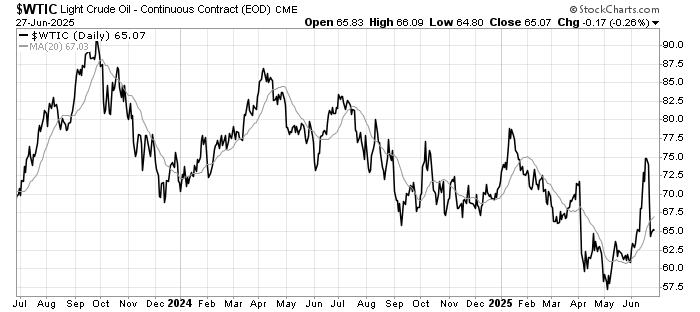
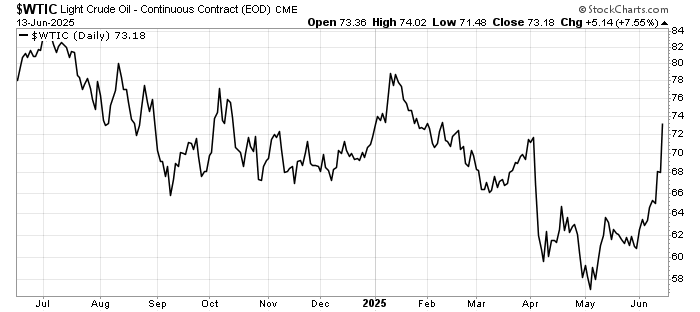
    Someone made a move on Sunday. Hezbollah launched hundreds of rockets and drones at Israel early on Sunday, and Israel’s military struck Lebanon with around 100 jets to thwart a larger attack. The two sides have exchanged messages that neither wants to escalate further, with the main gist being that the exchange was “done”, two diplomats told Reuters. More important is the reaction of oil prices. Brent crude futures climbed 37 cents, or 0.5%, to $79.39 a barrel by 2300 GMT while U.S. crude futures were at $75.19 a barrel, up 36 cents, or 0.5%. Again, not much of a reaction from oil markets. Investors can keep calm and carry on, for now.

  • Market Wrap for Week Ending 16 August 2024

    US Earnings Growing –

    According to LSEG/IBES data, US earnings is healthy:

    • 24Q2 Y/Y earnings are expected to be 12.5%. Excluding the energy sector, the Y/Y earnings estimate is 13.3%.
    • Of the 463 companies in the S&P 500 that have reported earnings to date for 24Q2, 78.8% have reported earnings above analyst estimates. This compares to a long-term average of 66.8% and prior four quarter average of 79.0%.

    According to FactSet, the number of companies that cited recession on their earnings call is low. Really tough to see a recession either in the current quarter or the next quarter.

    US Consumers Strength –

    The July data for retail sales vindicated the strength of the American consumer. It is also confirmed by how retailing stocks are performing. Strong performance YTD and also a nice recovery of the panic selling on August 5.

    Unemployment Claims Support –

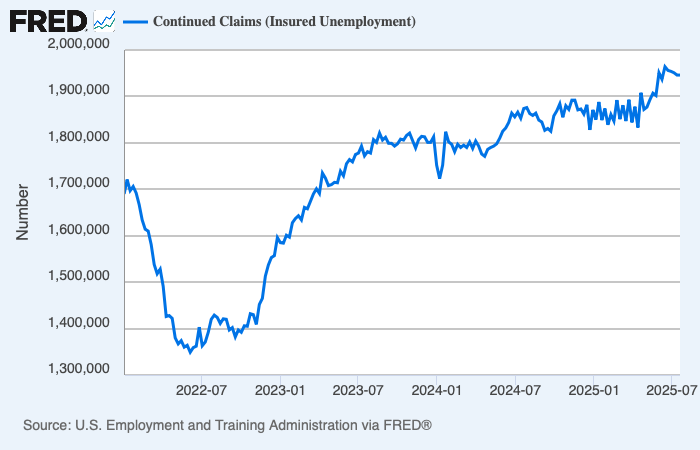
    The drop in initial claims continue to support weather related argument on the weaker jobs data for July. Claims for Texas has fallen back to normal. There is still some resilience in the jobs market.

    Mid-East Tensions –

    Lots of military hardware movement in the region while the world awaits a response from Iran. Oil prices remain steady despite the tension. It helps that demand for oil is weak, as China continues to struggle. China’s first-half 2024 fuel oil imports slide 11% y/y, according to Reuters.

    US Stock Market Recovery –

    Against the bearish predictions, the US stock market is back. Looking at it from an equal weighted perspective, to strip out the effects from the mega-cap stocks, we see US stocks recovering from their Aug 2nd and 5th sell off. Even technology stocks, where AI remains a divisive conversation, has staged a strong recovery.

  • Navigating Recent Volatility in US Stocks

    The past two days have seen a notable decline in the US stock market, causing understandable concern among investors. It’s important to remember that market volatility is a normal part of investing, and temporary dips can often present opportunities for long-term growth.

    Click to read moreMarket Update 6 August 2024

  • Market Review for the Week Ending 19 July 2024

    Biden quits: It’s official. He has announced on X that he quits and endorses Harris. It seems to improve the odds that Donald Trump would win the November election. Odds from bettings sites suggest that the probability of Trump winning the election has improved after the announcement. Markets have been discounting the news that Trump will win the election, so we do not expect much impact on financial markets.

    US stock market rotating/broadening: The week saw a continuation of the rotation out of Big tech into cyclical sectors like Industrials, banks and small caps. However, they ended the week on a weaker note, but still positive for the week. Market breadth indicators are pretty positive right now, with advances, new highs, equal weighted indicators all turning positive. We should see some momentum carried through in the next few weeks as the earnings report start to stream in.

    US earnings: More importantly, we kicked off Q2 earnings reporting in the US. According to Factset, “Of the 70 companies in the S&P 500 that have reported earnings to date for 24Q2, 82.9% have reported earnings above analyst estimates. This compares to a long-term average of 66.8% and prior four quarter average of 79%”. Earning season just started, so we will be watching how companies coped in Q2, and more importantly how markets react to the news.

    China plenum: No surprises here. Expectations were low that there will not be a pivot to re-charge the world’s second largest economy. The initial readout continues to echo what has been said over the past few months, with a focus on advanced manufacturing as the new growth driver while maintaining economic stability. This strategy is not without risk, given that the West is worried about Chinese dumping their excess goods on them. We think that China is unlikely to make consumption the main growth driver. Hence, corporate profits and economic growth will be subdued in the next few years. The performance of the Chinese stock markets reflects this forecast.


  • Market Review for the week ending 12 July 2024

    The biggest news have to be the continued cooling of US inflation. CPI increased 3% on year in June, fell 0.1% on month. The biggest driver was the decline in energy cost, while shelter continue to ease slowly, rising 5.2% on year. Although it continues to come down, it is still way above pre-COVID levels.

    While the report is encouraging, the market reaction is important and requires some explanation. The S&P500 dropped 0.88% by the end of the day, with tech leading the losses (-2.5%). It would seem that investors were disappointed with the CPI report, or that investors are now worried that price weakness would translate to economic weakness.

    However, given that small caps, banks and housing bounced back strongly, we feel that it is reasonable to conclude that investors are rotating back to non-tech stocks.

    • Homebuilders (XHB) +5.88%
    • Regional Banks (KRE) +4.21%
    • Small Caps (IWM) +3.59%

    Looking at equal weighted ETFs leads us to the same result. The equal weighted ETFs did better than the market weighted ETFs for both the broad market and also for sector funds.

    • S&P 500 Equal Weighted (RSP) +1.21%; S&P 500 Market Weighted (SPY) -0.86%
    • Tech Equal Weighted (RSPT) -0.85%; Tech Market Weighted (XLK) -2.5%

    It is thus reasonable to conclude that investors are not bailout out of the market (fearing recession) but are rotating into other sectors/stocks, other than the Magnificent 7 or whatever mega cap stocks. This suggests that the odds of a soft landing is improving. We have earnings for Q2 coming in the weeks ahead. This, coupled with market’s reaction will give us clues as to the outlook for stocks and the economy in Q3 and Q4.

  • Market Review for Week Ending 5 July 2024

    US economy

    Soft patch growing. More evidence of late to suggest that the US economy is slowing.

    • Jobless claims have risen. Unemployment rate inched higher even though job creation remains plentiful. Not the time to worry but investors need to watch that it does not deteriorate further.

    • GDPNow indicator down sharply. PMI for both manufacturing and services are down, below 50.

    • Consumption remains robust, core PCE up 3.7% in Q1 2024. Consumer confidence still struggling, according to Mich. Consumer Survey.

    • Market breadth is poor. Bull market still led by technology stocks. Equal weight S&P 500 holding up. If it holds the support line and breaks out, we could see a multi-month rally that is driven by fundamentals, rather than AI hype.


    Elections:

    UK – Labour party wins after 14 years. Financial market reaction is muted, without significant movement in UK stocks, gilts or the pound.

    France – Round one to the Right, round two to the Left, albeit slightly. Without a clear majority by any party, there will be jockeying for power sharing arrangement. This could mean status quo for France.

    Calls for Biden to dropout – It’s getting louder but what ever happens, it will probably not change much. Donald Trump is still expected to win the election in November.