Author: admin

  • Market Wrap For Week Ending 19 Sep 2025

    US Stocks At New High But USD Is Weak

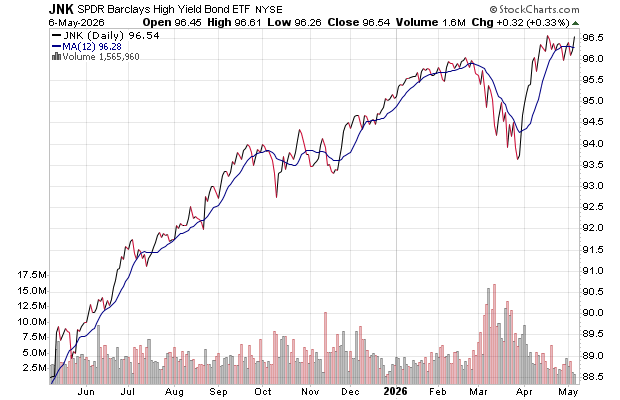
    The US stock market remains technically healthy and strongly bullish. The major indices, the S&P 500, Nasdaq, and DJIA, are at or near record highs, confirming strong underlying momentum.

    However, the market is also overbought in the short term, and the possibility of a pullback or sideways consolidation in the coming weeks will not be surprising.

    Over the next six months, the bias remains upward, supported by improving breadth, robust risk appetite, and the prospect of easier monetary policy.

    Market Breadth and Sector Rotation

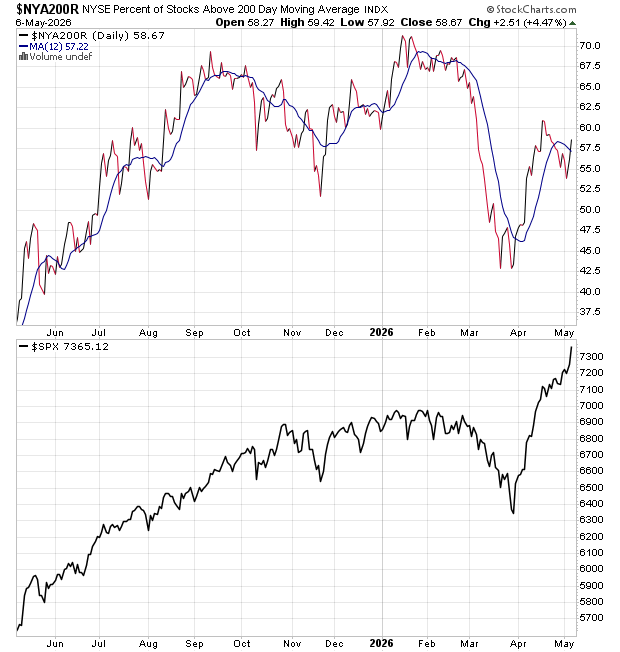
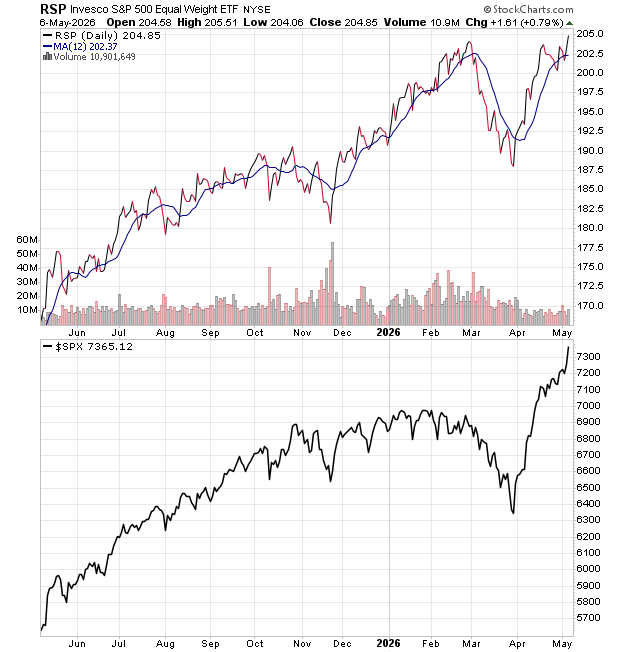
    • Participation is broadening. More than half of S&P 500 stocks trade above both 50- and 200-day averages. Although the trend is starting to slow, confirming the expectations that a period of consolidation is in store.

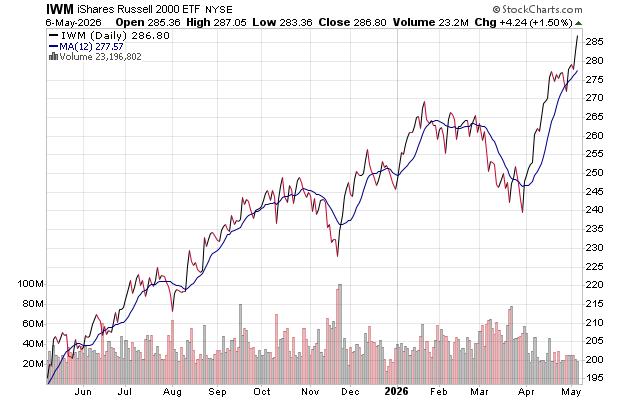
    • Rotation improving: Small-cap and value stocks have rallied recently, while leadership in technology remains intact.

    The weakness of USD continues to haunt foreign investors. For S$ based investors, an unhedged position in the S&P 500 underperformed by 50%.

    US Housing On Verge Of Recovery

    With mortgage rates at a 11-month low, mortgage application and refinancing activity is surging. Continued easing of monetary policy increases the odds of an over-heated economy, stock market melt-up and return of high inflation. The risk of a bear market in mid-2026 is increasing.

  • September FOMC Thoughts

    The FOMC reduced the fed funds rate by 25 bps to 4.00%-4.25% today, the first adjustment in nine months. Newly confirmed Trump ally Governor Stephan Miran was the lone dissenter at the meeting, preferring to cut by a larger 50 bps.

    The decision reflected a “shift in the balance of risks” with the Committee believing that the “downside risks to employment have increased.” While inflation has ticked up since the spring, a development acknowledged in the post-meeting statement, Fed Chair Powell considers that policy still remains somewhat restrictive. Job growth has downshifted sharply and the unemployment rate has risen.

    The odds of a scenario where the Fed cuts rates into economic expansion are rising. Jobless recoveries are not uncommon and by pumping more liquidity into the system when economic growth is accelerating can fuel a return of inflation. Investors should be on alert.

  • The “Jobless Recovery” Is Not New Nor Scary

    The U.S. economy can, and has, grown even when the jobs market is weak. This phenomenon, known as a jobless recovery, has been observed after several recent recessions.

    GDP growth indicates that the economy is expanding, but it doesn’t always reveal how that growth is being achieved. For example, growth can be driven by a small number of highly productive workers, new technology that automates tasks, or increases in productivity from existing employees. This means that a country can become wealthier overall even if the number of people employed or looking for work remains stagnant or declines.

    The most prominent examples of jobless recoveries in the U.S. occurred after the recessions of 1990-1991, 2001, and the Great Recession of 2007-2009. In each case, GDP growth resumed, but the unemployment rate either continued to rise or stayed elevated for an extended period, creating a disconnect that was widely reported in news headlines and economic analyses.

    Why the U.S. Is Not Necessarily Slipping into a Recession

    While a weak jobs market can be a cause for concern, there are several reasons why it does not automatically signal a looming recession in the current economic climate:

    • Productivity Gains: A key reason for a jobless recovery is increased productivity. This can be due to new technologies (like automation and AI) or businesses streamlining operations to become more efficient. In this scenario, companies can produce more with fewer workers, which boosts GDP but doesn’t necessarily create new jobs.
    • Data Revisions and Lagging Indicators: Economic data is often subject to revision. What initially looks like a weak jobs report can be revised upward later. Furthermore, the jobs market is a lagging indicator, meaning it typically changes after other parts of the economy have already shifted. GDP, consumer spending, and corporate earnings can be better real-time indicators of the economy’s health.
    • Strong Corporate Fundamentals: Many U.S. companies have strong balance sheets, which can help them weather periods of slow growth without resorting to widespread layoffs. Solid corporate earnings and continued business investment, particularly in technology and infrastructure, suggest that the economy’s underlying foundations are still stable.

    While a slowing jobs market is a legitimate concern, it is not a sure predictor of an impending recession. The complex interplay between productivity growth, labor force dynamics, and the lagging nature of jobs data means that the economy can continue to expand and thrive even when the unemployment rate is beginning to raise alarm. Looking at forward indicators, like financial market price action, would give investors a better sense of economic recession risk.

  • Market Wrap For Week Ending 12 Sep 2025

    U.S. Small Businesses More Confident

    Small business sentiment continued to climb in August. The NFIB Small Business Optimism Index increase to 100.8. Growing sales prospects and solid earnings are said to be the driving forces behind the improvement. Small businesses also appeared to receive greater clarity amid the unveiling of the administration’s tariff policy and the successful passage of the One Big Beautiful Bill Act. A drop in job openings at small firms raises some caution, however. That said, small cap stocks continue to rally.

    U.S. Job Growth Revised Down Significantly

    Annual revisions to nonfarm payrolls data for the year prior to March 2025 showed a drop of 911,000 from initial estimates, according to a preliminary report from the BLS. This is the largest since 2002 (the 2009 revision was -902,000). Clearly it showed that the economy was on shakier footing that it appeared. It is important to note that the revisions are not reflective of current conditions.

    Looking at initial claims would give a clearer picture of the health of the labour market. For now, there isn’t a significant increase in initial claims for unemployment, unlike the period where the data was revised. Market action was relatively muted. The S&P 500 gained 0.23% while the US dollar was flat. The 10Y Treasury bond yield inched up by 4 basis points.

    US Q3 Economic Growth Resilience

    The Atlanta Fed’s GDPNow model for Q3 2025 is currently stronger than the consensus forecast mainly because recent economic data shows stronger-than-expected activity in key areas: (1) Personal consumption spending has increased, indicating that consumers are spending more than anticipated. (2) Business investments are growing robustly, with stronger manufacturing, retail sales, and housing data supporting this. (3) Net exports contribution initially showed a decline but has stabilised, offsetting some downside. These data updates have pushed the GDPNow estimate to around 3.1% to 3.5%, higher than many consensus forecasts near 2.5% or lower.

    Cyclical sectors like homebuilding is rallying again. With long term rates lower, housing may be given a boost, leading to greater discretionary spending by consumers.

    ECB Kept Rates Unchanged

    The European Central Bank (ECB) left interest rates unchanged and signalled that it will likely keep them at the current level for some time. In the ECB’s assessment, downside risks to growth and inflation have diminished, reducing the scope for a more accommodative policy. The crisis brewing in France has yet to make an impact on French or European markets for now, as French corporates continue to enjoy lower interest rates than the government.

  • Do Investors Need To Worry About France’s Political Crisis

    What’s Happening in France?

    France, Europe’s second-largest economy, is experiencing severe political instability that has captured global attention. The French government led by Prime Minister François Bayrou has collapsed after losing a vote of no confidence, with public trust in the political class having collapsed and anger spilling onto the streets.

    This crisis didn’t happen overnight. After President Emmanuel Macron called snap elections in June 2024, France ended up with a hung parliament split between the left-wing New Popular Front, the right-wing populist National Rally, and Macron’s own Renaissance party. No party or coalition achieved the 289-seat threshold needed for a governing majority, making the Assembly “hung” and vulnerable to frequent government collapses or votes of no confidence.

    This fragmented political landscape has resulted in two short-lived minority governments, both collapsing over budgetary disputes. The core issue: France needs to reduce its massive government spending, but every proposal to cut expenses or raise taxes faces fierce opposition from different political groups.

    Why This Matters For Europe

    When a major economy like France becomes politically unstable, financial markets react nervously. Here’s why investors are concerned:

    Bond Market Turmoil: Government bonds are essentially IOUs that countries issue to borrow money. French bond yields have risen above those of Greece, who were once struggling with their own crisis. When investors lose confidence, they demand higher interest rates to lend money, making it more expensive for governments to finance their operations. However, judging from the recent moves in French 10Y bond yields, investors seem to be taking all this in their stride.

    Economic Uncertainty: Business leaders warn that political uncertainty triggers immediate consequences, including “freezing of investments, loss of confidence, increased risk of bankruptcies, and job destruction”. Companies delay major decisions when they don’t know what policies the next government might implement.

    Broader European Impact

    By right, the Euro currency should weaken, as a political crisis in Europe’s second-largest economy could reduce investment flows and drag on the Euro’s value. However, the Euro is holding up well, against the US$ and also the stable Singapore dollar.

    What Comes Next?

    The immediate challenge is forming a stable government that can address France’s fiscal problems. Further attempts to tackle the country’s enormous debt could be stalled until after the next presidential election in 2027. This prolonged uncertainty could increase the uncertainty in French financial markets. The downside risk appears to be muted but prolonged uncertainty dampers the potential for upside.


  • Market Wrap for the Week Ending 5 Sep 2025

    U.S. labour market weakens further.

    The August 2025 US jobs report revealed a significant weakening in the labor market, with employers adding only 22,000 jobs while the unemployment rate rose to 4.3%, well below economists’ expectations of 75,000-76,500 jobs.

    Job gains over the past three months have averaged less than 30,000, marking a dramatic slowdown from earlier in the year. The weak data has intensified expectations for Federal Reserve rate cuts, with markets now pricing in three quarter-point interest rate cuts by the Fed’s December meeting.

    The S&P 500 lost 0.29% as Wall Street grappled with concerns about a weakening economy. Bonds gained as lower rates lifted prices. The disappointing employment data has essentially “all but sealed a 25-basis-point rate cut later this month” according to analysts, as policymakers face mounting pressure to stimulate economic growth amid clear signs of labor market deterioration.

    U.S. ISM PMI New Orders index recovers

    The US ISM PMI New Orders index showed a notable improvement in August 2025, marking a significant turning point for the manufacturing sector. New Orders Index expanded in August for the first time after six consecutive months of contraction, registering 51.4, compared to July’s figure of 47.1.

    This expansion above the 50 threshold indicates that new orders are growing for the first time since early 2025, suggesting renewed demand for manufactured goods. This improvement in new orders could signal the beginning of a recovery in the manufacturing sector, as increased order flow typically precedes broader manufacturing expansion.

    Gold prices surge to all time highs.

    Gold prices have surged to new record highs over the past week, with prices climbing $3,653. The rally has been driven primarily by weaker-than-expected jobs data that has solidified expectations for Federal Reserve rate cuts, with traders now pricing in a near 100% chance of a 25-basis-point rate cut at the September 17 Fed meeting.

    A weakening dollar has further boosted gold’s appeal, as the precious metal benefits from both lower interest rate expectations and currency debasement. However, risks remain elevated as non-yielding gold’s performance is heavily dependent on the low-interest-rate environment, meaning any hawkish surprises from upcoming economic data or Fed communications could trigger sharp reversals, especially given the rapid pace of recent gains that may have left the market vulnerable to profit-taking.

    Correction time in Chinese stocks.

    Over the past week, Chinese stocks have experienced a notable pullback after their remarkable rally earlier this year. AI darlings like Cambricon Technologies fell sharply after warning that investors may have gotten ahead of themselves.

    This correction coincides with reports that China’s financial regulators are considering cooling measures for the stock market due to concerns about the speed of a $1.2 trillion rally since August. Market analysts attribute the recent weakness to “regulatory guard against a fast bull market and profit-taking pressure after the rapid gains”, suggesting that both government caution and natural profit-taking by investors are contributing to the current consolidation phase.

  • From “Uninvestible” To “Ignore At Your Own Risk”

    China was labelled “uninvestible” in 2021–2022 due to regulatory crackdowns, zero-COVID disruptions, and unpredictable policy shifts. However, conditions have changed significantly. While risks remain, the policy environment has stabilised, valuations are compelling, and government support is stronger, making the case for renewed investment in Chinese equities.

    After the 20th Party Congress (Oct 2022), Beijing recognised the economic costs of over-tight regulation. The leadership pivoted to prioritising stability, growth, and employment over ideological campaigns.

    Regulatory Cycles Are Maturing

    • Tech platforms: Rectification declared ‘basically complete’ in early 2023.
    • Education: Reforms have stabilised, with no new sweeping restrictions.
    • Property: Shift from punitive measures to support, including credit easing and state-backed restructuring.

    Regulators now issue forward guidance more consistently, reducing the risk of policy shocks. Examples include pre-signalled stock market support measures, limits on short selling, and equity allocation incentives.

    Post-Zero COVID, fiscal and monetary policies shifted towards restoring growth. Measures include tax cuts, green subsidies, and multiple PBoC rate and RRR cuts.

    The Plenum reaffirmed the private sector’s role as ‘important’ and promised greater support for entrepreneurs. Language now emphasises market mechanisms alongside state guidance, signalling pragmatism over ideology.
    The primary factor that once justified calling China ‘uninvestible’ has eased. Policy has become more predictable and pro-growth. Combined with attractive valuations and structural growth drivers, this stabilisation strengthens the bullish case for Chinese equities. A pull back to the 50-dMA would be an attractive entry point, given the authorities latest concern about speculation in the stock market.
  • Vietnam’s Stock Market Surge: How the FTSE Emerging Market Upgrade is Powering the Rally

    The Vietnam stock market broke records in 2025, driven by exceptional earnings growth, robust GDP expansion, foreign investor inflows, and transformative reforms. The VN-Index reached new highs, up 60% YTD, buoyed by the potential upgrade from frontier to emerging market status by FTSE Russell. This reclassification has fuelled strategic capital flows and expanded Vietnam’s visibility across global asset allocators.

    Reclassification to Emerging Market: Vietnam’s push for FTSE Russell upgrade meets strict criteria: adoption of non-prefunding (NPF) settlement, improved market accessibility, and enhanced disclosure standards. The KRX system launch in May improved overall market operations. Announcement from FTSE Russell in due early October 2025.

    GDP Expansion: Vietnam’s GDP posted 7.52% growth in H1 2025, the fastest first-half pace in 15 years. Growth was led by services (up 8.14%), manufacturing, and solid FDI inflows, which jumped 32% YoY to $21.5 billion.

    Earnings Growth: Companies achieved earnings growth forecasts of 32% in 2025 and a projected 19% for 2026, with the top 100 stocks expected to grow EPS by 13%, keeping the P/E ratio attractive at around 11x–12x.

    Passive and active funds tracking the FTSE Emerging Markets Index could inject $5–7 billion following official inclusion. Increased allocations, ETF flows, and strategic investments are already observed.

    The combination of robust earnings, economic growth, policy reforms, and the anticipated FTSE upgrade position Vietnam as one of Asia’s most interesting equity markets.


  • Market Wrap for Week Ending 29 August 2025

    US Courts: Trump’s Global Tariffs Illegal

    The recent ruling by the U.S. Court of Appeals for the Federal Circuit on August 29, 2025, declared that most of President Donald Trump’s tariffs imposed under the International Emergency Economic Powers Act (IEEPA) are unlawful.

    However, the court allowed these tariffs to remain in effect until October 14, 2025, to give the administration time to appeal to the U.S. Supreme Court. The Supreme Court is expected to hear the case quickly, given its importance. If the high court upholds the lower courts’ decision, the bulk of the tariffs under IEEPA will be canceled, and the administration may need to refund billions of dollars collected so far.

    The ruling is significant because it challenges the broad unilateral tariff powers Trump claimed under emergency economic powers, emphasising that tariff imposition is fundamentally a Congressional authority.

    This raises uncertainty about trade deals, on-going negotiations and future interactions with the Trump administration.

    US Q2 Economic Growth Upgraded

    The US Q2 2025 GDP growth was revised upward to 3.3% annualised from the initial 3.0% estimate.

    The upgrade was primarily driven by higher consumer spending, which rose at a 1.6% annual rate compared to the earlier 1.4% estimate, and significantly higher investment growth, revised up to 5.7% from the initial 1.9%. A sharp decline in imports, down 29.8%, also contributed positively to the GDP by reducing the subtraction from GDP calculations, reversing a Q1 surge in imports that dragged down growth.

    This stronger GDP growth revision highlights resilience amid tariff-related trade disruptions and is a positive signal for economic momentum in the second half of 2025.

    Recession risk remains low, in my opinion.

    Nvidia Losing Momentum

    Nvidia recently reported its fiscal second-quarter results, with adjusted earnings of $1.05 per share on $46.74 billion in revenue, a 56% increase year-over-year. Despite beating estimates, Nvidia’s stock declined in after-hours trading due to a conservative revenue outlook and data center revenue missing forecasts for the second consecutive quarter. The company projects next quarter revenue to reach approximately $54 billion, above Wall Street’s $53.43 billion consensus.

    Nvidia’s report validates ongoing robust demand for AI-capable semiconductors but also signals the industry is at a delicate inflection point balancing explosive growth with production costs, geopolitical risks, and market skepticism about sustained demand levels.

  • Market Wrap for Week Ending 22 August 2025

    FED Ready To Cut

    The recently concluded Jackson Hole gathering of central bankers produced an investor friendly outcome – Jerome Powell is ready to cut rates. The acknowledgment of rising risk to the labour market signalled a shift in the FED’s monetary policy stance. Expect a September cut unless there is a big change in inflation and job market data. Interestingly, markets responded positively, which would indicate that expectations of a rate cut was not that high.

    Rotation Out Of Tech

    While lower interest rates boost real estate, banks, and manufacturing companies, the tech sector’s “Magnificent Seven”—Amazon, Alphabet, Apple, Meta, Microsoft, Nvidia, and Tesla—are struggling to maintain momentum.These tech giants carried markets to record highs, but investors are having second thoughts. Stock prices have become extremely expensive compared to earnings, and the AI boom driving their growth is showing cracks.

    The AI revolution is facing harsh realities. OpenAI’s highly anticipated GPT-5 model flopped, failing to answer basic math questions despite being marketed as a “PhD-level expert.” A MIT study found hundreds of companies using AI haven’t seen promised revenue growth. Industry leaders are pumping the brakes. Meta froze AI hiring, and OpenAI’s CEO Sam Altman is comparing current AI investment to the dot-com bubble—making investors nervous.

    The short term negatives are likely to put a lid on investors’ enthusiasm for tech stocks for the time being. On a side note, the long term benefits of AI adoption is still positive. The same MIT study notes that companies are not deploying successfully, result in low Return on Investment. We are still in the early stages of learning how to integrate AI into business processes. The results will not be immediate.

    Germans Are More Positive

    After 3 years of business expectations below assessment of business situation, the forward looking index is leading the way up. This spells good news for Europe’s largest and still struggling economy, hit by trade tariffs and competition from export juggernaut China. The improvement should filter down to corporate earnings in the quarters ahead.