Blog

  • Market Wrap for Week Ending 30 May 2025

    Weekly Investor Missive:

    S&P 500 Performance: Q1 Highlights

    Despite Trump’s Tariff Turmoil (TTT), S&P 500 companies showed strength in Q1 2025. FactSet reported revenue growth of 4.7% y/y, slightly below the 10-year average of 5.1%, with 10 of 11 sectors growing, led by Tech, Utilities, and Health Care. Only 62% of firms beat revenue estimates, below the 5-year average of 69%. Yardeni Research noted a 4.6% y/y rise, under its 4.8% long-term average. Earnings per share (EPS) grew 12.9% y/y per FactSet, above the 10-year average of 8.9%, with 78% of companies beating estimates. Yardeni reported 11.1% EPS growth, exceeding its 9.0% average. Profit margins hit 13.0% (FactSet) to 13.3% (Yardeni), above the 10-year average of 10.8%.

    Analysts project 2025 revenue growth of 5.8% and EPS growth of 9.3%-14.8%, but TTT may slow growth if it sparks a global recession. Tariffs, mentioned by 411 firms in Q1 earnings calls, could act as a corporate tax unless offset by productivity gains or cost pass-through.

    Trump’s Tariffs: A System of Checks and Balances

    The U.S. operates as a federal republic with a constitutional system designed to prevent any single authority from holding unchecked power. This framework includes three branches of government—legislative, executive, and judicial—intended to balance each other and protect against overreach. This system is currently limiting President Trump’s tariff plans. On Wednesday, a lower court ruled against most of Trump’s tariffs, stating that the U.S. Constitution grants Congress exclusive authority over international commerce. A federal appeals court paused this ruling, and the matter may now proceed to the Supreme Court.

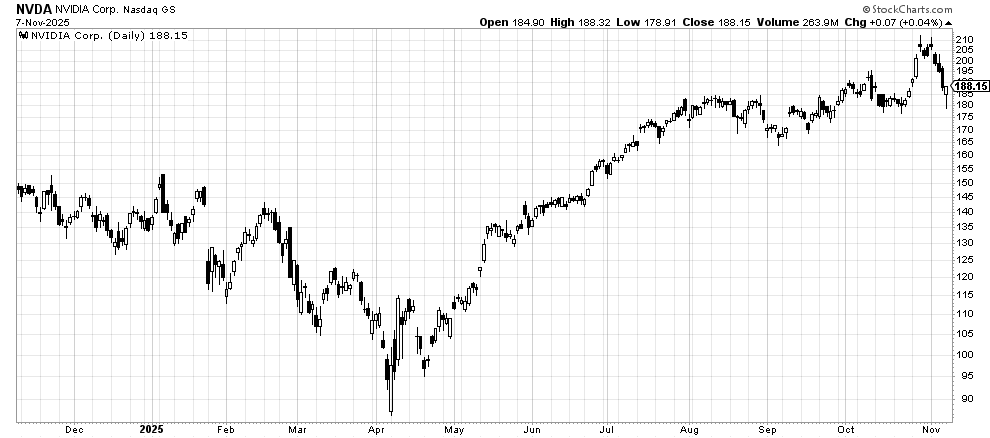
    This built-in “gridlock” is a deliberate feature of the U.S. system, ensuring stability by preventing rapid, unilateral policy changes. Investors globally often view this as positive, as businesses tend to perform best when government intervention is limited. Stock futures surged after the court’s ruling, further supported by Nvidia’s strong earnings report.

    Federal Reserve: Steady as She Goes

    President Trump met with Fed Chair Jerome Powell on June 2, pushing for immediate interest rate cuts. However, Powell and the Federal Open Market Committee (FOMC) remain cautious, as noted in the May 6-7 FOMC minutes. The Fed sees no rush to lower rates, given the economy’s resilience. The federal funds rate futures market anticipates three 25-basis-point cuts over the next 12 months, but we remain in the “none-and-done” camp through year-end.

    Q1 real GDP was revised to show a 0.2% annualized contraction, driven largely by a 42.6% spike in imports as companies rushed to beat tariffs. Despite this, the economy remains robust, supporting the Fed’s steady stance.

    Nvidia and the AI Boom

    Nvidia’s stock soared after a blockbuster Q1 report (ended April 2025), with datacenter revenues surging 73% y/y to $39.1 billion. Unlike Cisco’s crash during the Tech Wreck of 2000-2001, Nvidia’s growth is fueled by robust demand for AI infrastructure. Tech giants like Microsoft, Amazon, Google, and Meta plan to increase AI-related capital spending by 41% this year, totaling over $345 billion. This demand, driven by the broader Digital Revolution, suggests the datacenter boom is not a bubble but part of a long-term trend toward faster, cheaper data processing.

    However, concerns about a potential Nvidia valuation bubble persist. Bloomberg Opinion columnist John Authers has compared Nvidia’s meteoric rise to Cisco’s during the dot-com bubble, noting that while Nvidia’s profits are rising faster than its stock price, its valuation remains stretched. In a March 2024 article, Authers argued that Nvidia’s rally, while supported by strong fundamentals, hinges on the sustainability of its earnings growth. He highlighted that Nvidia’s market cap surged by over $275 billion in early 2024, drawing parallels to the 1999 dot-com melt-up, though he noted the AI boom is less extreme than the dot-com era. The introduction of DeepSeek in January 2025 raised fears that Nvidia’s “economic moat” could be disrupted by cheaper AI alternatives, potentially threatening its dominance. Despite these concerns, Authers emphasized in May 2025 that Nvidia’s ability to keep increasing profits, even amidst tariff challenges, continues to drive market optimism. Still, investors should remain cautious, as valuations assume aggressive revenue growth—potentially over 80% annually for the next five years, according to some analyses—raising “buyer beware” risks.

    Global Markets: Japan’s Bond Woes

    Japan’s government bond (JGB) market sparked global concern after a weak 20-year bond auction, the worst since 1987, signaled dwindling demand. Yields on 30-year JGBs hit a record 3.14%, and 40-year yields reached 3.6%, reflecting investor worries about Japan’s fiscal stability, with a debt-to-GDP ratio of 260%. Factors driving this included the Bank of Japan’s (BOJ) paused tightening due to “tariff haze,” Prime Minister Shigeru Ishiba’s comparison of Japan’s fiscal situation to Greece, and persistent economic challenges like inflation above the BOJ’s 2% target (3.6% in March 2025). Yields later fell to 2.85% for 30-year JGBs after reports that Japan’s finance ministry might reduce super-long bond issuance.

    This matters to global investors for several reasons. Japan holds $1.13 trillion in U.S. Treasuries, making it the largest foreign holder, and its investors own $2.3 trillion in foreign bonds, including significant U.S. and European debt. Rising JGB yields could prompt Japanese investors to repatriate capital, reducing demand for U.S. Treasuries and pushing up global borrowing costs. This could exacerbate U.S. yield pressures, with 30-year Treasury yields already breaching 5% amid weak auctions and a Moody’s downgrade. Additionally, the yen carry trade—borrowing in low-yield yen to invest in higher-yield assets like U.S. bonds—is unwinding as JGB yields rise, potentially strengthening the yen and disrupting global markets. A July 2024 BOJ rate hike triggered a 6% S&P 500 drop, showing the global ripple effect. If Japan’s bond market loses confidence, it could signal broader sovereign debt concerns, raising borrowing costs and liquidity risks worldwide, especially for debt-heavy economies like the U.S.

    Trade Talks: A Glimmer of Hope

    President Trump’s weekend call with EU Commission President Ursula von der Leyen brought positive developments. Trump postponed his threat of 50% tariffs on the EU from June 1 to July 9, citing progress in trade talks. European officials expressed readiness to advance negotiations swiftly. These developments, along with Nvidia’s earnings, buoyed stock markets.


  • Market Wrap for Week Ending 16 May 2025

    US-China trade war truce

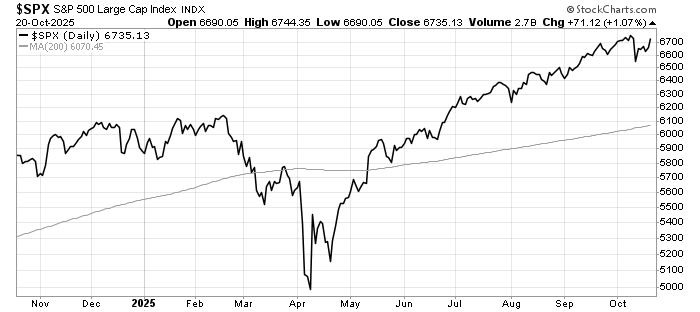
    The US and China agreed to a 90-day pause on high tariffs, reducing the US tariff on Chinese goods from 145% to 30% and China’s tariff on US goods from 125% to 10%. This deal, reached after talks in Geneva, aims to ease trade tensions but leaves uncertainty for businesses planning long-term. Markets rallied, sending the S&P500 to positive for the year.

    Moody’s downgraded US debt

    US debt was downgraded by Moody’s Ratings on May 16, 2025. The credit rating was lowered from Aaa (triple-A) to Aa1, citing the nation’s growing $36 trillion debt, rising interest payments, and persistent budget deficits. This aligns Moody’s with Fitch Ratings (downgraded in 2023) and S&P Global Ratings (downgraded in 2011), meaning all three major agencies no longer give the US their top rating. The downgrade reflects concerns about fiscal sustainability, especially with proposed tax cuts that could add trillions to the deficit. Not much impact to markets as it was already priced in.

    Walmart to raise prices due to tariffs

    Walmart on Thursday warned that even softer tariffs on China could soon force the company to raise prices on certain items. Still, the Walmart executive emphasized that the retailer will do what it can to avoid passing the import taxes onto customers. Trump has told Walmart to eat the tariffs. It remains to be seen how much of tariffs will be passed through to consumers, since we have a 30% tariff on China that remains intact.

    The AI Hiring Pause Is Here. Will Productivity Rise?

    Bloomberg reported that Microsoft is reducing 6,000 jobs this past week, even as it heads into a boom in the software market. Outside tech, AI has made significant inroads on productivity. Norway’s sovereign wealth fund, the world’s largest, is to stop hiring more humans for now in an early indication of the disruption the emerging technology may bring to the workforce. A possible scenario where labour market weakens (not dramatically) but company profits continue to rise, may occur in the quarters ahead, sustaining the bull market is equities.

    Market Repair Almost Complete

    As the S&P 500 erases the year’s losses, it was confirmed by some positive market breadth indicators. The advance-decline index is almost back to the peak last seen in late November 2024. The strength of the increase suggests that the pullback in stocks is just a correction, and the bull market remains intact.

  • Market Wrap for Week Ending 9 May 2025

    U.S.-China Trade Talks Spark Market Optimism

    Global markets rebounded as U.S.-China trade negotiations in Geneva showed signs of progress. U.S. Treasury Secretary Scott Bessent reported “substantial progress,” and both sides agreed to establish a consultative mechanism for continued economic negotiations. While no formal deal was reached, the talks signalled a potential de-escalation amid concerns about global supply chains. The Chinese side confirmed the positive meeting progress. Note: this is just the first step forward towards resolving the ridiculous tariffs.

    FED: Wait and See.

    At its May 6–7, 2025 meeting, the Federal Reserve’s Federal Open Market Committee (FOMC) decided to maintain the federal funds rate at 4.25% to 4.5%. This marks the third consecutive meeting where rates have remained unchanged, reflecting the Fed’s cautious approach amid economic uncertainties. Market reactions to the Fed’s decision were mixed. While some investors were reassured by the Fed’s commitment to data-driven policy, others expressed concerns about the potential for stagflation—a scenario characterised by high inflation and stagnant economic growth. Interestingly, Truflation is suggesting that inflation has fallen substantially. 

    Market Internals Repair Job: Work-in-Progress

    Buyers are still winning for now as the good news continue to roll in, with the US-UK trade deal, resilient US labour market, and less negative outcome for US-China trade talks. Advance-Decline index continues to improve,

  • Market Sentiment Is Really Bad

    The latest Bank of America Global Fund Manager Survey, conducted from April 4-10, 2025, covering 195 institutional fund managers with $444 billion in assets under management, reveals a highly bearish outlook, marking it as the fifth most bearish survey in the past 25 years. 
    Macro Outlook
    • Economic Pessimism: 82% of fund managers expect a weaker global economy over the next 12 months, with 42% anticipating a recession, the fourth-highest recession expectation in 20 years.
    • Inflation Concerns: 57% predict rising global inflation, a significant shift from previous expectations of lower inflation.
    • U.S. Exceptionalism Wanes: A net 62% believe the theme of “U.S. exceptionalism” has peaked, with reduced confidence in U.S. economic outperformance.
    Sentiment
    • Bearish Sentiment: The survey’s broadest sentiment measure, based on cash levels, economic growth expectations, and equity allocations, reflects extreme pessimism, driven by a worsening U.S. economic outlook, though China’s growth outlook slightly improved.
    • Bull Crash: Investor sentiment experienced a “bull crash,” with the second-largest monthly rise in macro pessimism since 1994.
    Positioning
    • Equity Sell-Off: Global investors significantly reduced equity holdings, with a record 40-percentage-point drop in U.S. equity allocation, the largest monthly decline on record. A record number of investors plan to cut U.S. stock exposure further.
    • Cash and Bonds Increase: Cash levels rose sharply to 4.1% from 3.5% in February, the highest since 2010, and bond allocations increased, reflecting a flight to safety.
    • Regional Shifts: Eurozone stocks saw increased allocations (net 39% overweight, up from 12% in February), as did global emerging markets (net 20% overweight). Japanese equities remained slightly underweight, while UK allocations rose to a net 4% overweight.
    Biggest Tail Risks
    • Trade War: 55% of managers cited a trade war-induced recession as the top tail risk, particularly due to potential tariffs under the new U.S. administration.
    • Inflation and Rates: 31% highlighted inflation forcing the Federal Reserve to raise rates, down from 41% in January.
    • Other Risks: 13% pointed to an AI bubble, and 10% noted new geopolitical conflicts.
    Bank of America Commentary
    • The survey notes a sharp shift in investor outlook, with the U.S. economy expected to weaken (net 71% anticipate a downturn) while China’s outlook brightened (net 28% expect strengthening).
    • Expectations for Federal Reserve rate cuts increased, with 68% anticipating cuts in 2025, up from 51% in February, though the magnitude of cuts remains debated.
    • The bearish sentiment contrasts with earlier 2025 surveys, such as February’s, which showed bullishness at a three-year high and low recession fears.
    Given the high level of bearishness and low positioning in US equities, it would take a drastic deterioration in US-China relations to push equity markets further down. The bottom looks in, but a rally would require good  news from trade negotiations.
  • Thoughts on “Liberation Day”

    Global markets have spoken on Trump’s universal tariffs on everyone. 54% on China, 46% on Vietnam, 20% on EU, and 10% minimum on all others.

    By Friday, S&P 500 plunged 10.5% over two days, while Monday futures indicate another 2.5% decline as of writing. Asian markets are also falling, HSI is down 11.3%, TOPIX is down 12.4%. Investors are piling into government bonds, with the US 10Y yield falling to 3.5% from 3.9%. Safe haven currencies like the JPY is up. Clearly, this is a risk off event as investors worry about global recession, rather than stagflation.

    How should investors respond?

    How markets react will be based on whether the tariffs can be negotiated and retracted. Besides China (that has already retaliated) and the EU that threatened to retaliate but could not come to agreement among its member states, most other countries are choosing to negotiate. Trump himself has already said that he had a call with Vietnam and the direction is going towards negotiation.

    However, the key will still be US-China relations. If there are no signs of negotiations, it may be difficult to see how markets can stabilise, especially if the tariffs escalates (worst case scenario).

    Before market stabilises, investors probably need to see signs to indicate a willingness to talk. We could be in for more pain, i.e. more pain in financial markets before both sides are willing to negotiate.

    Based on the price action in markets, the US is expected to experience a mild recession. The S&P 500 is down 20%, Small caps -28%, and Nasdaq even more, all from their last peak.

    Further declines would probably mean a bigger crisis, i.e. deeper economic contraction or credit event (GFC in 2008) or the COVID shock in 2020. Due to the gaps in the sell off, i.e. there were large price differences between the opening and previous closing prices, there seems to be some form of capitulation going on. So for a further sell off in markets, i.e. another 15-20% decline in US stocks, we would need to see another round of escalation in the trade war, which would slow global economic growth dramatically.

    Given the high level of uncertainty, it is probably unwise to make any investment decisions (more than 6 months). Investors should gather more evidence before re-positioning their portfolios.

  • Market Wrap For The Week Ending 28 March 2025

    US Economic data is poor.

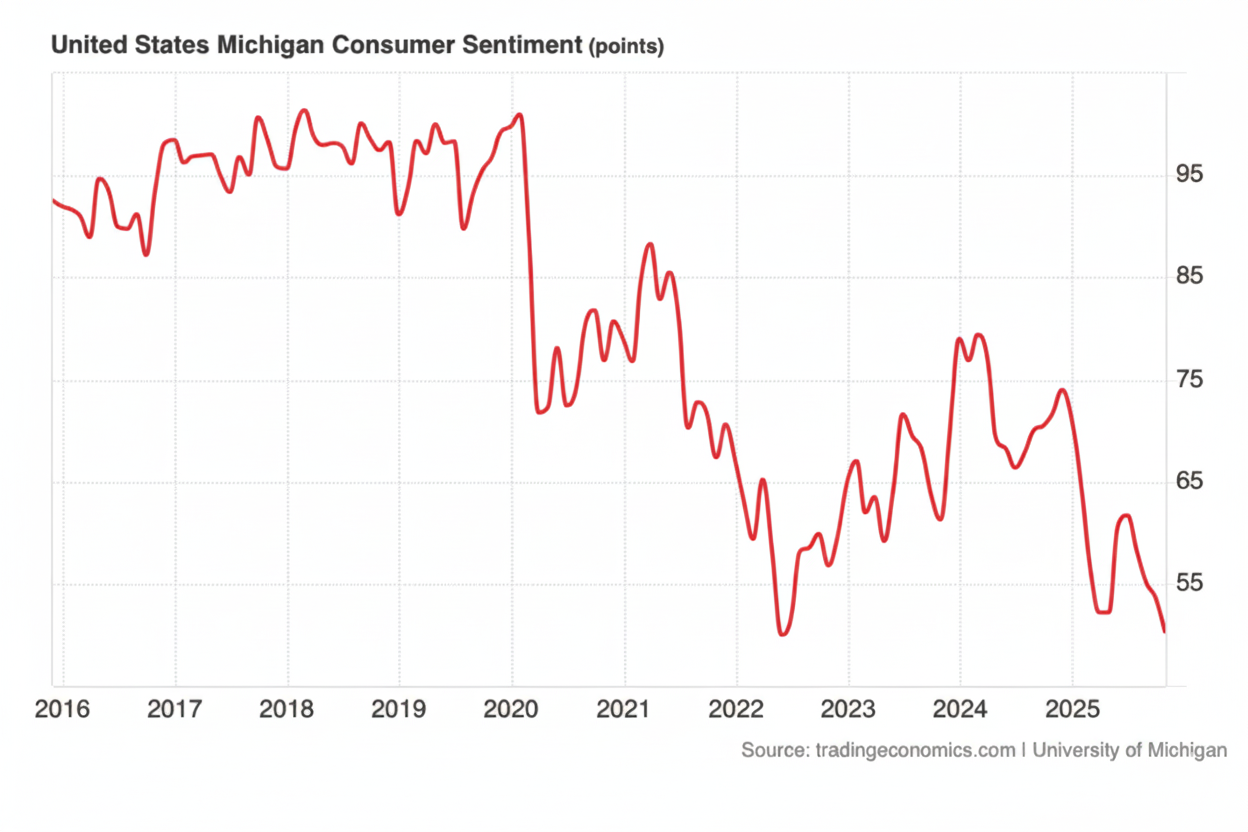
    Consumer confidence fell again, lowest level in 2 years based on the Michigan consumer sentiment index.

    PCE came in higher than expected. Fostering the case for sticky inflation.

    More tariff uncertainties, with a new 25% tariffs on all auto imports.

    Stock markets fell hard on Friday, Wall Street banks are lowering S&P 500 forecast. Optimism is in short supply.

    Setup for a bottom?

    On a cautionary note, the longer stocks remain below the 200dMA, the higher the risk of a bear market materialising.

  • Europe Set To Outperform

    After years of underperforming the US, European stocks are set to outperform as Trump forces Europe to borrow and spend.

  • Market Wrap For The Week Ending 21 March 2025

    US Economy

    US housing starts rebounded, up 11.2% in February. Industrial production gained 0.7% on month while retail sales rose 3.1%.

    Sentiment among homebuilders remain weak, with the NAHB housing market index slipping to 39.

    The biggest event was probably the FOMC meeting, where rates were left unchanged but FOMC participants raised inflation targets and lowered economic growth projections.

    US Markets

    It is important to note that financial markets reacted positively to the release of the FOMC’s projections. US stocks were up and yields were down. This could possibly signal that financial markets have priced in a slower economic growth and higher inflation environment.

    US stocks are still trying to recover from the mid-February sell off. While there is no all clear signal, there are some encouraging signs.

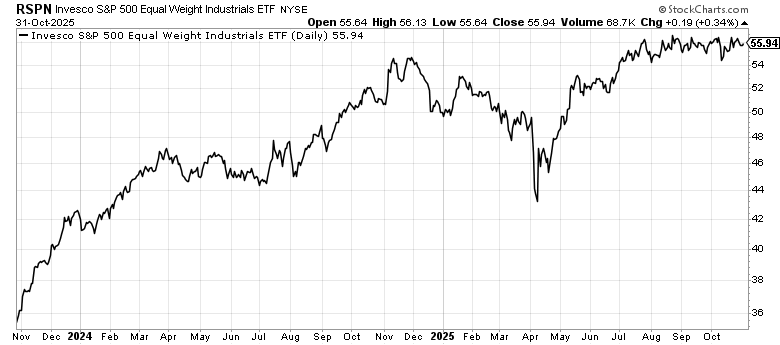
    Relative performance of high-beta to low-volatility stocks is improving, suggesting that risk appetite is increasing, albeit slowly. Equal weight Financials ETF has recovered well, although the loss of momentum is evident.

    So if this is not a dead cat bounce, then we need to have some positive catalyst to drive risk appetite. Besides a re-calibration of tariffs, there should be a shift in focus to tax cuts and de-regulations. For now, investors must be prepared for a significant probability of a period of market weakness.

  • How Investors Should View The Current Stock Market Weakness

    US stocks managed to close up on Friday, 14 March 2025. This is the first tentative sign of a bottom, as taking a bullish position over the weekend – where many tweets can be made – is brave for traders. Unlike investors, traders in the current environment want to see bullish news, rather than look forward to bullish factors like tax cuts and de-regulation.

    It is notable that the cyclical and technology ETFs have made the strongest recovery on Friday.

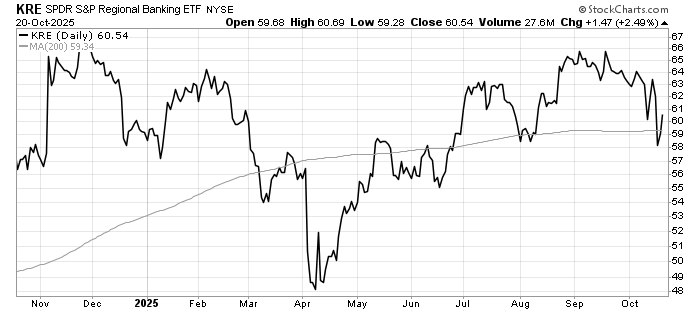
    Semiconductors were up 3.27% while Banks rose 2.98%. Markets are oversold, with the RSI below 30 for the S&P 500. We could see some further recovery on Monday, if the news on retail sales and the NAHB housing market index is well received.

    For investors, it is important that the long term drivers of the bull market remain intact. Tax cuts and de-regulation remain on track. These are necessary to counter the pain inflicted by tariffs.

    Still, the technical damage has to be repaired. We will need to see cyclical sectors leading the recovery. We need to have a recovery in market breadth. Like in Q3 of 2023, there were significant concerns about the economy and the S&P500 tanked 10%. Currently the damage is about 10%. A broad based recovery will be a good indicator of the current sell off is just a correction, and not something more sinister.

  • The Real Deal On Steel And Aluminium Tariffs

    The recently imposed 25% tariffs on imported steel and aluminum are not expected to significantly raise car prices in the U.S., contrary to headlines. The American automotive industry relies more on domestic production of these metals than imports. Here are the key reasons:

    1. High Domestic Sourcing:
    – A significant portion of steel used by U.S. automakers is sourced domestically. For instance, Ford sources 90% of its steel from within the U.S., with only 10% coming from imports, primarily from Canada[4][5].
    – Similarly, much of the aluminum used by automakers is produced domestically or imported from Canada, which has historically been a major supplier (70% of primary aluminum imports)[1][2].

    2. Limited Exposure to Tariffs:
    – Since most steel and aluminum used in auto manufacturing is domestically produced or sourced from North America, the impact of tariffs on imported materials is relatively limited for automakers like Ford, General Motors, and Stellantis[4][6].
    – Even when imports are used, they often constitute a small percentage of total material consumption.

    3. Localized Supply Chains:
    – The U.S. automotive industry has well-established domestic supply chains for raw materials like steel and aluminum, reducing dependency on global imports[1][2].

    While the tariffs may lead to some price increases due to market speculation and higher costs for suppliers who rely on imports, the direct impact on car prices is expected to be minimal because of the industry’s reliance on domestic raw materials.

    Sources
    [1] Regional analysis of aluminum and steel flows into the American … https://css.umich.edu/publications/research-publications/regional-analysis-aluminum-and-steel-flows-american-automotive
    [2] Regional analysis of aluminum and steel flows into the American … https://onlinelibrary.wiley.com/doi/10.1111/jiec.13268
    [3] Automakers brace for higher costs as steel and aluminum tariffs kick in https://www.npr.org/2025/03/12/nx-s1-5325933/steel-aluminum-tariffs-autos
    [4] Trump steel, aluminum tariffs likely to drive up car costs, industry … https://apnews.com/article/trump-tariffs-automakers-cars-steel-c002e25a597b8936dae7de111e6653f1
    [5] Tariffs on steel, aluminum likely mean higher costs for auto industry https://www.automotivedive.com/news/tariffs-trump-steel-aluminum-automotive/739872/
    [6] Trump steel, aluminum tariffs likely to drive up car costs, industry https://business.inquirer.net/506204/trump-steel-aluminum-tariffs-likely-to-drive-up-car-costs-industry
    [7] The U.S. Automotive Industry Supply Chain – Boise State University https://www.boisestate.edu/cobe/blog/2025/02/the-u-s-automotive-industry-supply-chain-challenges-and-transformations/
    [8] How will US import tariffs affect the auto industry? https://atradiuscollections.com/uk/knowledge-and-research/news/how-will-us-import-tariffs-affect-the-auto-industry