The US midterm elections on 3 November could dramatically change the balance of power in Washington. They may change much less for investors.
That sounds counter-intuitive. A Democratic takeover of Congress would severely restrict President Trump’s ability to pass legislation, while a Republican victory would preserve his control of both chambers. Yet many of the policies that have mattered most to markets during his second term — tariffs, immigration enforcement, sanctions, regulation and foreign policy — do not disappear simply because Congress changes hands.
This is the distinction investors should keep in mind before election night. The midterms are more likely to change how Trump governs than what his administration is trying to achieve.
Where the result could matter much more is fiscal policy. A Republican Congress would give Trump greater scope to spend, potentially adding to deficits and upward pressure on Treasury yields. A divided Congress would make new spending harder but increase the risk of shutdowns and debt-ceiling fights. Democratic control of both chambers would impose the strongest constraint on the administration, particularly through investigations and blocked appointments, but still leave many of Trump’s executive powers intact.
For investors, therefore, the key question is not simply whether Congress turns red or blue. It is what the election does to government borrowing, Treasury yields and eventually the cost of capital.
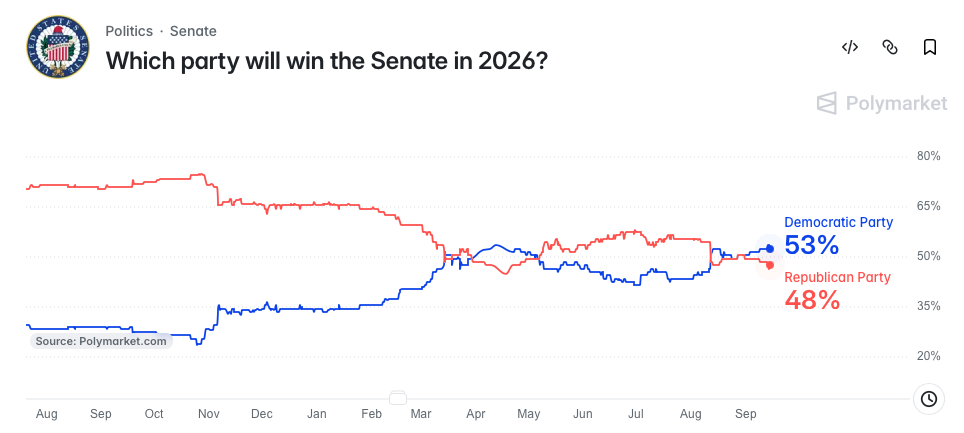
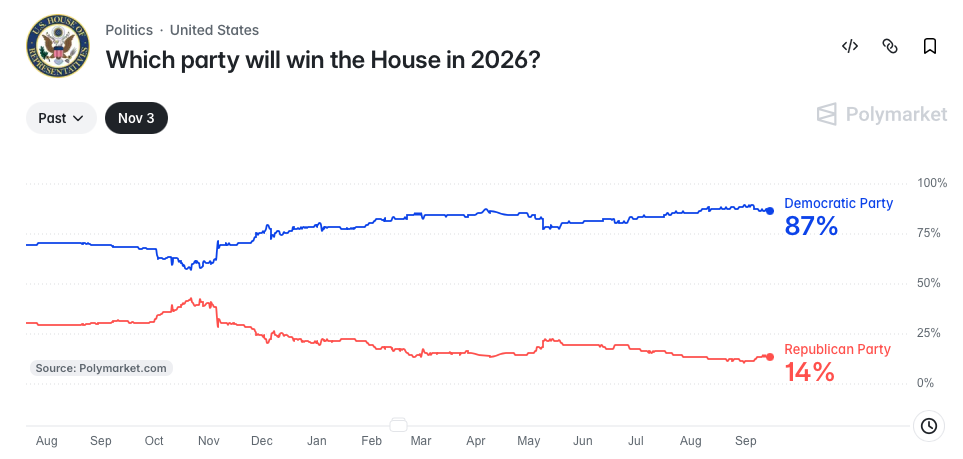
Republicans hold both chambers: the cleanest political outcome may not be the cleanest market outcome
If Republicans retain both the House and Senate, Trump would face the fewest political constraints.
Republicans would continue to control congressional committees, limiting the scope for hostile investigations into the administration. More importantly, control of the Senate would allow the White House to continue filling judicial, Cabinet and regulatory positions with relatively little obstruction.
It would also give Republicans their best chance of passing further fiscal measures, although narrow majorities would still limit how ambitious they could be.
This is where the investment implications become less straightforward.
A Republican victory would probably be seen initially as a continuation of the existing policy regime: more defence spending, a relatively supportive environment for conventional energy and a generally pro-business regulatory stance. That could favour defence, energy and parts of the financial sector.
But more spending would come at a time when the US fiscal position is already weak and Treasury borrowing needs are high. Continued Republican control could raise expectations of additional fiscal spending. If that translates into larger deficits and more Treasury issuance, bond investors may demand higher yields to absorb the extra supply.
So the apparently most stable political result could also be the outcome that puts the greatest upward pressure on long-term bond yields.
That matters because the problem would not stop with bonds. Higher Treasury yields raise borrowing costs across the economy and increase the discount rate investors use to value future earnings. The effect would be felt most by expensive, long-duration assets.
In short: Republican control could be positive for selected sectors while still creating a tougher backdrop for the wider market through higher yields.
Republicans hold the Senate but lose the House: less spending, more confrontation
A Democratic House with a Republican Senate would create a very different set of risks.
The most immediate change would be greater scrutiny of the administration. Democrats would control House committees and gain much more scope to hold hearings, issue subpoenas and investigate the White House, federal agencies and politically sensitive industries.
That would create more political noise, but it would not necessarily change the direction of economic policy.
The Republican-controlled Senate would still be able to confirm many Trump nominees. More importantly, the White House would retain substantial control over trade policy, sanctions, immigration enforcement, regulation and foreign policy.
What would change most is the ability to pass new legislation.
A divided Congress would make additional fiscal packages much harder. That could reduce some of the upward pressure on deficits compared with a Republican sweep. But the trade-off would be a greater risk of budget disputes, government shutdowns and eventually another fight over the debt ceiling.
A government shutdown occurs when Congress fails to approve funding for federal agencies. The debt ceiling is different: it is the legal limit on how much the government can borrow. Both can become bargaining tools when control of Washington is divided.
For markets, this matters because political gridlock can produce short bursts of volatility even when the underlying economy remains intact.
This is therefore not necessarily a bearish scenario. In fact, investors could initially welcome the reduced likelihood of additional fiscal spending if it helps contain Treasury yields. The risk is that periodic budget battles become increasingly disruptive.
The investment trade-off is fairly clear: less fiscal expansion, but more fiscal brinkmanship.
Democrats win both chambers: maximum political constraint, but limited policy reversal
A Democratic sweep would represent the biggest change in Washington, but probably a smaller change in economic policy than the headlines suggest.
Democrats would control both congressional chambers and gain significantly more power to investigate the administration. A Democratic Senate could also slow or block Trump nominees to the courts, Cabinet and regulatory agencies.
This would be the scenario where confirmation gridlock becomes a real issue.
Yet Trump would still be president.
That matters because Democrats would not be able to simply replace the administration’s economic policies with their own. Trump could veto legislation, while overriding a presidential veto requires a two-thirds majority in both chambers — something neither party is realistically likely to have.
The result would therefore be less a Democratic policy agenda than a political stalemate.
Congress could block or reshape spending proposals. It could make appointments more difficult. It could increase oversight of sectors such as financial services, private equity, digital assets, health care and energy.
But many of the White House’s most market-relevant tools would remain intact.
Tariffs can still be pursued under existing trade laws. Sanctions and foreign-policy measures remain largely under executive control. Immigration enforcement and many regulatory decisions would continue to sit with the administration.
This is why investors should be careful about describing a Democratic sweep as a wholesale reversal of the Trump agenda. It would constrain the administration, sometimes significantly, but it would not replace it.
The main market risk would again come through fiscal confrontation. With Democrats controlling Congress and Trump retaining veto power, budget negotiations could become more difficult and shutdown risks more frequent.
So although this would be the largest political change of the three scenarios, it may not produce the largest economic change.
What actually matters for investors
A Republican sweep raises the possibility of more fiscal spending and higher Treasury yields.
A split Congress reduces the chance of major new spending, but increases the risk of shutdowns and debt-ceiling battles.
A Democratic Congress creates the greatest constraint on the administration, but may leave much of Trump’s existing executive policy framework intact.
This also explains why the market reaction may not follow the political headlines.
If Republicans win and bond yields rise sharply because investors expect more borrowing, equities may struggle even though the result is viewed as pro-business.
If Democrats take Congress and Treasury yields fall because markets expect less fiscal expansion, parts of the equity market could actually benefit despite the political uncertainty.
While the election result matters, it is how bond markets react that may matter more.
Leave a Reply