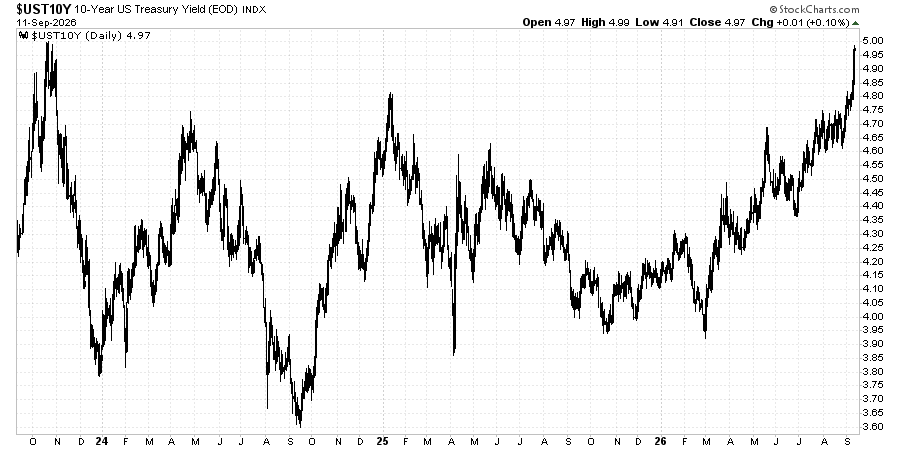
It was a mixed, uneasy week. Equities staged a broad rally on Friday, but that came after a broad decline through the week, so the net picture is closer to “pause and regroup” than genuine strength. The dominant story underneath the surface is rising bond yields — the 10-year US Treasury yield closed at 4.97% on Friday 11 September — pulling credit and duration-sensitive assets lower even as headline equity indices bounced.
TOP THEMES THIS WEEK
1. AI spending is now a bond market story, not just a tech story. Big US technology firms have borrowed over $600 billion globally to fund data centre construction, and are increasingly issuing debt in Europe (sterling, euro, Swiss franc bonds) to avoid overcrowding the US market. This matters because it’s pushing up US borrowing costs to the point where large Asian technology firms (TSMC, SK Hynix) can now borrow more cheaply than US giants like Amazon and Meta — a genuine shift in who the market sees as the safer credit.
2. Government bond yields are climbing toward levels that worry equity investors. The US 10-year yield is approaching 5% and the 30-year is trading around 5.25%, and analysts increasingly expect inflation to settle nearer 3% than the 2% central banks target, due to structural pressures like ageing populations and energy costs. This matters because higher long-term yields make future company profits worth less in today’s money, which is the main channel through which rising rates eventually weigh on share prices.
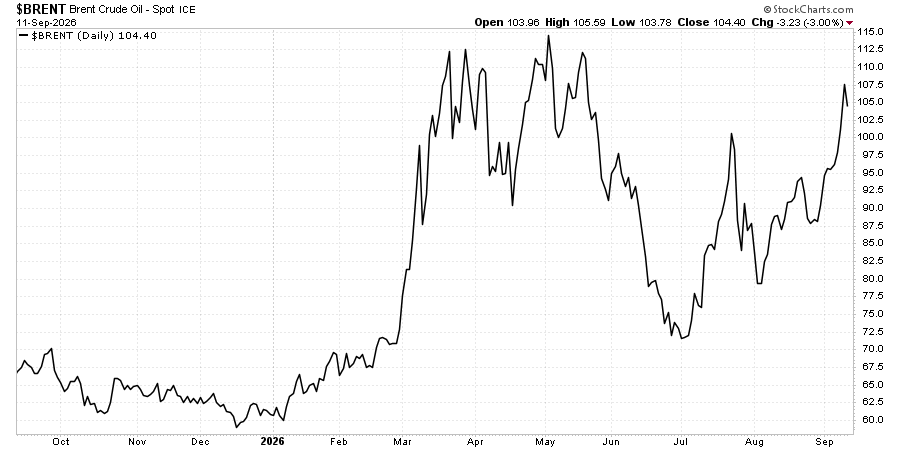
3. The US-Iran conflict is keeping energy prices elevated and feeding into inflation. Fighting in the Strait of Hormuz has disrupted Qatari gas exports and pushed oil prices above $100 a barrel, and this is showing up directly in US inflation data — a hotter-than-expected August inflation reading was reported this week, with energy costs a key driver. This matters because it is one of the clearest links between a geopolitical event and the interest rate decisions markets now expect from the Federal Reserve.
4. Chinese open-source AI models are winning the adoption race on cost. Models from firms like Moonshot and DeepSeek now account for over 60% of monthly usage on the developer platform OpenRouter and over 40% of downloads on Hugging Face, with US companies including DoorDash and Airbnb adopting them to cut costs by as much as 90%. This matters because it directly challenges the assumption that US firms hold a clear lead in commercial AI, and puts pressure on the pricing power of US model providers.
WATCH THIS NEXT WEEK
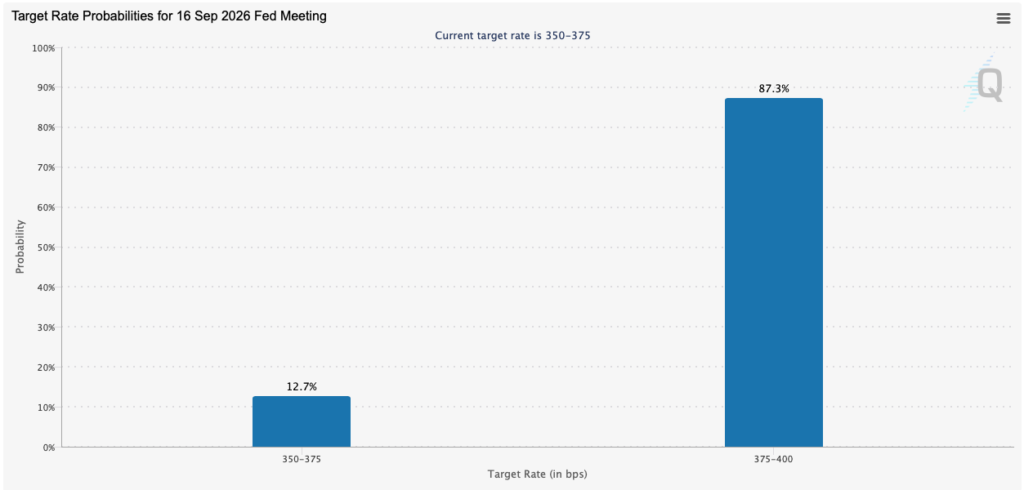
The Federal Reserve’s meeting on 15–16 September, with the rate decision due Wednesday 16 September at 2:00pm US time. This is not a routine meeting: the Fed held rates steady in July on a divided 9-3 vote, and market pricing for a rate increase (not a cut) has risen sharply since — from around 66% in late August to 87% yesterday after this week’s hot inflation data. A hike would be the first rise in this cycle, driven largely by energy-cost pressure from the Iran conflict, and would land directly on top of a bond market that is already under strain. How the Fed frames this decision — and whether it signals more increases to come — will likely set the tone for markets into October.
Leave a Reply