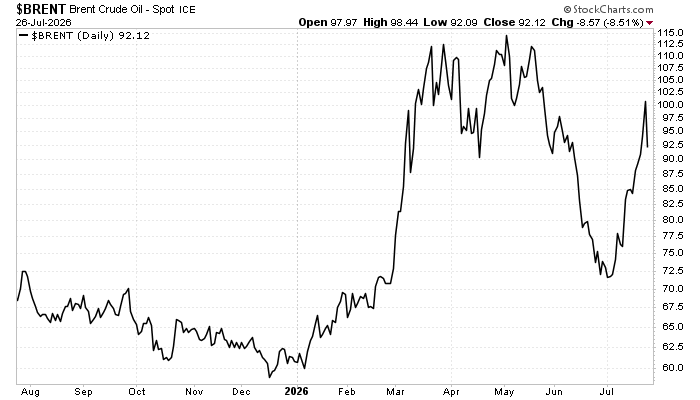
Markets sent mixed signals this week rather than moving as one. US shares lagged, led down by big technology names, while government bond yields stayed high and gold and the US dollar both firmed — a combination that doesn’t fit neatly into either a “risk-on” or “risk-off” box. Oil prices, which had rallied hard through the month on Middle East tensions, reversed sharply in the final days of the week.
TOP THEMES THIS WEEK
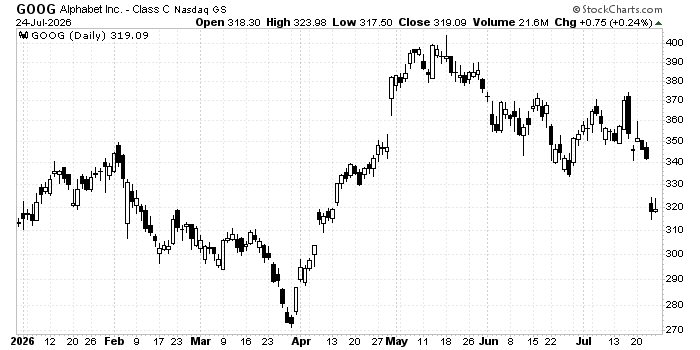
1. The cost of the AI build-out is starting to worry investors. Alphabet (Google’s parent company) raised its planned 2026 spending on AI infrastructure to between $195 billion and $205 billion, and investors reacted badly, seeing $200 billion as a level the company shouldn’t cross. This matters because it signals a shift in mood: investors are no longer giving technology companies a free pass on spending and want to see this money turning into actual profit, not just rising costs.
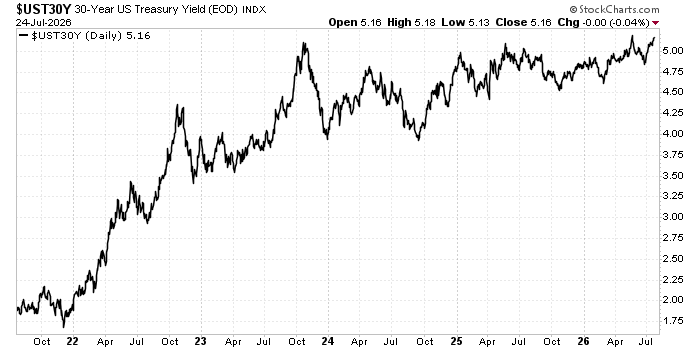
2. Government bond yields remain uncomfortably high, and “bond vigilantes” are back in the conversation. The US 30-year government bond yield has stayed above 5% for its longest run since 2007, and annual US interest payments have now passed $1 trillion a year. This matters because higher long-term borrowing costs make it more expensive for governments and companies to borrow, and can act as a drag on share prices by giving investors an attractive, safer alternative to equities.
3. The US-Iran conflict pushed oil and bond yields higher through the week — but oil turned sharply by Friday.Renewed fighting between the US and Iran drove a rebound in oil prices and further selling of US government bonds earlier in the week, but Brent crude fell 4.7% and petrol prices fell 3.3% by week’s end, unwinding a chunk of the month’s gains. This matters because oil is the clearest read on how seriously markets are pricing the conflict — a genuine cooling in prices would suggest markets see the risk easing, but this could just as easily reverse if the situation flares up again.
4. Private credit funds are quietly tightening access to investor cash. A number of private credit funds have been forced to cap withdrawals after a surge in redemption requests, and many are dropping the “easy access” language they used to market these funds. This matters because it’s a reminder that private credit, often sold to clients as flexible and low-risk, can become harder to exit precisely when investors most want their money back.
WATCH THIS NEXT WEEK
Oil prices. Given how much of this month’s move was tied to the Iran conflict, the sharp reversal in Brent and petrol prices on Friday is the single most useful signal heading into next week. If the reversal holds, it suggests markets are starting to price in some de-escalation. If it snaps back higher, it confirms the conflict is still the dominant driver of markets, and inflation and interest rate expectations will likely follow oil higher with it.
INVESTMENT IMPLICATIONS
This week’s news reinforces that two separate pressures are building on markets at once: elevated government bond yields that make borrowing more expensive and give investors a real alternative to shares, and a technology sector facing tougher questions about whether its enormous AI spending is paying off. Neither of these resolved this week, and both are worth watching closely rather than treating as background noise. On the geopolitical side, oil remains the cleanest gauge of how seriously the market is taking the Iran conflict, and its next move will say more than any headline will.
Leave a Reply