Author: admin

  • Market Wrap For The Week Ending 28 March 2025

    US Economic data is poor.

    Consumer confidence fell again, lowest level in 2 years based on the Michigan consumer sentiment index.

    PCE came in higher than expected. Fostering the case for sticky inflation.

    More tariff uncertainties, with a new 25% tariffs on all auto imports.

    Stock markets fell hard on Friday, Wall Street banks are lowering S&P 500 forecast. Optimism is in short supply.

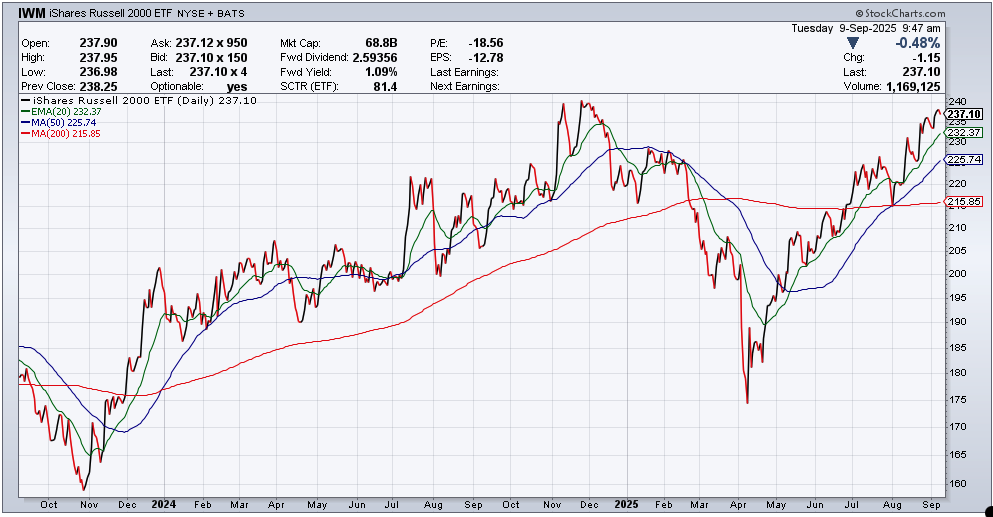
    Setup for a bottom?

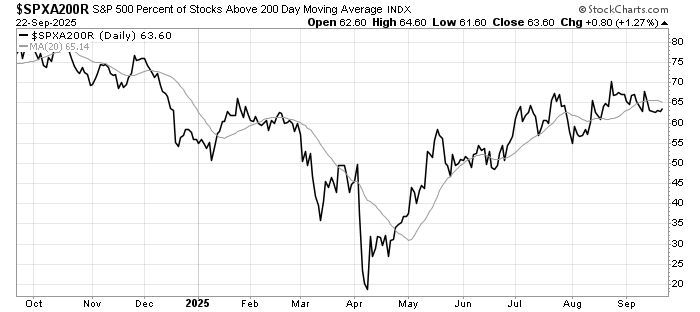
    On a cautionary note, the longer stocks remain below the 200dMA, the higher the risk of a bear market materialising.

  • Europe Set To Outperform

    After years of underperforming the US, European stocks are set to outperform as Trump forces Europe to borrow and spend.

  • Market Wrap For The Week Ending 21 March 2025

    US Economy

    US housing starts rebounded, up 11.2% in February. Industrial production gained 0.7% on month while retail sales rose 3.1%.

    Sentiment among homebuilders remain weak, with the NAHB housing market index slipping to 39.

    The biggest event was probably the FOMC meeting, where rates were left unchanged but FOMC participants raised inflation targets and lowered economic growth projections.

    US Markets

    It is important to note that financial markets reacted positively to the release of the FOMC’s projections. US stocks were up and yields were down. This could possibly signal that financial markets have priced in a slower economic growth and higher inflation environment.

    US stocks are still trying to recover from the mid-February sell off. While there is no all clear signal, there are some encouraging signs.

    Relative performance of high-beta to low-volatility stocks is improving, suggesting that risk appetite is increasing, albeit slowly. Equal weight Financials ETF has recovered well, although the loss of momentum is evident.

    So if this is not a dead cat bounce, then we need to have some positive catalyst to drive risk appetite. Besides a re-calibration of tariffs, there should be a shift in focus to tax cuts and de-regulations. For now, investors must be prepared for a significant probability of a period of market weakness.

  • How Investors Should View The Current Stock Market Weakness

    US stocks managed to close up on Friday, 14 March 2025. This is the first tentative sign of a bottom, as taking a bullish position over the weekend – where many tweets can be made – is brave for traders. Unlike investors, traders in the current environment want to see bullish news, rather than look forward to bullish factors like tax cuts and de-regulation.

    It is notable that the cyclical and technology ETFs have made the strongest recovery on Friday.

    Semiconductors were up 3.27% while Banks rose 2.98%. Markets are oversold, with the RSI below 30 for the S&P 500. We could see some further recovery on Monday, if the news on retail sales and the NAHB housing market index is well received.

    For investors, it is important that the long term drivers of the bull market remain intact. Tax cuts and de-regulation remain on track. These are necessary to counter the pain inflicted by tariffs.

    Still, the technical damage has to be repaired. We will need to see cyclical sectors leading the recovery. We need to have a recovery in market breadth. Like in Q3 of 2023, there were significant concerns about the economy and the S&P500 tanked 10%. Currently the damage is about 10%. A broad based recovery will be a good indicator of the current sell off is just a correction, and not something more sinister.

  • The Real Deal On Steel And Aluminium Tariffs

    The recently imposed 25% tariffs on imported steel and aluminum are not expected to significantly raise car prices in the U.S., contrary to headlines. The American automotive industry relies more on domestic production of these metals than imports. Here are the key reasons:

    1. High Domestic Sourcing:
    – A significant portion of steel used by U.S. automakers is sourced domestically. For instance, Ford sources 90% of its steel from within the U.S., with only 10% coming from imports, primarily from Canada[4][5].
    – Similarly, much of the aluminum used by automakers is produced domestically or imported from Canada, which has historically been a major supplier (70% of primary aluminum imports)[1][2].

    2. Limited Exposure to Tariffs:
    – Since most steel and aluminum used in auto manufacturing is domestically produced or sourced from North America, the impact of tariffs on imported materials is relatively limited for automakers like Ford, General Motors, and Stellantis[4][6].
    – Even when imports are used, they often constitute a small percentage of total material consumption.

    3. Localized Supply Chains:
    – The U.S. automotive industry has well-established domestic supply chains for raw materials like steel and aluminum, reducing dependency on global imports[1][2].

    While the tariffs may lead to some price increases due to market speculation and higher costs for suppliers who rely on imports, the direct impact on car prices is expected to be minimal because of the industry’s reliance on domestic raw materials.

    Sources
    [1] Regional analysis of aluminum and steel flows into the American … https://css.umich.edu/publications/research-publications/regional-analysis-aluminum-and-steel-flows-american-automotive
    [2] Regional analysis of aluminum and steel flows into the American … https://onlinelibrary.wiley.com/doi/10.1111/jiec.13268
    [3] Automakers brace for higher costs as steel and aluminum tariffs kick in https://www.npr.org/2025/03/12/nx-s1-5325933/steel-aluminum-tariffs-autos
    [4] Trump steel, aluminum tariffs likely to drive up car costs, industry … https://apnews.com/article/trump-tariffs-automakers-cars-steel-c002e25a597b8936dae7de111e6653f1
    [5] Tariffs on steel, aluminum likely mean higher costs for auto industry https://www.automotivedive.com/news/tariffs-trump-steel-aluminum-automotive/739872/
    [6] Trump steel, aluminum tariffs likely to drive up car costs, industry https://business.inquirer.net/506204/trump-steel-aluminum-tariffs-likely-to-drive-up-car-costs-industry
    [7] The U.S. Automotive Industry Supply Chain – Boise State University https://www.boisestate.edu/cobe/blog/2025/02/the-u-s-automotive-industry-supply-chain-challenges-and-transformations/
    [8] How will US import tariffs affect the auto industry? https://atradiuscollections.com/uk/knowledge-and-research/news/how-will-us-import-tariffs-affect-the-auto-industry

  • Market Wrap for the Week Ending 7 March 2025

    US economic risk now higher.

    The risk of a U.S. recession has increased compared to two weeks ago, based on recent economic indicators and forecasters:

    Morgan Stanley and Goldman Sachs have both revised their U.S. GDP growth forecasts downward for 2025, citing factors such as tariffs and inflationary pressures. Goldman Sachs also raised its 12-month recession probability to 20% from 15%. Meanwhile, the Atlanta Federal Reserve’s model predicts negative GDP growth for Q1 2025, signalling a potential contraction.

    The reason for the negative print was a sharp increase in imports, which subtracted significantly from GDP. Specifically, imports surged by 29.7%, leading to a -3.72% impact on GDP. This spike was largely attributed to businesses stockpiling goods ahead of anticipated tariffs, which inflated import levels temporarily.

    Prediction markets have raised the probability of a 2025 recession to 40%, up sharply in recent weeks. Financial market models from JPMorgan and Goldman Sachs also show increasing recession probabilities, with JPMorgan’s market-implied risk climbing to 31% from 17% in November.

    Consumer and Business Sentiment: Consumer confidence has declined, with the Conference Board’s Expectations Index falling below recession-warning levels for the first time in eight months. Business uncertainty related to tariffs is also starting to show up in the surveys but the ISM PMIs remain resilient for now. Services PMI for February came in at 53.5, higher than the previous 52.8. Manufacturing slipped to 50.3 from 50.9

    Overall, these factors suggest that the likelihood of a U.S. recession has risen over the past two weeks. With US stock markets richly valued, investors are right to be jittery. How markets recover from the sell off over the next few weeks will be crucial to the longer term outlook.


  • Market Wrap for the Week Ending 7 Feb 2025

    1. U.S. Tariffs and Rising Trade Tensions

    – The U.S. announced new tariffs, including 25% duties on steel and aluminum imports, targeting key trade partners such as the EU, China, India, and Brazil.
    – While these measures raised concerns over escalating trade tensions, temporary exemptions were granted to Mexico and Canada, offering some relief.

    2. U.S. Economic Data

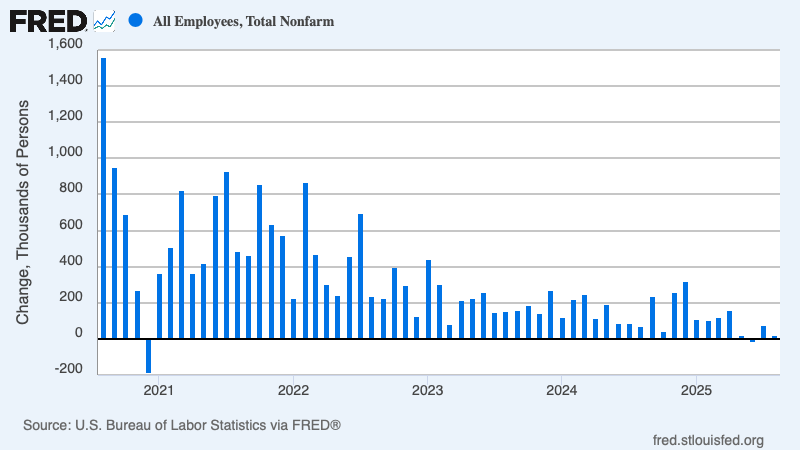
    – Jobs Report: The U.S. added 143,000 jobs in January, below the expected 175,000. However, upward revisions for prior months and a slight drop in unemployment to 4.0% signaled continued labor market resilience.
    – Inflation Concerns: The University of Michigan reported one-year inflation expectations at 4.3%, the highest since late 2023, raising concerns about persistent price pressures.

    3. Corporate Earnings – A Mixed Bag

    So far, 62% of S&P 500 companies have reported their Q4 2024 earnings. Of these, 77% have beaten earnings per share (EPS) estimates—matching the 5-year average but slightly above the 10-year average of 75%. On average, earnings have come in 7.5% higher than expected, which is lower than the 5-year average of 8.5% but better than the 10-year average of 6.7%. The historical averages are based on results from all 500 companies, not just those that have reported so far. (Factset)


    U.S. Financial Market Performance

    Major Indexes (Week Ending February 9, 2025)
    – S&P 500: -0.24%
    – Nasdaq 100: +0.06%
    – Dow Jones: -241 points (-0.7%)

    Sector Highlights
    – Technology: Volatile due to concerns over trade restrictions and AI competition.
    – Energy: Declined as oil prices fell for a third consecutive week.

    Fixed Income & Commodities
    – Treasury Yields: Held steady despite market turbulence.
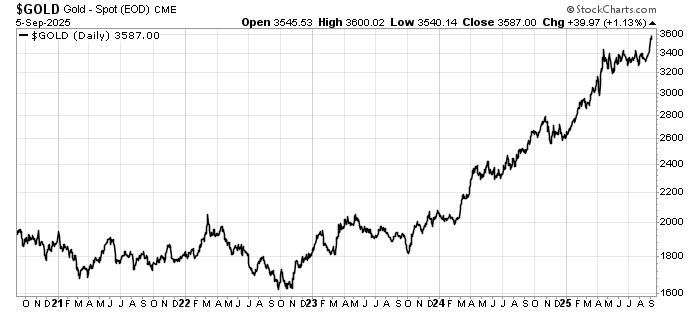
    – Gold: Gained for the sixth straight week (+1.2%) as investors sought safe-haven assets amid trade uncertainty.

    Developments in China

    1. China’s Retaliatory Trade Measures

    – China responded to U.S. tariffs with its own levies (10%-15%) on American goods, including coal, LNG, crude oil, machinery, and vehicles.
    – Beijing also imposed export controls on critical minerals like tungsten, tellurium, and bismuth, citing national security concerns.
    – U.S. companies PVH Group (Calvin Klein, Tommy Hilfiger) and Illumina Inc. were added to China’s “Unreliable Entity List,” restricting their operations in the country.
    – China launched an antitrust investigation into Google and filed a complaint with the WTO against the U.S.’s trade policies.

    2. Economic Stimulus Measures and Data

    Despite trade tensions, China’s economy showed signs of stabilization, helped by monetary easing and support for the property sector.

    Key Economic Indicators:
    – Inflation: Consumer prices rose 0.5% year-over-year in January, driven by Lunar New Year spending. This marks the first acceleration in inflation since August 2024.
    – Producer Prices: PPI fell 2.3% year-over-year, extending its streak of industrial deflation to 28 months.
    – Credit Growth: New yuan loans totaled CNY 990 billion in January, with total social financing reaching CNY 2.86 trillion.
    – Vehicle Sales: Surged 10.5% year-over-year, signaling a rebound in demand for durable goods.
    – Caixin Services PMI: Fell to 51.0 in January (from 52.3 in December), reflecting slower expansion in the services sector despite holiday-related boosts.


  • Market Wrap for the Week Ending 17 Jan 2025

    American economic resilience remains intact

    A slew of economic data continues to indicate that the US economy remains in an expansionary mode. Industrial production, housing starts, and retail sales all improved. Continuing jobless claims fell, signalling the ongoing resilience of the labour market. The Atlanta Fed’s GDPNow is at a strong 3% for Q4 2024.

    Earnings update: Financials are strong

    US banks reported bumper results for Q4. The level of optimism is also high. This raises the odds of a sustainable economic expansion as credit flows through the economy.

    Small businesses are more confident

    The NFIB index rose again. The turnaround in confidence is not a knee jerk reaction to a Trump win. It appears that small business owners expect positive change from the new administration, helping to boost business. Hiring and spending plans are likely to improve.

    Inflation concerns ease

    A slight improvement is enough to send sentimental higher. While core CPI beat estimates, CPI came in line with expectations. The Cleveland Fed’s Inflation Nowcasting continues to show low risk of inflation accelerating for Jan 2025.

  • Market Wrap for the Week Ending 10 Jan 2025

    Rocky start to the new year.

    S&P 500 is down 0.93% year to date, down about 4.5% from its last peak in mid-December.

    The biggest driver is the move in bond yields, with the UST10Y rising to 4.76% as  stronger than expected jobs report tamper expectations of a FED rate cut.

    How should investors think about this?

    In my opinion, investors ought to consider 1) if the FED does not cut rates anymore, will it lead to a bear market in stocks and an economic recession? 2) will a 4.7% or even 5% bond yield lead to a recession and bear market in stocks?

    Bond yields are rising because the US economy is not slowing down sufficiently. Non-farm payrolls for Dec came in at 256K versus expectations of 160K and the previous reading of 212K.The unemployment rate fell, from 4.2% to 4.1%. ISM Services PMI registered 54.1 versus expectations of 53.3 and the previous 52.1. The Atlanta FED’s GDPNow for real GDP growth is 2.7%.

    The US economy did fine in 2023 and 2024 when the 10Y rate was ranging between 3.5% and 5%. Unless we see signs that the yield is breaking above the 5% range, it is not time to worry about the impact of higher rates on the economy.

    Still, investors should respect the signals generated by markets. For now, despite the weakness in market breadth and a correction in the index, the broad trend remains up so long as the 50dMA is trading above the 200dMA.

    The drivers of US economic growth remains unchanged and buyers should begin to emerge as both stocks and bonds provides an attractive entry point to enter.

  • Quick Guide To Our 2025 Investment Outlook

    As we look forward to 2025, the global investment landscape is filled with both exciting opportunities and potential challenges. The U.S. economy stands out for its resilience, buoyed by strong consumer spending, technological advancements, and supportive monetary policies. In contrast, China faces a more subdued outlook due to external pressures like U.S. tariffs.

    The U.S. economy is expected to grow between 2% and 2.5% in 2025. This growth is driven by:
    – Consumer Spending: Americans are continuing to spend, which supports businesses and overall economic health.
    – Technological Innovation: Artificial intelligence (AI) is a major growth engine, with spending projected to reach $200 billion by 2025. Both large corporations and small businesses are leveraging AI to boost productivity.
    – Robust Labor Market: Although unemployment has risen slightly to 4.2%, job creation remains strong across various industries.

    With a Republican administration likely taking office in 2025, we can expect a focus on tax cuts and deregulation. These measures could create a more business-friendly environment, stimulating investment and boosting consumer confidence.

    While inflation has moderated to around 2.3%, risks of a resurgence remain due to supply chain issues and strong consumer demand. The Federal Reserve will need to carefully manage monetary policy to balance inflation control with economic growth.

    China’s GDP growth is projected to dip below 5% in 2025, primarily due to external pressures like potential tariff increases from the U.S. The Chinese government is responding with increased fiscal support, but significant economic recovery may take time.

    China’s property market continues to struggle, with state developers faring better than private ones. A full recovery in property sales and prices is not expected until at least mid-2026.

    The fixed income market will face challenges in 2025 as inflation risks could prompt the Federal Reserve to adjust interest rates unexpectedly. Investors should keep an eye on inflation trends, as they will significantly influence bond yields and market conditions.

    Gold is likely to perform well in 2025 due to safe-haven demand amid geopolitical uncertainties. In contrast, energy markets may remain subdued despite ongoing tensions in the Middle East.

    The U.S. dollar is expected to stay strong thanks to solid economic fundamentals and favourable interest rate differentials compared to other currencies.

    Geopolitical tensions, particularly in the Middle East and Ukraine, continue to pose risks but have not significantly affected global financial markets so far. Investors should remain alert to these developments as they could impact market stability.

    The U.S. stock market appears poised for a strong year ahead, with broad participation across sectors. Despite high valuations, robust earnings growth suggests that the market could continue its upward trend in 2025.

    As we head into 2025, the outlook for U.S. equities is generally positive, but it’s important for investors to stay vigilant about potential risks that could disrupt this environment. Monitoring economic indicators, geopolitical developments, and changes in monetary policy will be crucial for making informed investment decisions.