Author: admin

  • Market Wrap for the Week Ending 8 Nov 2024

    US Election:

    Looks like it’s a sweep by the Republicans and equity markets are loving it.

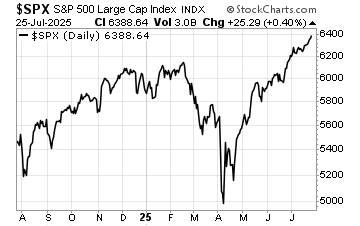
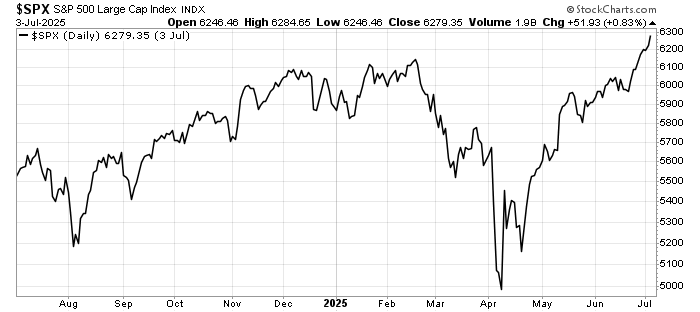
    S&P 500 is up to new highs and market breadth is solid (equal weighted index is also up to new highs). The past five trading days show broad rallies, not just the tech sector, but also industrials (+6%) and financials (+5%).

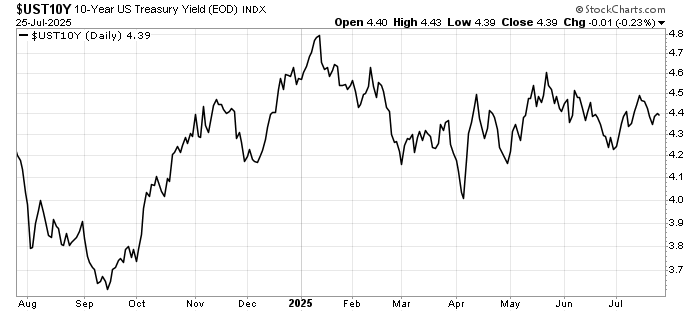
    US bond yields are rising sharply. Should investors be concerned?

    The fear that Trump may push the deficit higher is sending bond yields higher. Or could it be the result of unwinding the “hard landing” trade. After all, the US economy is doing very well of late, according to the IMF. Nonetheless, we still need to watch how the 10Y yield is behaving.

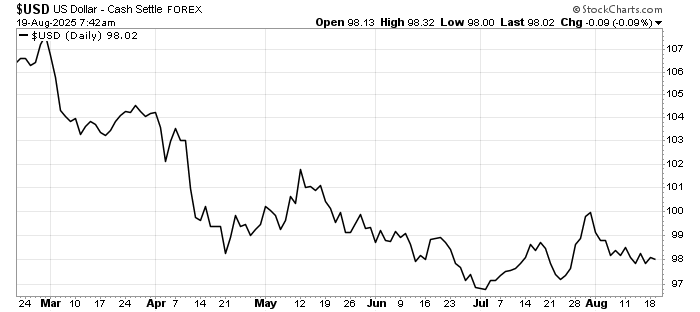
    USD is rising – certain US assets are still attractive.

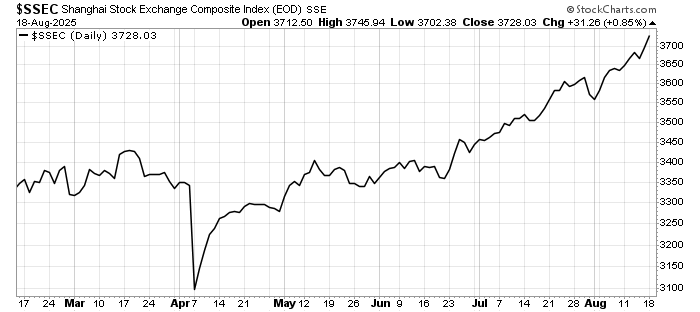
    Stocks are a definitely an attractive asset for investors. US stocks are up 26% YTD while international markets are way behind, with the exception of China (super volatile and dependent on bazookas) and Taiwan (thanks to TSMC AI near-monopoly)

    Geo-politics – Pro-Isreal, Pro-America

    With the return of Trump, we could see less globalisation and more pro-America policies. This should favour American equities over international equities, worsening the underperformance of non-US equities relative to US stocks. In this context, overweighting US equities makes sense, despite the high valuation in US stocks. Of course, this works under the assumption that the economy continues to grow and interest rates are not going up. If signs emerge that the FED is thinking of raising rates or long term rates start to go beyond 4.6%, a new strategy is probably required.


  • Market Wrap for the Week Ending 11 Oct 2024

    China disappoints or investors’ hopes misplaced?

    China’s government failed to boost its economy over the past week, disappointing investors. After a week-long holiday, Chinese stocks jumped 11% on hopes for stimulus, but no new measures were announced. It subsequently lost 13% for the week, its worst drop since 2008.

    This writer remains skeptical that central bank easing and limited fiscal measures can fix China’s economy. It doesn’t make sense for China to endure the past three years of pain just to revert back to a debt driven growth model that is clearly no longer working. All China is doing is to prevent further slowdown in the economy. As for long term investment into Chinese stocks, a shift back toward capitalism (favouring private sector and foreign investors) would be needed to make it investable long-term.

    US inflation pressures remain

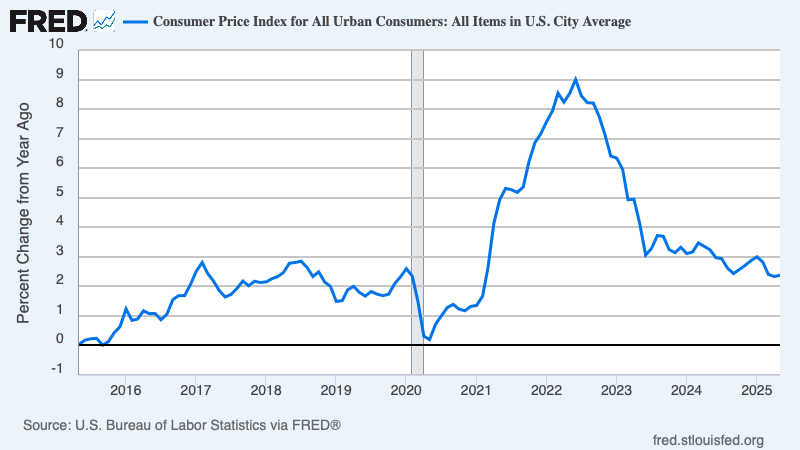
    According to Bloomberg, underlying US inflation rose more than forecast in September, representing a pause in the recent progress toward moderating price pressures. Investors need to taper down expectations of more rate cuts by the Federal Reserve as growth is strong and price pressures are not easing significantly.

    Middle East conflict update

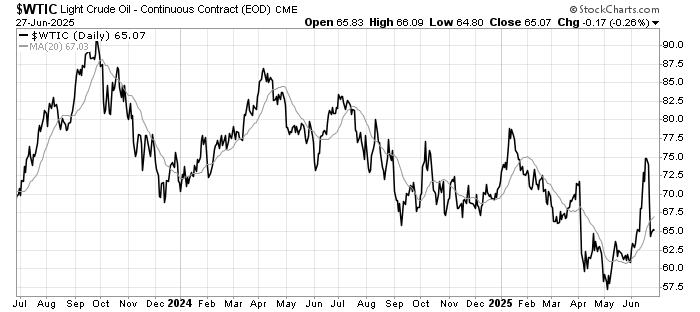
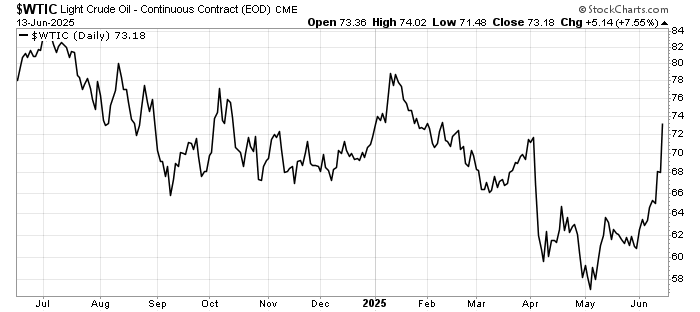
    Israel is still holding back on its retaliation on Iran. There has been a lot of chatter on the potential targets, oil and missiles facilities, giving Iran ample time to prepare. It is inconceivable that Israel has not planned before hand how it will retaliate should Iran attack them. This writer continues to believe that any strike on Iran will be surgical, as Israeli forces are already stretched in the North and the West. Note how oil prices are actually weak despite rising tensions. Also, Saudi Arabia and the UAE are noticeably quiet on this matter. The writer believes there is lots of diplomatic action behind the scenes to avert and all out war in the region.


  • Market Wrap for the Week Ending 4 Oct 2024

    US Blowout Employment Report:

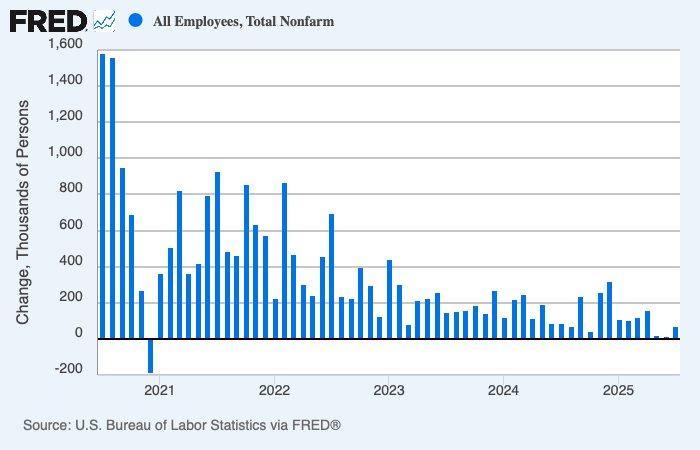
    The US added 254,000 jobs in September, surpassing expectations and lowering the unemployment rate to 4.1%. This stronger-than-anticipated job growth suggests that the Federal Reserve may need to keep interest rates higher for longer to avoid inflationary pressure.

    Citigroup Economic Surprise Index (CESI):

    The CESI has turned positive for the first time in five months, signaling that US economic data has consistently exceeded expectations recently. The soft landing scenario is becoming real, providing much needed support for equity investors.

    ISM Services PMI:

    The ISM Services PMI saw a significant rise, indicating continued growth in the services sector, which may further support the Fed’s “higher for longer” rate stance. Note that prices paid component is starting to swing higher.

    Middle East Escalation:

    Geopolitical tensions in the Middle East have escalated with Iran firing missiles, potentially adding to market volatility, particularly in oil prices. Although oil price climbed more than 5% since the attack, investors ought to note that oil prices are still trading within a range since the Hamas surprise attack on Israel last October.

    Chinese Stocks Rally:

    Chinese equities continue to rally alongside US stocks, though no concrete details on China’s fiscal stimulus plan have emerged. Expectations are high. A high level announcement on Tuesday can potentially disappoint or affirm the rally. The writer continues to take the view that Xi Jinping is not targeting the stock market but the economy. The goal to rein in leverage in the economy remains unchanged despite the need to prevent growth from falling below 5%. The near vertical ascent in Chinese equities makes a lot of assumptions about the scale of the measures that would be announced.


  • Market Wrap for the Week Ending 27 September 2024

    US economic revisions – GDP up 3% in Q2.

    Gross domestic product increased at an unrevised 3.0% annualized rate last quarter, the Commerce Department’s Bureau of Economic Analysis confirmed in its third estimate of second-quarter GDP.

    Gross Domestic Income, which measures economic activity from the income side, increased at a 3.4% rate last quarter, revised up from the initially estimated 1.3% pace. It rose at an upwardly revised 3.0% pace in the January-March quarter. GDI was previously reported to have increased at a 1.3% rate in the first quarter.

    This is affirmation that the US economy has stayed resilient despite high interest rates, defying the predictions of some bears that claim that the US was in fact already in a recession.

    The Atlanta FED GDPNow is forecasting Q3 GDP at 3.1%

    China big stimulus

    Xi Jinping chaired a politburo meeting and discussed economic matters. It was unusual as economic matters were traditionally discussed in April, July and December. That shows some sense of urgency as the 5% growth target seems out of reach. Importantly, boosting fiscal spending took a front seat in the read out. Still, we are awaiting details which will come out in the next few weeks. Nevertheless, investors are loving it, sending the CSI 300 up 15.7% for the week, the best performance since November 2008.

    The provision of some social security benefits to those who haven’t found a job after graduation is a policy U-turn. This should help arrest the decline in sentiment among the unemployed youths. The call for more quality jobs remains doubtful if businesses are not optimistic about the future and regulations continue to favour state enterprises.

    As for the property sector, the important policy improvement is central bank re-lending program, providing 100% of the principal. up from 60% previously. Lower mortgage rates and downpayment were also introduced. Can this help developers complete the unfinished properties, improve buyer confidence and arrest the price decline? Let’s wait for the evidence.


  • China Getting A Little Worried About Growth

    On Tuesday, 24th September 2024, the People’s Bank of China (PBOC) introduced major changes to its monetary policy aimed at boosting the economy. The central bank announced a 0.5% reduction in the reserve requirement ratio (RRR), which is the amount of cash banks must hold in reserve. This move will inject 1 trillion yuan ($142 billion) into the financial system, roughly 0.8% of China’s GDP.

    In addition, China will lower mortgage rates by 0.5%, including for existing borrowers, and reduce the downpayment requirement for second-home purchases from 25% to 15%, making it easier for buyers to enter the property market.

    To support the stock market, the PBOC will allow funds and brokers to access central bank funding to purchase stocks. A new swap facility will enable securities firms, funds, and insurance companies to obtain liquidity from the central bank to buy shares. There are also plans to offer special refinancing for listed companies and major shareholders to facilitate share buybacks.

    This comprehensive package of measures is designed to stimulate economic activity and stabilize the stock market.

    The bait has been set. Now, we wait for demand to bite.

    This writer has reasons to be doubtful that it will lead to a full fledge boom in the Chinese economy. Cheaper financing makes it easier for buyers of stock and property, on the condition that their prices DO NOT fall. If buyers do not expect prices to rise, why would they even buy with cheaper financing (although it makes it more palatable for those who have been instructed to do so). We have yet to see a turnaround in the fortunes of the property sector, where prices continue to fall. Ditto the stock market.

    So, in short, the measures are meant to arrest the slowdown in the Chinese economy. The writer still does not see a return to stellar growth for the economy, profits or the stock market. China is also not expected to sink deeper into lower growth territory.


  • Market Summary for the Week Ending 20 Sep 2024

    It was the most anticipated FED meeting in recent times. Even though FED chair set the stage for a rate cut at the Jackson Hole central banking symposium, markets and economic observers could not agree on the size of the cut – 25 or 50bp.

    Eventually we got 50bp, with one dissent. FED chair did make it clear that the path forward remains data dependent, i.e. the health of the labour market and barring any negative surprise from the inflation front. Markets took another day to digest the news, sending stocks up across the board.

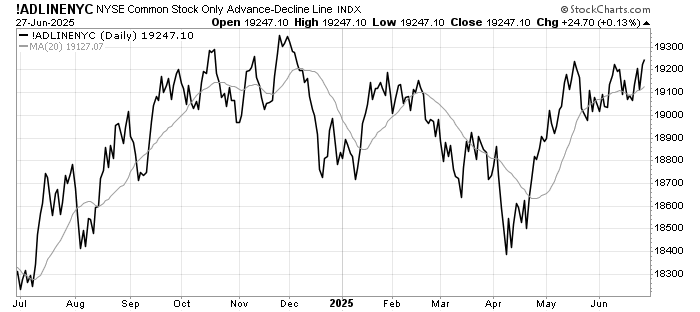
    From a market breadth analysis, we see many positive signals from advance-decline index, new highs-new lows, and equal weight indices are making new highs. Strangely, the bears stop warning about bad breadth in markets anymore.

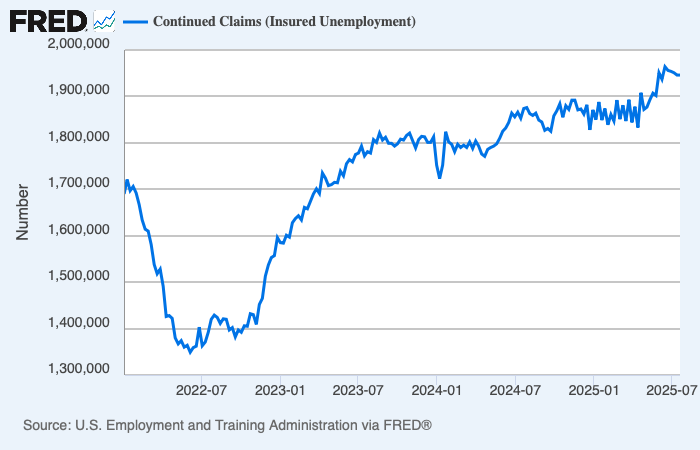
    Economic data from the weak also added to the optimism and raised hopes of the elusive soft landing for the American economy. Retail sales, industrial production, NAHB housing market index, continuing jobless claims all came in better than expected, better than the previous month.

    Still, this writer is aware that there are enough data points to suggest that the weaker is not 100% healthy. Manufacturing sector PMI remains weak (under 50), delinquency rates is on the rise, and companies are not really hiring much. This is a difficult economy to predict, let alone describe, which is why the optimist and the pessimists are aplenty. It is akin the story where three blind men were trying to describe an elephant. They each describe the it as a snake, a tree and a wall, depending on where they touch. That is why relying on financial market signals would be better off as it collects all the inputs from the economy.

    So for now, this writer remain bullish on US equities and positive on the US economy and see a higher chance of a soft landing. So does the Atlanta FED GDPNowcasting model, which shows a Q3 growth of 2.9%.

  • Market Wrap for the Week Ending 14 Sep 2024

    US CPI – slow improvement

    The long awaited report is out. According to GS:

    August’s US headline consumer price index came in 0.2% month-over-month and 2.5% year-over-year, in line with expectations and below its 20-year average for the first time since 2020. However, core CPI rose 0.3% month-over-month (above +0.2% expectations) to the highest level in four months, indicating there’s still room to tame inflation, despite controlled headline data. Shelter prices remained stubbornly sticky, climbing 0.5%, the biggest increase since the start of the year and the second month of acceleration. Lingering inflation was also evident by headline and core producer price index readings that came in firmer than expected at 0.2% and 0.3%, respectively.

    Most likely we will get a 25bp cut but the key will be what would the dot plots say? A lower year end target for rates can be a tailwind for risk assets.

    Can Key Day Reversal (KDR) overcome a weak start to September?

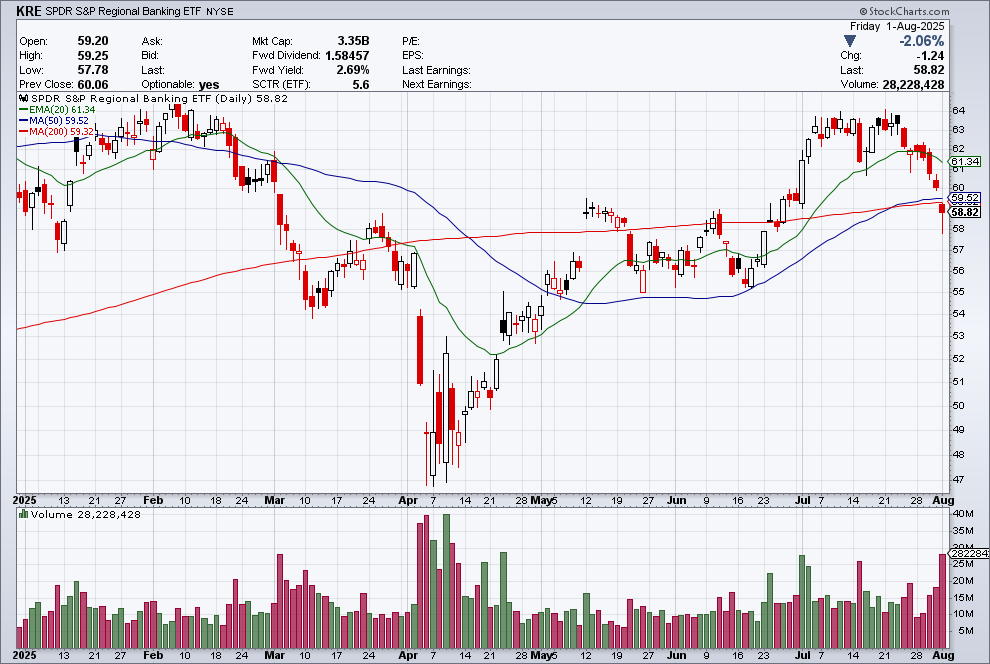
    US equities started September on a weak note. Last week saw some strong buying, with cyclical sectors like housing and regional banks displaying KDRs and positive followups (another positive close). As we head into the FED meeting, the market signals are positive, suggesting that the momentum should carry equities higher in the months ahead. So the risk of a recession is still low and the odds of a soft landing remain higher.


    JPY carry trade effect over?

    Based on the price action of the largest technology stocks in US markets, and the performance of the USDJPY, it seems to indicate that the effect of the carry trade reversal is diminishing. Since mid-August, the JPY has strengthened again, making new highs against the USD (it’s inverse on the chart). However the QQQ, which tracked the top 100 stocks on Nasdaq, staged a strong rebound to recover much of the losses. Either much of the trade has been unwound, or the thesis was not solid in the first place, i.e. investors did not borrow free JPY to invest in tech stocks.

  • Market Summary for Week Ending 6 Sep 2024

    It was a week marked by worries over the economy. ISM manufacturing numbers were worse than expected, although it was better than the previous month. The New Order component came in weaker than the previous month, suggesting no improvement for the manufacturing sector in the current month.

    The labour market also disappointed, although the data improved from the previous month. The July non-farm payroll was revised downwards (from 114K to 89K). The August report was 142K, lowered than the expected 160K. Unemployment rate inched lower to 4.2%. The JOLTS report did not indicate a rise in layoffs, but hiring has eased.

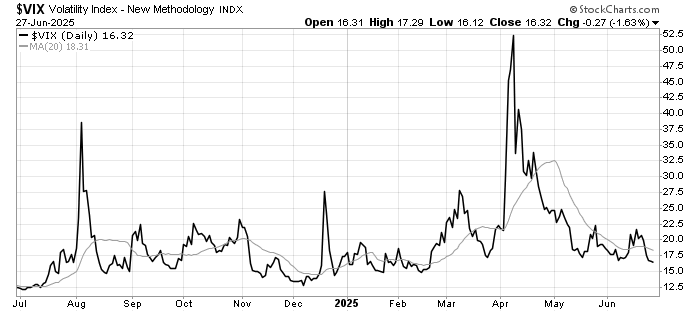
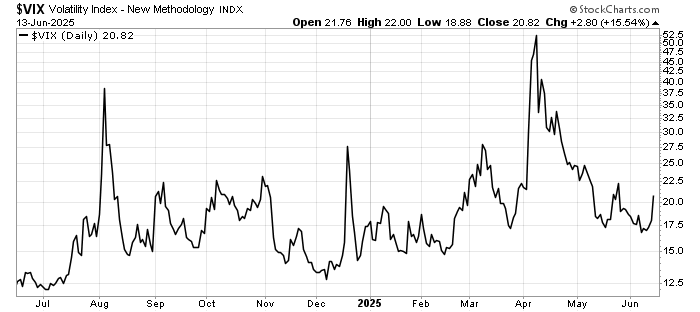
    Nonetheless, markets were worried about growth, sending stocks down and bonds up. The S&P500 was down 4% while the 10Y Treasury yield fell to 3.7% from 4%. The VIX surged to 20.3% from 15% as investors sought protection.

    Clearly, as we enter into the final quarter of 2024 and the upcoming election, volatility is increasing. Coupled with the delicate task of soft landing the economy, it is natural that investors are on edge. We have been positive on risk taking based upon the positive signals from markets (broad market participation and cyclicals remaining in an uptrend). We need to find confirmation from the data to show that the economy is not stalling, and equities can regain its footing. Otherwise, the alternative scenario, where a soft landing is not achieved, will have to be consider the base case.

  • Thoughts On The Dis-inverting Yield Curve

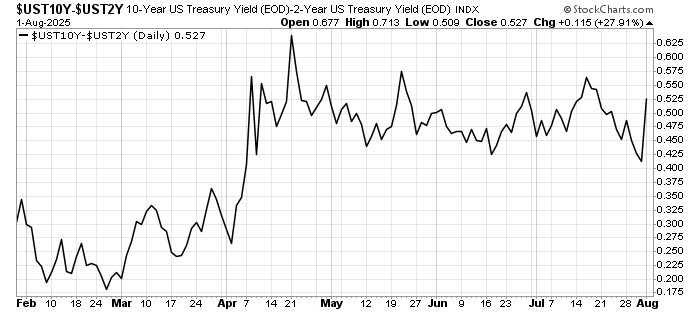
    Many observers are posting that the dis-inverting yield curve is the real signal of a recession.

    Historically speaking it is true that when the yield curve dis-inverts, ie. the short term rates starts to fall when the FED cuts, the economy is in trouble (unemployment goes up) and the stock market tanks (2001, 2007/08).

    Taken from a promotional email from Sevens Report

    The only reason why the economy and stocks can avoid the same outcome is if the economy can achieve a soft landing. Now it is true that certain parts of the economy is already weak or contracting. Manufacturing is one, according to the ISM surveys. The contraction is in its fifth consecutive month. Unemployment is also inching up, triggering the now famous Sham Rule. There is also a rise in delinquency in consumer loans. All these point towards a weaker economy.

    Yet, the signals from financial markets is starkly different.

    Unlike the previous dis-inverting periods, the signs from markets are more positive. Market breadth was very weak in 1999-2000, and in 2007-08. When the yield curve dis-inverted, many stocks were already in a bear market. The Advance-Decline index was trending down during those periods.

    Currently, the signal from markets are more positive. More stocks are participating in the current rally. Even industrial stocks are in an uptrend, defying the results of the ISM surveys. Hence, we conclude that there is a significant chance that the economy can do a soft landing, arresting the increase in unemployment and continuing the economic expansion.

  • Market Summary for the Week Ending 23 August 2024

    Jackson Hole outcome:

    “The time has come for policy to adjust. The direction of travel is clear, and the timing and pace of rate cuts will depend on incoming data, the evolving outlook, and the balance of risks”

    Words from the most powerful central banker. A rate cut in September is baked in as policy makers have pivot from fighting inflation to taming the rise in unemployment. According to the FED, the upside risks to inflation have diminished, and the downside risks to employment have increased. The focus is now on stemming the rise in the unemployment rate, which if they are successful, will dramatically increase the odds of a soft-landing in the world largest economy.

    Kamala Harris economic policy:

    • Harris has proposed keeping rates in place for those making less than $400,000, while raising taxes for higher earners. She is also pushing for an increase in the corporate tax rate to 28%, up from the current 21%.
    • While details remain vague, Harris has called for a federal law against price gouging on food and groceries.
    • Harris has proposed as much as $25,000 in down-payment support for first-time home buyers. She has also suggested a tax incentive for builders who work on starter homes and called for the creation of a $40 billion innovation fund to spur innovations in housing construction.

    Still in the early stages of the presidential campaign, so the impact on markets is likely to be limited. Prediction market is still split on who will be the next President. There is also no clear winner on who will control the government (which is a good thing!).

    Market’s response to dovish tilt:

    The dovish tilt by FED chair led investors to bid asset markets higher. The S&P500 is whiskers away from its all time high set on 16 July 2024. Nobody talks about the 5 August market panic anymore.

    Tech-heavy Nasdaq 100 is back on positive momentum. There is broad participation in cyclical sectors like small caps, industrial and financial stocks. Even bonds are having a good day. High yield bonds are making ATH!

    Mid-East tensions

    Someone made a move on Sunday. Hezbollah launched hundreds of rockets and drones at Israel early on Sunday, and Israel’s military struck Lebanon with around 100 jets to thwart a larger attack. The two sides have exchanged messages that neither wants to escalate further, with the main gist being that the exchange was “done”, two diplomats told Reuters. More important is the reaction of oil prices. Brent crude futures climbed 37 cents, or 0.5%, to $79.39 a barrel by 2300 GMT while U.S. crude futures were at $75.19 a barrel, up 36 cents, or 0.5%. Again, not much of a reaction from oil markets. Investors can keep calm and carry on, for now.