Blog

  • The First Brands Group Collapse

    First Brands Group, a major U.S. auto parts maker known for brands such as FRAM and TRICO, filed for bankruptcy at the end of September 2025. The company had grown rapidly by borrowing heavily and using complex financing structures based on invoices and receivables.

    Problems surfaced when lenders discovered that some of these receivables had been pledged more than once as collateral, and that billions of dollars in assets could not be fully accounted for. In mid-September, the company stopped passing payments to a trade-finance fund managed by Jefferies. That broke investor confidence and led to an immediate liquidity crisis.

    The U.S. Department of Justice is now investigating possible financial irregularities, and creditors are seeking an independent audit to trace the missing assets.

    Why it matters

    While few mainstream funds hold direct exposure, this event raises concerns about the hidden risks in private credit and supply-chain finance. These forms of lending often operate with less transparency than traditional bank loans, making it harder for investors to know where the true risks lie.

    The case is being compared to the Greensill Capital collapse in 2021 and may lead to tighter scrutiny of trade-finance funds and other non-bank lenders.

    Key takeaways for investors

    • No systemic risk: The situation is serious but contained. It is unlikely to threaten the broader financial system.
    • Greater caution in private credit: Investors should expect tighter lending standards and slower inflows into trade-finance and receivables-based funds.
    • Diversification remains key: Spread exposures across different sectors and financing styles to reduce concentration risk.

    Background: The Greensill Collapse (2021)

    The Greensill Capital collapse in 2021 provides important context for understanding the First Brands case.

    What happened:
    Greensill Capital was a UK-based finance firm that specialised in supply chain finance — paying suppliers upfront and collecting later from buyers. It then bundled these invoices into investment funds distributed mainly by Credit Suisse.

    However, Greensill began financing anticipated future invoices (sales that had not yet occurred), blurring the line between short-term credit and speculative lending. When insurers withdrew coverage and investors questioned the quality of its receivables, the entire structure unravelled. Greensill filed for bankruptcy in March 2021, leaving Credit Suisse investors facing losses of up to US$5 billion.

    Why it matters:
    The collapse revealed how opaque financing structures can hide true credit risk. In both Greensill and First Brands, complex receivables arrangements made it difficult for lenders and investors to verify the underlying assets. Once confidence broke, liquidity evaporated almost overnight.

    Parallel with First Brands:
    Like Greensill, First Brands relied heavily on receivables-based funding. When lenders discovered missing or double-pledged invoices, it triggered a similar confidence crisis — but this time from the borrower side rather than the intermediary. Both cases show the danger of excessive leverage and limited transparency in private credit markets.

  • Market Wrap for Week Ending 11 Oct 2025

    US-Chinese Trade Tensions Escalate

    President Trump announced new tariff threats against China, proposing hikes from 30% to 100% effective 1 November as a response to China’s expanded rare earth controls and an investigation into Qualcomm. China retaliated with new port fees targeting US ships, causing market unease and triggering one of the steepest selloffs for the Nasdaq 100 in months. Investors now await the outcome of the potential Trump-Xi meeting at the APEC summit in November, which could further influence global trade relations.

    Gaza Ceasefire Deal Reached

    A historic ceasefire agreement was reached in Gaza, mediated by the US, Turkey, Egypt, and Qatar, focusing on a phased hostage exchange and increased humanitarian aid. This reduced geopolitical fears and sent oil prices sharply lower, with WTI crude dropping more than 5% to $58.90.

    US Government Shutdown Impact

    The ongoing US government shutdown moved into its second week, leading to layoffs in key federal agencies and delaying the release of vital economic indicators including the US CPI and jobs reports. The lack of fresh data complicated the Federal Reserve’s October policy assessment, although markets now expect a rate cut at the upcoming meeting.

    Metals Rally as Safe Havens

    Gold broke through the $4,000 mark per ounce and silver surged past $50 for the first time, reflecting a rush to safe assets as investors worried over trade, inflation, and market volatility.


  • Japan LDP Leadership Change & Market Implications

    1) Summary of the Leadership Election

    On 4 October 2025, the Liberal Democratic Party (LDP) held a leadership election; Sanae Takaichi won the runoff and is positioned to become Japan’s next prime minister. The leadership race was widely interpreted as a pivotal moment: markets expected the winner to set the tone for fiscal policy, BOJ‑government coordination, and Japan’s growth trajectory. Parliament will vote to choose the next prime minister on 15 October 2025.

    2) Takaichi’s Policy Leanings (Market‑Relevant)

    • Fiscal stimulus / reflation bias: she has publicly advocated for aggressive public investment to stimulate demand and lift wages (a return to “Abenomics” style stimulus).
      • Monetary policy stance: she is expected to favor continued accommodative settings (or at least resist aggressive tightening). She has publicly stated that detailed monetary decisions remain BOJ’s prerogative.
      • Strategic / industrial tilt: she has emphasized boosting sectors such as semiconductors, defence, domestic supply chains, and potentially energy / nuclear infrastructure.

    3) Market Reaction (Immediate Moves)

    • Equities: Japanese equity indices surged (Nikkei up ~4–5 %) as markets repriced a more stimulative regime.
      • FX: the yen weakened sharply (USD/JPY broke above ¥150) on greater carry appeal and delayed BOJ tightening expectations.
      • Bonds: Long‑dated JGB yields rose, the yield curve steepened, reflecting heightened term premium and expectations of greater supply / fiscal expansion.

    4) Medium‑Term Macro & Asset Implications (3–12 months)

    • Monetary / FX interplay: The BOJ may delay or moderate tightening; however, if yen weakness becomes excessive, the government or BOJ might intervene (FX intervention or verbal/communication constraints).
      • Bond markets / yields: Fiscal expansion + delayed tightening = upward pressure on long yields and more volatility in the JGB market.
      • Equity / sector impacts: Exporters, industrials, and sectors tied to government infrastructure / defence / tech are likely beneficiaries. Financials are more ambiguous (they may benefit from a steeper curve, but suffer if policy stays too dovish).
      • Cross‑border & macro spillovers: Foreign interest into Japanese assets may rise; weaker yen raises import costs (pressures on trade balance), but stronger domestic growth could offset some of that.
      • Political & implementation risk: The bold policy rhetoric is subject to constraints (intra‑party consensus, budget limits, institutional resistance). If stimulus delivery disappoints, optimism could reverse.

    Bottom Line

    The change in leadership is clearly bullish for Japanese equities and assets more broadly: the policy shift toward fiscal stimulus, continued monetary accommodation, and strategic industrial support all favor a positive backdrop for those invested in Japan. The risk of abrupt yen intervention or policy mis-step is a caveat, but overall the directional bias is supportive.

  • Primer on U.S. Government Shutdowns and Market Implications

    What is a Government Shutdown?

    A U.S. government shutdown occurs when Congress fails to pass appropriations bills or a continuing resolution to fund federal agencies. Non-essential federal employees are placed on unpaid leave, and many government services pause. Essential services, such as national security and public safety, continue. It is distinct from a debt-ceiling crisis, which threatens U.S. Treasury default and carries much greater systemic risk.

    Historical Context

    Shutdowns became more common after the 1980s, following legal rulings that required agencies to cease operations without appropriations. Notable shutdowns include the 1995–96 standoff (21 days), the 2013 shutdown (16 days), and the 2018–19 partial shutdown (35 days, the longest in history). These events disrupted federal operations and caused temporary economic costs, but markets generally recovered.

    How Markets React

    Historically, markets tend to view shutdowns as short-term disruptions rather than systemic risks. The S&P 500 often shows volatility during the event, but performance three months later is typically more influenced by macroeconomic and monetary factors. Treasury markets generally remain stable unless linked to debt-ceiling risk. Sector-specific effects are more pronounced, particularly in defence contractors, healthcare services reliant on federal approvals, and regions with heavy federal employment.

    S&P 500 Performance During Past Shutdowns

    The table below summarises the S&P 500’s performance three months after the start of major U.S. government shutdowns since 1990.


    Near-Term Implications for Financial Markets (Next 3 Months)

    In the near term, shutdowns can cause headline risk and elevated volatility. Short shutdowns (days to two weeks) tend to have limited impact, with markets resuming prior trends quickly. Prolonged shutdowns (three weeks or longer) can weigh on GDP growth and earnings season, particularly in sectors tied to federal spending. However, history suggests shutdowns alone do not trigger systemic downturns unless tied to a debt-ceiling standoff.

  • Market Wrap For The Week Ending 26 Sep 2025

    US Inflation Maintains FED’s Rate Path

    The US PCE inflation reading for August came in at 2.7%, matching expectations. So did core PCE. The data gave markets some breathing room that inflation is under control, but also take away the expectations that the FED may cut aggressively.

    US GDP Revision Complicates The Inflation Outlook

    Q2 GDP was revised upwards to 3.8%, the strongest since Q3 of 2023. With stronger growth, the odds of aggressive rate cuts are likely to fall. Highly valued stocks may come under pressure. Already, Oracle lost 8% on Friday.

    Trump’s Latest Tariffs

    The U.S. administration unveiled sharp new tariffs: 100% on branded pharmaceuticals, 25% on heavy trucks, and additional levies on other goods. These moves have unnerved markets because they could stoke inflation (via import cost pass-through) and complicate global supply chains and trade flows. Markets appear to be taking it in its stride. The Pharmaceutical ETF traded higher on Friday.

    China’s Industrial Profits Rebound

    Chinese industrial profits grew 20.4% year-on-year for August, reversing recent declines, and year-to-date profits rose 0.9%. The rebound suggests that some corporate margin pressures are easing, which could alleviate concerns about cascading defaults or severe weakness in the industrial sector. The key is always sustainability, so we need to watch for Sep and Oct numbers. That said, the strength of the Chinese stock market cannot be ignored.

  • Market Wrap For Week Ending 19 Sep 2025

    US Stocks At New High But USD Is Weak

    The US stock market remains technically healthy and strongly bullish. The major indices, the S&P 500, Nasdaq, and DJIA, are at or near record highs, confirming strong underlying momentum.

    However, the market is also overbought in the short term, and the possibility of a pullback or sideways consolidation in the coming weeks will not be surprising.

    Over the next six months, the bias remains upward, supported by improving breadth, robust risk appetite, and the prospect of easier monetary policy.

    Market Breadth and Sector Rotation

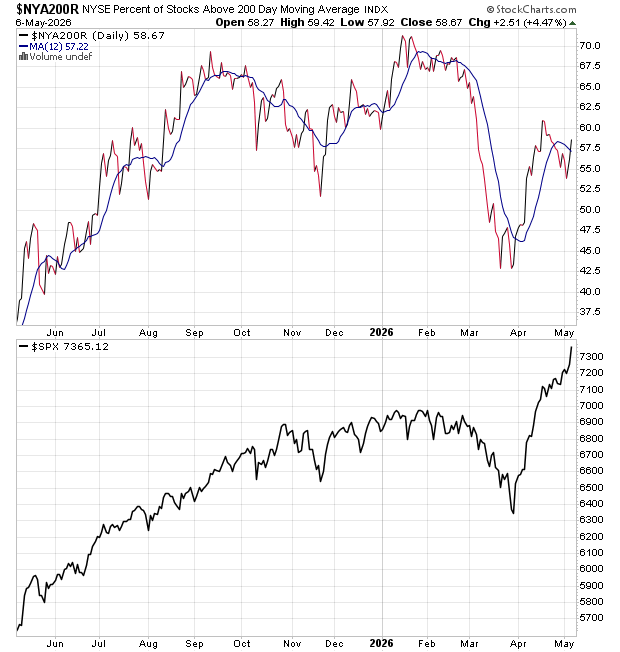
    • Participation is broadening. More than half of S&P 500 stocks trade above both 50- and 200-day averages. Although the trend is starting to slow, confirming the expectations that a period of consolidation is in store.

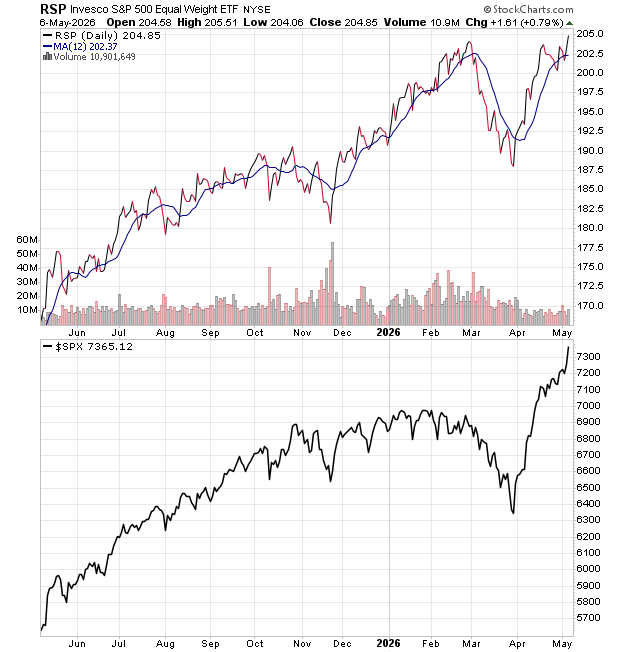
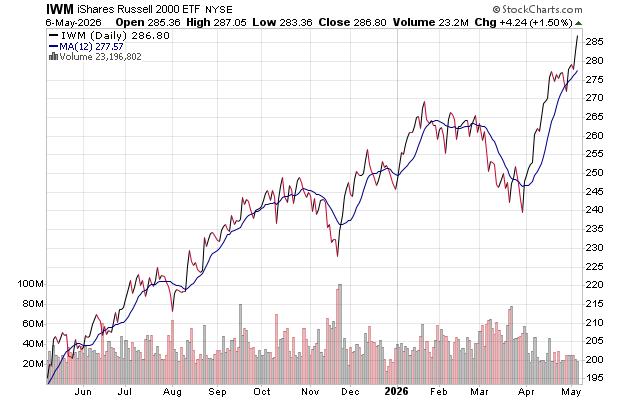
    • Rotation improving: Small-cap and value stocks have rallied recently, while leadership in technology remains intact.

    The weakness of USD continues to haunt foreign investors. For S$ based investors, an unhedged position in the S&P 500 underperformed by 50%.

    US Housing On Verge Of Recovery

    With mortgage rates at a 11-month low, mortgage application and refinancing activity is surging. Continued easing of monetary policy increases the odds of an over-heated economy, stock market melt-up and return of high inflation. The risk of a bear market in mid-2026 is increasing.

  • September FOMC Thoughts

    The FOMC reduced the fed funds rate by 25 bps to 4.00%-4.25% today, the first adjustment in nine months. Newly confirmed Trump ally Governor Stephan Miran was the lone dissenter at the meeting, preferring to cut by a larger 50 bps.

    The decision reflected a “shift in the balance of risks” with the Committee believing that the “downside risks to employment have increased.” While inflation has ticked up since the spring, a development acknowledged in the post-meeting statement, Fed Chair Powell considers that policy still remains somewhat restrictive. Job growth has downshifted sharply and the unemployment rate has risen.

    The odds of a scenario where the Fed cuts rates into economic expansion are rising. Jobless recoveries are not uncommon and by pumping more liquidity into the system when economic growth is accelerating can fuel a return of inflation. Investors should be on alert.

  • The “Jobless Recovery” Is Not New Nor Scary

    The U.S. economy can, and has, grown even when the jobs market is weak. This phenomenon, known as a jobless recovery, has been observed after several recent recessions.

    GDP growth indicates that the economy is expanding, but it doesn’t always reveal how that growth is being achieved. For example, growth can be driven by a small number of highly productive workers, new technology that automates tasks, or increases in productivity from existing employees. This means that a country can become wealthier overall even if the number of people employed or looking for work remains stagnant or declines.

    The most prominent examples of jobless recoveries in the U.S. occurred after the recessions of 1990-1991, 2001, and the Great Recession of 2007-2009. In each case, GDP growth resumed, but the unemployment rate either continued to rise or stayed elevated for an extended period, creating a disconnect that was widely reported in news headlines and economic analyses.

    Why the U.S. Is Not Necessarily Slipping into a Recession

    While a weak jobs market can be a cause for concern, there are several reasons why it does not automatically signal a looming recession in the current economic climate:

    • Productivity Gains: A key reason for a jobless recovery is increased productivity. This can be due to new technologies (like automation and AI) or businesses streamlining operations to become more efficient. In this scenario, companies can produce more with fewer workers, which boosts GDP but doesn’t necessarily create new jobs.
    • Data Revisions and Lagging Indicators: Economic data is often subject to revision. What initially looks like a weak jobs report can be revised upward later. Furthermore, the jobs market is a lagging indicator, meaning it typically changes after other parts of the economy have already shifted. GDP, consumer spending, and corporate earnings can be better real-time indicators of the economy’s health.
    • Strong Corporate Fundamentals: Many U.S. companies have strong balance sheets, which can help them weather periods of slow growth without resorting to widespread layoffs. Solid corporate earnings and continued business investment, particularly in technology and infrastructure, suggest that the economy’s underlying foundations are still stable.

    While a slowing jobs market is a legitimate concern, it is not a sure predictor of an impending recession. The complex interplay between productivity growth, labor force dynamics, and the lagging nature of jobs data means that the economy can continue to expand and thrive even when the unemployment rate is beginning to raise alarm. Looking at forward indicators, like financial market price action, would give investors a better sense of economic recession risk.

  • Market Wrap For Week Ending 12 Sep 2025

    U.S. Small Businesses More Confident

    Small business sentiment continued to climb in August. The NFIB Small Business Optimism Index increase to 100.8. Growing sales prospects and solid earnings are said to be the driving forces behind the improvement. Small businesses also appeared to receive greater clarity amid the unveiling of the administration’s tariff policy and the successful passage of the One Big Beautiful Bill Act. A drop in job openings at small firms raises some caution, however. That said, small cap stocks continue to rally.

    U.S. Job Growth Revised Down Significantly

    Annual revisions to nonfarm payrolls data for the year prior to March 2025 showed a drop of 911,000 from initial estimates, according to a preliminary report from the BLS. This is the largest since 2002 (the 2009 revision was -902,000). Clearly it showed that the economy was on shakier footing that it appeared. It is important to note that the revisions are not reflective of current conditions.

    Looking at initial claims would give a clearer picture of the health of the labour market. For now, there isn’t a significant increase in initial claims for unemployment, unlike the period where the data was revised. Market action was relatively muted. The S&P 500 gained 0.23% while the US dollar was flat. The 10Y Treasury bond yield inched up by 4 basis points.

    US Q3 Economic Growth Resilience

    The Atlanta Fed’s GDPNow model for Q3 2025 is currently stronger than the consensus forecast mainly because recent economic data shows stronger-than-expected activity in key areas: (1) Personal consumption spending has increased, indicating that consumers are spending more than anticipated. (2) Business investments are growing robustly, with stronger manufacturing, retail sales, and housing data supporting this. (3) Net exports contribution initially showed a decline but has stabilised, offsetting some downside. These data updates have pushed the GDPNow estimate to around 3.1% to 3.5%, higher than many consensus forecasts near 2.5% or lower.

    Cyclical sectors like homebuilding is rallying again. With long term rates lower, housing may be given a boost, leading to greater discretionary spending by consumers.

    ECB Kept Rates Unchanged

    The European Central Bank (ECB) left interest rates unchanged and signalled that it will likely keep them at the current level for some time. In the ECB’s assessment, downside risks to growth and inflation have diminished, reducing the scope for a more accommodative policy. The crisis brewing in France has yet to make an impact on French or European markets for now, as French corporates continue to enjoy lower interest rates than the government.

  • Do Investors Need To Worry About France’s Political Crisis

    What’s Happening in France?

    France, Europe’s second-largest economy, is experiencing severe political instability that has captured global attention. The French government led by Prime Minister François Bayrou has collapsed after losing a vote of no confidence, with public trust in the political class having collapsed and anger spilling onto the streets.

    This crisis didn’t happen overnight. After President Emmanuel Macron called snap elections in June 2024, France ended up with a hung parliament split between the left-wing New Popular Front, the right-wing populist National Rally, and Macron’s own Renaissance party. No party or coalition achieved the 289-seat threshold needed for a governing majority, making the Assembly “hung” and vulnerable to frequent government collapses or votes of no confidence.

    This fragmented political landscape has resulted in two short-lived minority governments, both collapsing over budgetary disputes. The core issue: France needs to reduce its massive government spending, but every proposal to cut expenses or raise taxes faces fierce opposition from different political groups.

    Why This Matters For Europe

    When a major economy like France becomes politically unstable, financial markets react nervously. Here’s why investors are concerned:

    Bond Market Turmoil: Government bonds are essentially IOUs that countries issue to borrow money. French bond yields have risen above those of Greece, who were once struggling with their own crisis. When investors lose confidence, they demand higher interest rates to lend money, making it more expensive for governments to finance their operations. However, judging from the recent moves in French 10Y bond yields, investors seem to be taking all this in their stride.

    Economic Uncertainty: Business leaders warn that political uncertainty triggers immediate consequences, including “freezing of investments, loss of confidence, increased risk of bankruptcies, and job destruction”. Companies delay major decisions when they don’t know what policies the next government might implement.

    Broader European Impact

    By right, the Euro currency should weaken, as a political crisis in Europe’s second-largest economy could reduce investment flows and drag on the Euro’s value. However, the Euro is holding up well, against the US$ and also the stable Singapore dollar.

    What Comes Next?

    The immediate challenge is forming a stable government that can address France’s fiscal problems. Further attempts to tackle the country’s enormous debt could be stalled until after the next presidential election in 2027. This prolonged uncertainty could increase the uncertainty in French financial markets. The downside risk appears to be muted but prolonged uncertainty dampers the potential for upside.