Author: admin

  • Week in review 1 Apr 2024

    Positive reading from US and China ISM surveys. Manufacturing recovering.

    US consumer spending continues unabated.

    US 2023 Q4 economic growth revised to 3.4%, supported by consumer spending.

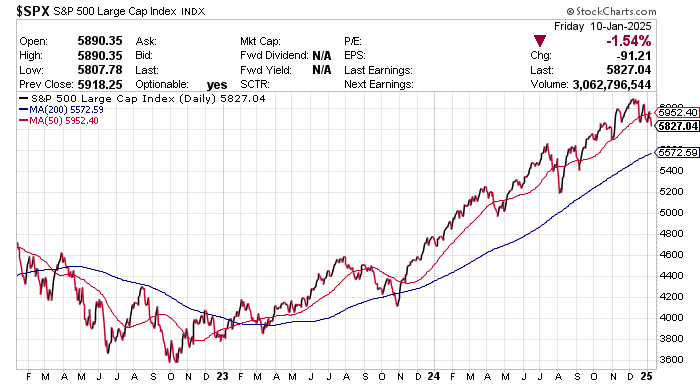
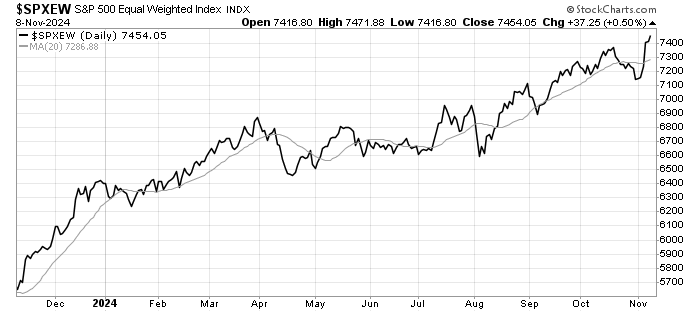
    US stock market outlook is positive, supported by strong market participation. More stocks and sectors are rallying. No longer a Mag-7 or Fab-4 driven bull market. Stay invested, pull backs are opportunities to invest!

  • BOJ Ends Negative Rates Implications for Japan

    On March 19, 2024, the Bank of Japan (BOJ) marked a historic shift by ending its policy of negative interest rates. The first rate hike in 17 years, signifies a potential turning point for the Japanese economy, its stock market, and the Japanese yen. Here are some quick takes:

    Impact on the Japanese Economy:

    • Inflationary Pressures: The primary motivation for ending negative rates is likely to declare its victory over deflation. Rising global energy and commodity prices, coupled with ongoing supply chain disruptions, have pushed inflation in Japan above the BOJ’s target of 2%. While the rate hike itself is modest, it could signal the BOJ’s view that the inflation outlook has changed from deflationary to one that is slightly inflationary. The recent wage-hike agreement was seen as a critical aspect of the changed economic environment.
    • Stimulus Reduction: The negative rate policy aimed to incentivize lending and boost economic activity. Its removal could lead to tighter credit conditions for businesses and consumers. However, the BOJ continues to implement alternative measures to maintain some level of stimulus, such as quantitative easing (purchasing government bonds). Note that at 0-0.1%, interest rates in Japan is still extremely low, in the global context.
    • Growth Prospects: The impact on economic growth is minimal. While curbing inflation is necessary for long-term stability, there is little need for tighter monetary policy which could dampen economic activity in the short term. The BOJ downgraded its assessment of consumer spending, signalling a  need to carefully adjust monetary policy to achieve sustainable growth.

    Implications for the Stock Market:

    • Long-Term Potential: A more stable and predictable monetary environment could ultimately benefit the stock market. Investors might regain confidence, leading to increased investment activity and potentially higher valuations in the long run. Note that Japanese stocks have benefited from the benefits of corporate reforms. Sustained economic growth will be another tailwind for Japanese equities.

    The Yen’s Future:

    • Potential Appreciation: The rate hike could lead to a strengthening of the Japanese yen but it is doubtful that the JPY can rally strongly given the significant difference between interest rates. US rates are at 5.25% while the ECB’s is at 4%.

    Uncertainties and Challenges:

    • Wage Growth: A key challenge lies in achieving sustained wage growth. If wages don’t rise alongside inflation, consumers might face a decline in purchasing power, negating the benefits of curbing inflation. It is not clear if SMEs are following the trend of offering wage hikes, an issue brought up by the dissenters.
    • Debt Burden: Japan has a high national debt burden. Rising interest rates could increase the government’s borrowing costs, posing a fiscal challenge. Again, it is doubtful that we would see aggressive rate hikes in Japan.
  • Week 5 2024 In Review

    Summary of Main Events:

    • FED Chair pushes back on March rate cuts, but rates have peaked.
    • US jobs report was stellar! Payrolls: 353K vs 185K.
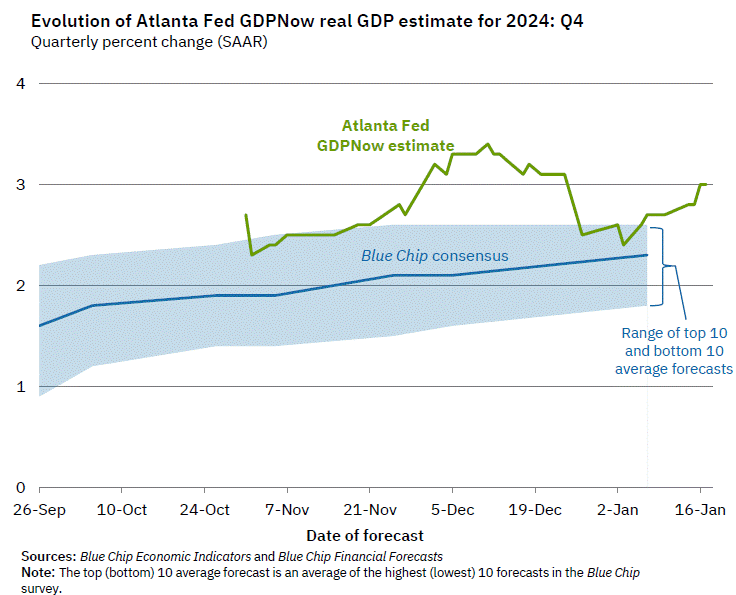
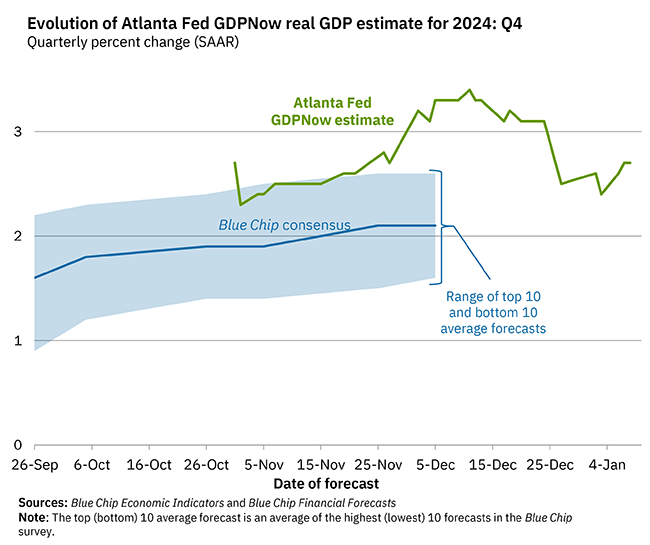
    • US Q4 economic performance outperformed expectations (3.3% vs 2%).
    • Mid-east escalation: US servicemen killed, US strikes back but oil prices steady.
    • Taiwan exports point to new electronics cycle

    Things to consider: Is the current FED funds rate too restrictive? Are financial conditions too tight that will trigger a recession?

    • Junk bonds have held up despite the disappointment. No fear of recession in high yield bond prices.

    • Market breadth is still positive. More stocks rising than falling as risk appetite remains good.

  • Taiwan Election – Considered A Non Event

    The results are out and pro-independence Lai Ching-te, the DPP candidate, is the newly elected president of Taiwan. Naturally, this raises concerns that cross strait tension will increase. In my opinion, the level of tension is unlikely to increase. They will however, remain high.

    DPP won 40% of the vote (This is lower than the 57% they won at the last election). Beijing friendly KMT candidate gathered 33% while former Taipei mayor received 26%. Voter turnout rate is estimated to be 69%, lower than the previous 75%. If Taiwanese are voting based solely on the China issue, we do not have a majority siding for independence, since the Taipei mayor presented himself as a balanced candidate.

    The legislative election outcome is unlikely to lead to greater tension. The DPP lost 10 seats, while the KMT gained 14 seats. It is hard to make a case that the Taiwanese people is moving towards pro-independence.

    The outcome is also expected by the Chinese, as we did not see any mass military exercise around the island. It also helps that US president, when asked for his reaction, said that the US does not support an independent Taiwan. All these point towards an unchanged environment for cross straits relation.

    It is likely that the US presidential election may matter more, especially if a Republican, who tend to take a more aggressive posture with China, wins.

    Financial markets reaction is fairly muted thus far, with Asian equities, gold, FX trading in a tight range. The election result is not expected to have any impact on financial markets.

  • 2023 Mid-Year Investment Outlook

    As we approach the latter half of 2023, the prevailing theme in the financial landscape is undoubtedly resilience. Despite the Federal Reserve’s assertive rate hikes, occurrences of bank failures, and tightening financial conditions, the US economy has demonstrated remarkable strength, managing to avert a recession. While equity markets have shown positive performance, not all stocks have participated in the gains, except those associated with artificial intelligence. Nonetheless, there are indications that the market could be heading for a downturn as concerns about an inevitable recession surface in the latter half of the year. It is, however, crucial for investors to consider the possibility that the US may continue to avoid a recession this year, which could have significant implications for risk assets.

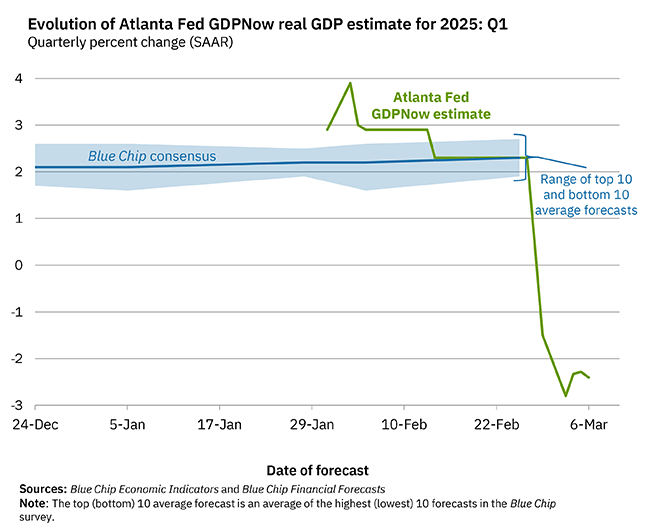
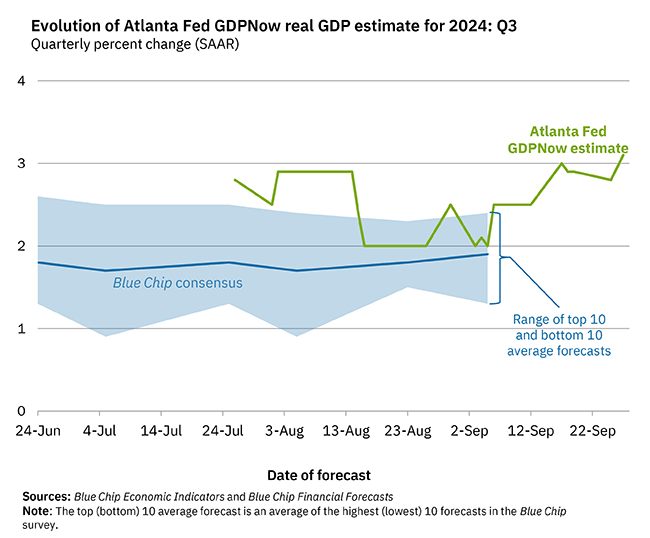
    The US economy has displayed unexpected resilience, with Q1 GDP revisions indicating an annualized growth rate of 2%, surpassing the earlier estimate of 1.3%. Strong consumer spending and robust exports have been pivotal in supporting this growth. Furthermore, the outlook for Q2 remains positive, with the Atlanta Federal Reserve’s GDPNow estimate projecting a growth rate of 1.8%. The US economy’s ability to withstand higher interest rates highlights its capacity to endure adverse monetary conditions.

    While inflation has peaked and is now slowing, it remains above the Federal Reserve’s target rate of 2%. Although the CPI declined to 4% in May from the peak of 9.1% in June 2022, the core CPI (excluding food and energy) remains elevated at 5.3%. However, there are encouraging signs, such as the slowdown in housing inflation, which may contribute to a further decline in inflation in the coming months.

    The Federal Reserve remains resolute in its commitment to combat inflation, maintaining a hawkish bias and projecting two more rate hikes for 2023. This stance has resulted in an inverted yield curve, contributing to concerns about an impending recession.

    A notable factor contributing to the US economy’s resilience amid higher interest rates is the strength of the labor market. The unemployment rate has consistently remained below 4% since 2022, standing at 3.7% currently. The decline in ongoing jobless claims indicates that those affected by layoffs have been able to find new employment opportunities swiftly.

    While the US regional banking sector experienced some turbulence, the situation seems to have stabilized, with deposits at small banks steadying after the Silicon Valley Bank’s failure. However, banks are facing challenges related to profitability and balance sheet protection, which may affect their lending activities and subsequently impact the economy.

    Looking ahead, the US economy’s outlook is subject to various factors. If inflation continues to decline, and the Federal Reserve adopts a prudent approach to monetary policy, the start date of a forecasted recession may be postponed. The recovery in the housing sector and its potential to offset weaknesses in manufacturing could contribute to avoiding a recession.

    In the US stock market, while large-cap technology stocks have performed well, other sectors have lagged behind, and small caps are facing challenges due to recession concerns. The market’s sustainability largely depends on whether the rally broadens to include non-large cap technology stocks, indicating broad-based confidence in the US economic outlook.

    The European economy faced headwinds, falling into a technical recession in Q1 2023 due to various factors, including the Ukraine war, energy price surge, and slowdown in global trade. However, current consumer sentiment indicators suggest a mild recovery may be underway.

    In China, growth momentum may be slowing, with some data indicating a slowdown in industrial activity. Restoring consumer confidence and stimulating the economy are critical to its recovery, especially amid global tensions and challenges.

    In the bond market, an inverted yield curve remains a concern for investors, with potential scenarios ranging from a recession-driven rate cut to a more cautious Fed policy. Corporate bonds are facing challenges, and defaults are expected to rise, requiring close monitoring.

    Commodities such as oil and copper reflect global economic conditions. While oil prices have been under pressure due to weak global industrial activity and higher interest rates, signs of stability in commodities could indicate an upturn in industrial activity.

    The US dollar has remained range-bound amid the Fed’s hawkish monetary policy, with emerging market currencies rallying against it. The stability or appreciation of currencies like the Brazilian real may attract American investors seeking higher yields.

    In conclusion, the second half of 2023 presents a mixed outlook for financial markets. While recession concerns persist, positive economic data and potential broadening of the stock market rally offer reasons for optimism. Monitoring inflation trends and the Federal Reserve’s response will be crucial in shaping market dynamics. As financial advisors, it is essential to carefully assess these factors to make well-informed decisions and navigate the evolving economic landscape for the benefit of your valued clients.


  • Strength Underlying US Stock Market

    The divergence in stock prices and its relative strength appears to be weak, given that market breadth remains strong.

    New highs are rising, AD line is climbing, equal weighted cyclical indices are up.

    Probability of stock market rising is higher.


  • US Economy Turning Around

    Good news ahead for the US economy. Housing appears to be on a recovery, based on low supply, healthy demand as seen from higher starts, new home sales and builder confidence. Investors are confirming this, judging by the performance of the HGX. Note that this is despite mortgage rates at 6-7%. Also, mortgage demand is growing.

    If the manufacturing sector bottoms, and recovers, it will be another boost. Watch out of a leveling of producer prices, following by an increase. This would indicate a turnaround for the manufacturing sector. Perhaps that is why XLI is doing so well.

    If true, the recession call will be invalidated. Especially since inflation is falling and the FED looks likely to pause after one last hike.

  • US Corporate Fundamentals Improving

    Despite the recession calls and financial tightening, corporate fundamentals appear to be improving, or let’s just say it’s getting less bad. Earnings revision for large caps flipped to positive, while that for mid and small caps is going in the right direction.

    Could the next phase of the bull market be driven by “fundamentals”? Stay tuned.

  • Recent US economic data

    Consumers are feeling more upbeat. Michigan consumer sentiment index is up to 63.9, better than previous and expectations.

    Retail sales are also coming in better than expectations, up 0.3% on month.

    NAHB housing market index continues to improve, rising to 55.


  • If Rising Rates Hurts And Causes A Recession, Why Are Bank Stocks Not Falling In Anticipation Of Rising NPL?

    The fear is that with rising interest rates globally, borrowers are hurting with higher interest payment, leading to a surge in defaults. Blackstone’s CMBS comes to mind. However, we note that bank stocks are rallying. Seems like markets are not expecting a surge in NPLs. Economy is fine, especially in Europe.