The latest earnings from America’s largest banks confirm the resilience of the US economy. But beneath the strong profits, there are emerging risks that investors should not overlook.
Four of America’s biggest banks — JPMorgan Chase, Goldman Sachs, Citigroup and Wells Fargo — have reported their Q3 results. Together, they generated approximately US$31.8 billion in net profits in just three months.
The results offer an encouraging picture of the US banking industry. Lending is growing, consumers are largely keeping up with their debt repayments, and investment banking activity remains healthy.
However, there is an important distinction between banks performing well today and their earnings continuing to improve over the coming year.
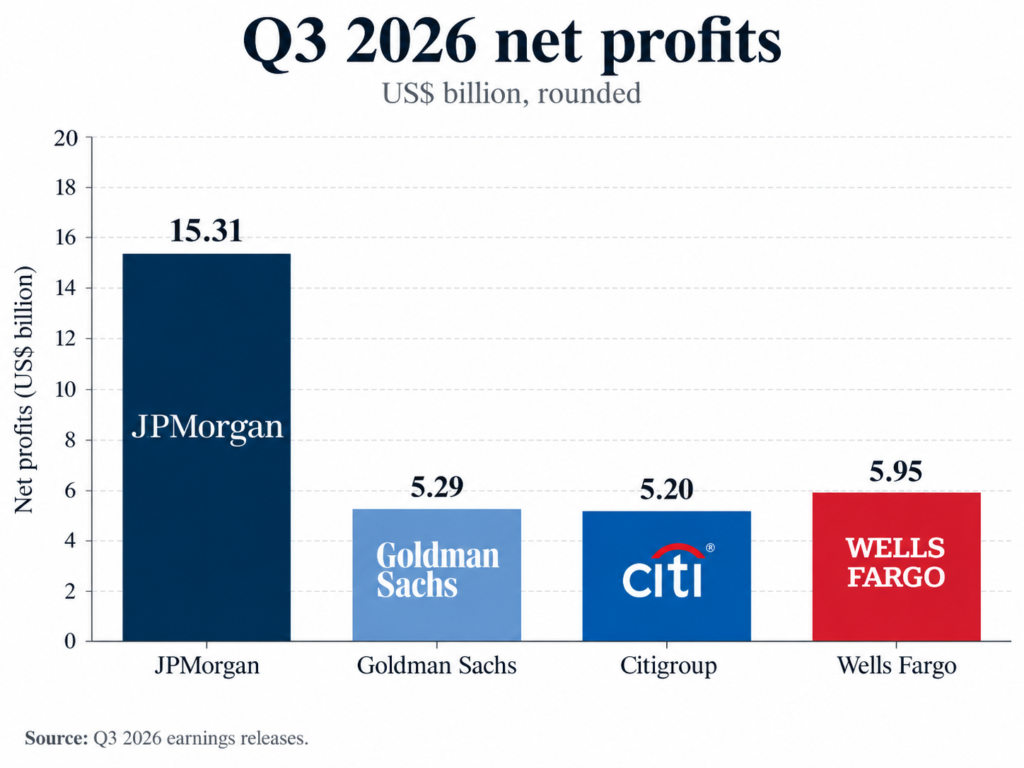
JPMorgan led with US$15.3 billion in net profits, up approximately 6% from a year earlier. Citigroup’s earnings jumped around 38%, while Goldman Sachs recorded a 29% increase. Wells Fargo’s profits also improved by approximately 6%.
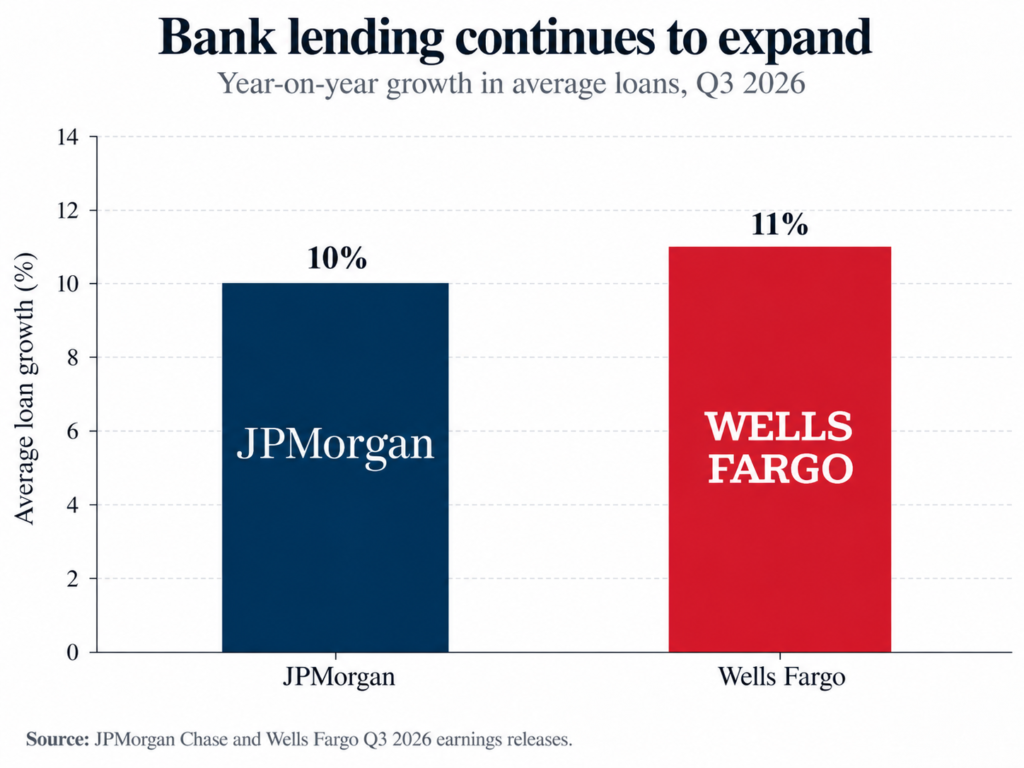
JPMorgan’s average loan balances grew 10% year-on-year, while Wells Fargo recorded an 11% increase. Both banks also reported deposit growth, suggesting that demand for banking services remains healthy despite elevated interest rates.
Meanwhile, investment banking and trading provided another source of strength. Goldman Sachs benefited from a 72% surge in equities trading revenue, while investment banking fees rose 21%.
The message is encouraging: US banks are not relying on a single source of income to generate profits.
American consumers are still holding up
One of the most reassuring findings concerns US households.
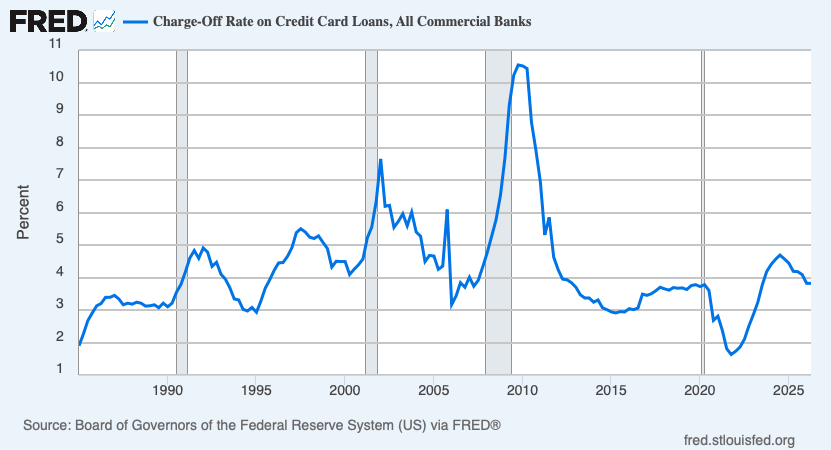
JPMorgan reported that debit and credit card spending increased 10% year-on-year, while its credit card net charge-off rate stood at 2.91%.
This suggests that many consumers are continuing to spend and service their debts despite persistent inflation and higher borrowing costs.
Lending growth remains surprisingly strong
These increases are significant because higher interest rates would ordinarily be expected to discourage borrowing.
But loan growth does not necessarily mean the economy is accelerating. Companies may borrow more to finance expansion, refinance existing obligations or support cash flow. Banks may also increase lending by gaining market share.
For investors, the important question is not simply whether lending is expanding, but whether borrowers can comfortably repay their obligations.
The housing slowdown has yet to become a problem
The US housing market remains under considerable pressure from high mortgage rates. Home sales are subdued, refinancing activity has weakened, and affordability remains a major challenge. Yet these difficulties have not translated into widespread banking losses.
JPMorgan’s home-lending revenue declined 3% year-on-year, illustrating how weaker mortgage activity is affecting parts of the financial industry. However, its other businesses more than compensated for this weakness.
At Wells Fargo, commercial loan charge-offs increased, but non-performing assets declined during the quarter.
These are mixed signals rather than clear evidence of deteriorating financial conditions.
It is also worth remembering that many American homeowners still hold long-term fixed-rate mortgages obtained when interest rates were substantially lower. This provides some protection against the latest increase in borrowing costs.
The greater danger would arise if the housing slowdown coincided with rising unemployment and falling property prices, pushing more borrowers into financial difficulty.
Higher interest rates are a double-edged sword
Banks can benefit from higher interest rates because they earn more on certain loans and interest-bearing assets.
JPMorgan’s net interest income increased approximately 13% year-on-year, supported by larger lending and deposit balances.
However, rising rates also carry costs.
Banks holding older fixed-rate bonds may experience losses as market yields rise. JPMorgan, for instance, reported US$658 million in investment securities losses during the quarter.
Higher rates can also raise banks’ funding costs, discourage new borrowing and eventually increase credit losses.
This is particularly relevant following the latest increase in US Treasury yields and mortgage rates.
The latest quarterly results cover July to September and therefore do not fully reflect the impact of October’s bond-market volatility.
What should investors watch next?
Three indicators that matter for US banks
- Loan growth and net interest income: Sustained growth would support earnings, provided lending standards remain sound and deposit costs are controlled.
- Corporate credit quality: Rising provisions accompanied by higher actual defaults would be a more serious warning than reserve increases alone.
- Treasury yields and regional banks: Persistent increases in long-term bond yields could pressure securities portfolios and banks with weaker funding structures.
What does this mean for investors?
The first round of bank earnings suggests that the US financial sector remains fundamentally healthy. Large banks are generating substantial profits, lending continues to expand, and consumer credit quality has held up better than many feared.
However, strong earnings do not automatically translate into strong share-price performance. Bank valuations also depend on future earnings expectations, credit conditions and the direction of interest rates.
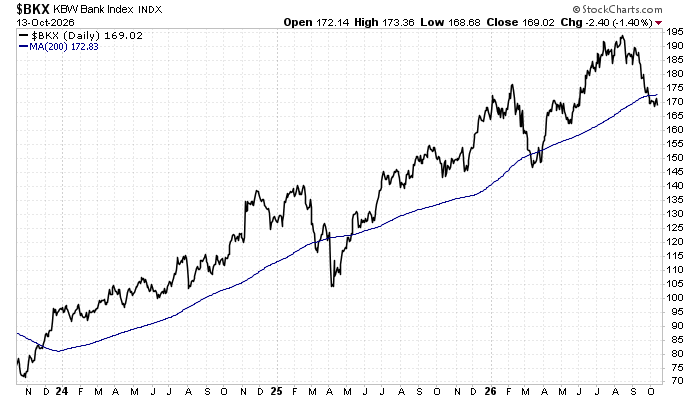
Investors should also distinguish between large diversified institutions and smaller regional banks. The former benefit from multiple income streams and substantial funding advantages, while the latter may be more exposed to commercial property lending, deposit costs and bond-market losses.
The upcoming regional-bank earnings will help determine whether the positive developments extend across the broader industry.
The bottom line
US banks are in better shape than the weak housing market and elevated borrowing costs might suggest.
For now, solid lending activity, resilient consumers and healthy capital-market revenues are supporting profitability.
The risk is that today’s strong earnings reflect economic conditions that could change if higher interest rates persist and growth slows.
For investors, the more important question is whether those profits can continue growing without a deterioration in credit quality.
Leave a Reply